Finding comfortable boots when you have hammer toes isn’t always straightforward. A boot might be labelled wide fit, but that doesn’t necessarily mean there’s enough room above your toes to stop them rubbing against the upper.
The good news is that some women’s boots are designed with deeper toe boxes, stretchy materials or removable insoles that can make a real difference to comfort.
I’ve picked out six wide-fit women’s boots for hammer toes that are available in the UK, concentrating on the features that matter when you have hammer toes: room above raised toe joints, soft uppers, adjustable fastenings and enough support for everyday wear.
Affiliate Disclosure: This article contains affiliate links. If you buy something through one of these links, I may earn a small commission at no extra cost to you.
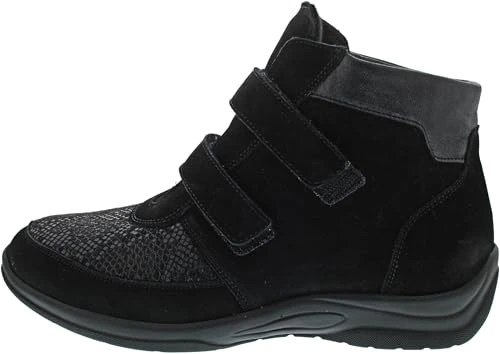
Waldläufer Hesna – Best for Stretch Over Hammer Toes
The Waldläufer Hesna has a stretchy forefoot that gives raised toe joints more room. Its H width fitting and removable insole offer extra fitting flexibility, particularly if ordinary boots press against your toes.
Colour: Black
UK sizes: 3.5–8
Width: H fitting
upper
insole
fit
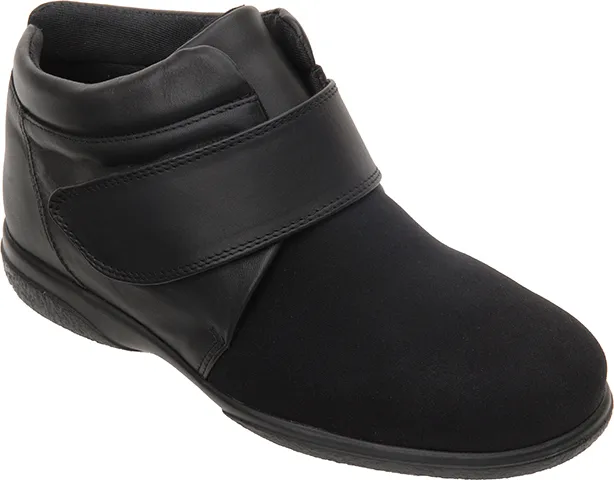
Cosyfeet Julia – Best for Stretchy Forefoot Comfort
Cosyfeet Julia combines a soft, stretchy Elastane forefoot with a supportive leather heel section. Its extra-roomy 6E fitting and removable insole offer flexibility for women whose hammer toes need more space and less pressure from the upper.
Colours: Black, Claret & Galaxy
UK sizes: 3–9
Width: 6E fitting
forefoot
insole
fit

DB Stoke – Best for a Stretchy, Seam-Free Toe Box
DB Stoke combines a stretchy forefoot with a seam-free toe box to help reduce pressure on raised toe joints. Its twin zips make getting the boots on and off easier, while two removable cushioned insoles allow you to create extra depth when needed.
Colours: Black & Burgundy
UK sizes: 3–9
Widths: 2E–4E (2V) or 6E
forefoot
insoles
zips
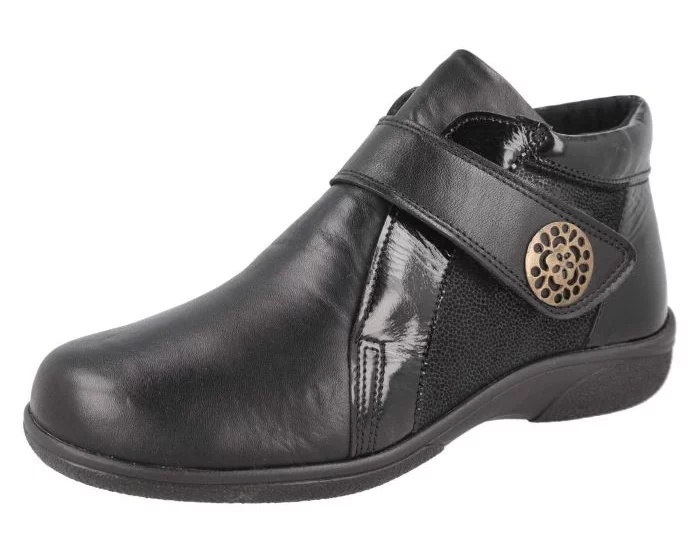
DB Celeste – Best for Adjustable Comfort and Extra Toe Depth
DB Celeste has a deep, rounded toe box that gives raised hammer toes more room without them rubbing against the upper. Its adjustable touch fastening makes it easier to accommodate a higher instep, while two removable cushioned insoles let you create extra depth when needed.
Colours: Black, Burgundy & Navy
UK sizes: 3–9
Widths: 2E–4E (2V) or 6E–8E (6V)
toe box
insoles
fastening

DB Chirk – Best for Water-Resistant Everyday Wear
DB Chirk is a practical choice for women who want wide-fit boots for everyday wear. Its water-resistant design helps with damp weather, while the lace-up fastening allows you to adjust the fit across your foot. A useful option for hammer toes when you want something suitable for getting out and about.
Colours: Taupe, Red, Purple, Black, Denim & Dark Grey
UK sizes: 3–9
Widths: 2E–4E (2V) or 6E–8E (6V)
upper
fit
laces

Ganter Kira K – Best for Premium Comfort and Quality
Ganter Kira K combines a generous K-width fitting with stretch inserts designed to accommodate sensitive areas of the foot. Its removable footbed provides fitting flexibility, while the lace-up fastening and side zip offer adjustability and easier access. A premium option worth considering when comfort and quality are priorities.
Colours: Brown, Black, Wine
UK sizes: 4–8
Width: K fitting
inserts
insole
laces
My experience with Ganter: I own a pair of Ganter Klara K boots, and I’ve been really impressed by their quality. They’re generously deep, have removable insoles, and the leather lining is beautifully soft, almost velvety. My Klara boots don’t have stretch panels, and I haven’t tried the Kira boots personally, but my experience has certainly made me appreciate Ganter’s workmanship.
What to Look for in Boots When You Have Hammer Toes
Finding boots that are wide enough is only half the battle when you have hammer toes. You also need enough room above your toes, particularly where the joints are raised.
Here are the features I’d pay closest attention to.
A Deep, Roomy Toe Box
A wide boot isn’t necessarily a deep one. Look for enough height inside the toe box so your raised toe joints aren’t rubbing against the upper.
Your toes should be able to rest comfortably without feeling squashed from above or squeezed together.
Soft or Stretchy Uppers
Soft leather, flexible fabric and stretch panels can be particularly helpful if ordinary boots press against your toes.
Pay attention to where any seams sit. A seam running directly across a raised toe joint can cause irritation, even in an otherwise comfortable boot.
Adjustable Fastenings
Laces, touch fastenings and adjustable straps help you get a more secure fit without squeezing the front of your foot.
Zips are handy for getting boots on and off, but they don’t necessarily make the fit adjustable.
Removable Insoles
A removable insole can give you more flexibility with the fit. Some boots have two removable insoles, allowing you to create additional room inside.
Just remember that removing an insole may change the cushioning and support, so check that the boot still feels comfortable and secure.
Don’t Forget the Heel
It’s tempting to concentrate entirely on your toes, but the rest of the boot matters too.
Look for a secure heel and a stable sole. You don’t want your foot sliding forwards with every step and pushing your toes against the front of the boot.
If you’re still unsure which features matter most, have a look at my guide to choosing shoes for hammer toes.
And if boots aren’t what you’re looking for, I’ve also put together a selection of soft-top trainers for hammer toes, focusing on styles that give raised toe joints a little more breathing room.
Frequently Asked Questions About Boots for Hammer Toes
Are wide-fit boots always suitable for hammer toes?
Not necessarily. Wide-fit boots give your feet more room from side to side, but hammer toes often need extra depth above the toes as well. Look for a deep toe box, soft uppers and enough space for raised toe joints without rubbing.
Are lace-up or zip-up boots better for hammer toes?
Both can work, but they offer different advantages. Laces allow you to adjust the fit across your foot, while zips make boots easier to put on and take off. Boots with both can be particularly convenient, provided there’s enough room around your toes.
Can I wear ankle boots if I have hammer toes?
Yes, provided they fit comfortably. The height of the boot around your ankle is less important than having enough room around your toes, a secure heel and a stable sole. Your toes shouldn’t rub against the upper or be pushed against the front when you walk.
The Bottom Line
Finding comfortable boots when you have hammer toes isn’t simply about choosing a wider fitting. You need enough room above your toes, too, particularly if the joints are raised or sensitive to pressure.
If pressure across the tops of your toes is your biggest problem, I’d start by looking at Waldläufer Hesna, Cosyfeet Julia or DB Stoke, all of which offer stretchy material around the forefoot.
For extra toe depth and adjustable fastening, DB Celeste is worth considering, while DB Chirk offers a practical water-resistant option for everyday wear.
Ganter Kira K adds another choice for anyone looking for a generous K fitting, adjustable laces and a removable footbed, with the emphasis on quality and comfort.
Whichever style appeals to you, remember that a boot can be wide enough across your foot and still press painfully on your toes. Look for depth, check where the seams sit, and make sure you can move your toes comfortably.
My advice? Never put up with a boot that presses on your hammer toes in the hope that it will eventually soften. The right fit should feel comfortable from the start.
About Sue Holland
Sue writes WiderFittingShoes.com from first-hand experience of finding footwear for wide and difficult-to-fit feet. After two hip replacements, two ankle replacements and years of dealing with arthritis, swelling and feet that don’t always behave the same from one day to the next, she shares the practical things she’s learned about shoe fit, width and comfort.
A Quick Health Note
This article is intended to help you choose more comfortable footwear, not to provide medical advice. Everyone’s feet are different, and a boot that suits one person with hammer toes may not suit another. If you’re experiencing persistent pain, rubbing or changes to your toes, speak to a podiatrist or healthcare professional for individual advice.