
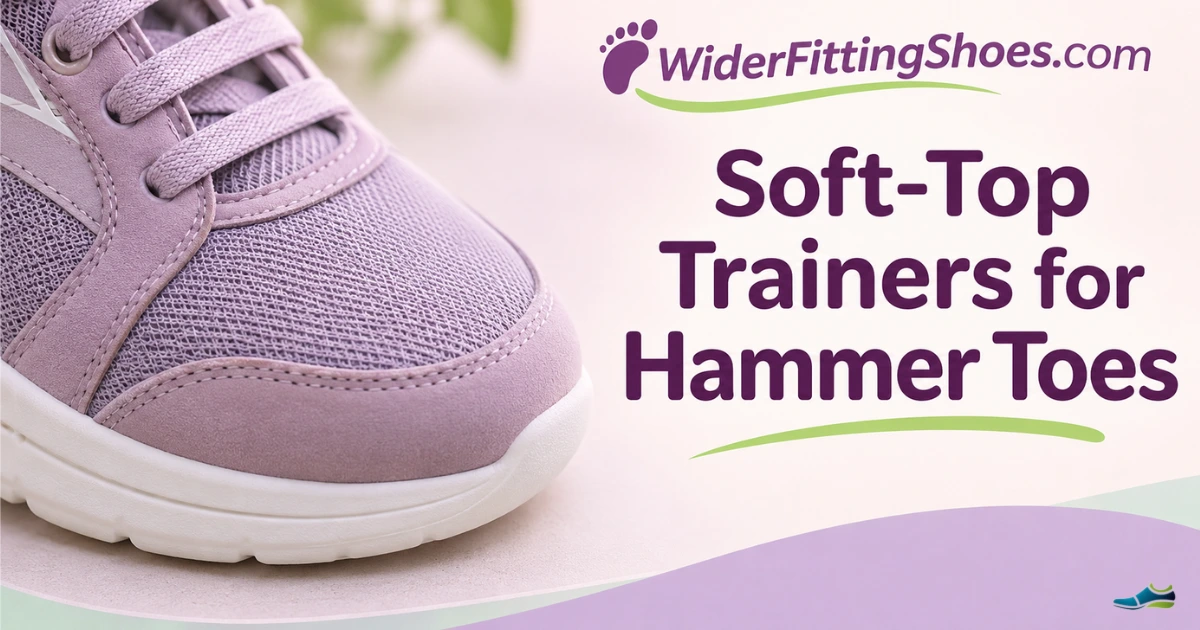
Finding comfortable trainers when you have hammer toes isn’t always straightforward. Even trainers labelled as wide fitting can press down on raised toe joints, causing rubbing and discomfort.
The trouble is, a wide toe box isn’t necessarily a deep one. Sometimes it’s the material directly above your toes that makes the difference. A soft, stretchy panel in the right place can be more forgiving than a firm leather or synthetic upper.
In this guide, I’ll look at four trainers worth considering if you have hammer toes, including a Waldläufer style I’ve worn myself. I’ll explain what makes each one different, who it might suit and what to check before buying.
Affiliate Disclosure: This article contains affiliate links. If you buy something through one of these links, I may earn a small commission at no extra cost to you.
Waldläufer Hiroko-Soft – A Stretch Panel Where Your Toes Need It
The Waldläufer Hiroko-Soft is particularly interesting because it combines a leather upper with a soft, stretchy fabric panel positioned directly above the toes. For someone with hammer toes, that’s an important detail, as raised toe joints can rub against the upper even when the shoe is wide enough.
💜 My Experience With the Hiroko
The Hiroko was actually my first pair of Waldläufer trainers. I bought a size 5½, hoping I might get away with it, but unfortunately they were too short, so I ended up giving them away.
However, they were fabulous over my chubby toes!
What impressed me was how beautifully the stretch panel blended with the surrounding leather. Unless you looked closely, you could hardly tell it was fabric. The rest of the shoe was leather, so it didn’t look like an obviously stretchy or specialist trainer.
✓ What I Like
- Soft stretch fabric directly above the toes, rather than just around the sides.
- Leather construction around the rest of the upper.
- H width fitting for feet that need additional room.
- Removable insoles for greater fitting flexibility.
Worth knowing: The stretch panel may help accommodate raised toe joints, but it doesn’t compensate for a trainer that’s too short or the wrong width. My own experience was a reminder of that — the toe area felt lovely, but I’d chosen the wrong length!
DB Shoes Lexi – Extra Room With a Seam-Free Toe Box
The DB Shoes Lexi 2V is worth considering if you have hammer toes and need more room across the forefoot as well as above your toes.
It combines leather with stretch textile sections, while the seam-free toe box helps avoid stitching rubbing against raised or sensitive toe joints.
One of its useful features is the two removable insoles. These allow you to adjust the amount of space inside the shoe, which may be particularly helpful if your feet swell or you need additional toe depth.
✓ What I Like
- Seam-free, squared toe box designed to reduce rubbing around sensitive toes.
- Leather and stretch textile construction for a more accommodating upper.
- Two removable insoles to help adjust the internal depth and volume.
- Lace-up fastening to help keep the foot secure.
Worth knowing: The Lexi offers useful adjustability, particularly with its two removable insoles. However, a seam-free toe box isn’t automatically deep enough for every hammer toe. Check that there’s adequate space above raised joints and that the stretch material is positioned where you need it.
DB Shoes Solitaire – For Feet That Need Considerably More Width
If you have hammer toes as well as particularly wide feet, finding trainers with enough room can be a challenge. The DB Shoes Solitaire is worth considering because it offers specialist wider fitting options for feet that need considerably more room.
The Solitaire combines leather with stretch textile sections, helping accommodate areas where raised or sensitive toes might otherwise rub against a firmer upper. Its roomy, squared toe shape also provides more space across the front of the shoe.
Removable insoles allow you to adjust the internal depth, which may be useful if your toes need additional height or you wear suitable orthotics.
✓ What I Like
- Opens wide for easier access, with adjustable fastening to help achieve a comfortable, secure fit.
- Squared toe shape designed to provide room around the toes.
- Leather and stretch textile construction for a more accommodating fit.
- Removable insoles that allow some adjustment to the internal space.
- Air-bubble cushioning in the sole for comfort underfoot.
Worth knowing: Solitaire is worth considering when ordinary wide-fit trainers still feel restrictive. However, choosing an unnecessarily wide fitting can leave your foot moving around inside the shoe. Check the width, depth and heel fit rather than assuming the widest option will be the most comfortable.
Orthofeet Nira – Stretchy Comfort With Hands-Free Entry
The Orthofeet Nira is an interesting option for people with hammer toes who want a trainer with a soft, forgiving upper rather than firm material pressing against sensitive toe joints.
Unlike the Hiroko, which has a targeted stretch panel above the toes, the Nira has a more extensive stretch upper designed to accommodate the shape of the foot. It also has a roomy toe box, although it’s important to check that there’s enough depth above your raised toe joints.
Another useful feature is its hands-free design. You can slip your feet into the trainers without having to bend down and pull them on, which may be particularly helpful if you have limited mobility.
✓ What I Like
- Stretchy upper designed to accommodate changes in foot shape.
- Roomy toe box with additional depth for toes needing more space.
- Hands-free entry, which may make getting the trainers on easier.
- Padded interior to help reduce pressure and friction.
- Removable insole and optional spacers for adjusting the fit.
Worth knowing: The optional spacers take up spare room inside the trainer; they don’t create additional depth. If you have raised toe joints, make sure there’s enough space above them before adjusting the fit. UK availability can also vary, so check the sizes and fitting options offered by the retailer.
What to Check Before Buying Soft-Top Trainers
A stretchy upper can make a real difference when you have hammer toes, but not all stretch-top trainers are designed in the same way.
Before choosing a pair, check these four things:
- Where is the stretch? Ideally, the soft fabric should sit directly above your raised toe joints, rather than just along the sides of the shoe.
- Is there enough depth? A stretchy upper helps accommodate your toes, but it shouldn’t be constantly stretched tight against them.
- Do you need extra width? Hammer toes don’t automatically mean wide feet. Choose a wider fitting only if your foot needs it.
- Does the rest of the trainer fit securely? Your heel and midfoot should feel comfortably supported without your foot sliding around.
And don’t forget the length! As I discovered with my Hiroko trainers, even a wonderfully comfortable toe area can’t rescue a shoe that’s too short.
A roomy toe box matters just as much as a stretchy upper, particularly if your toes need extra space above them. A shoe can be wide enough across the foot but still press down on raised toe joints.
If you’re unsure about the difference, my guide to high-volume toe box shoes explains why depth matters as well as width.
The Bottom Line
If you have hammer toes, finding comfortable trainers isn’t simply a matter of choosing a wider fitting. You need enough room above your toes, too, particularly where raised joints might rub against the upper.
That’s where soft fabric panels and stretchy materials can make a difference. The Waldläufer Hiroko-Soft, DB Shoes Lexi, DB Shoes Solitaire and Orthofeet Nira all offer features worth considering, although they accommodate different fitting needs.
My own experience with the Hiroko taught me two things: a soft stretch panel directly above the toes can feel wonderfully comfortable, but getting the correct shoe length is just as important!
If you’re looking for more general advice, have a read of my guide to what to look for when choosing shoes for hammer toes. It explains which features can make footwear more comfortable, whether you’re shopping for trainers, everyday shoes or something smarter.
About Sue Holland
Sue writes WiderFittingShoes.com from first-hand experience of finding footwear for wide and difficult-to-fit feet. After two hip replacements, two ankle replacements and years of dealing with arthritis, swelling and feet that don’t always behave the same from one day to the next, she shares the practical things she’s learned about shoe fit, width and comfort.
Medical Disclaimer
The information in this article is based on personal experience, independent research and publicly available information. It is intended for general guidance only and isn’t a substitute for professional medical advice.
Soft or stretchy footwear may help reduce pressure and rubbing, but it won’t correct hammer toes. If you have persistent pain, worsening symptoms, diabetes or circulation problems, speak to your GP or podiatrist for individual advice.