
By Sue Holland
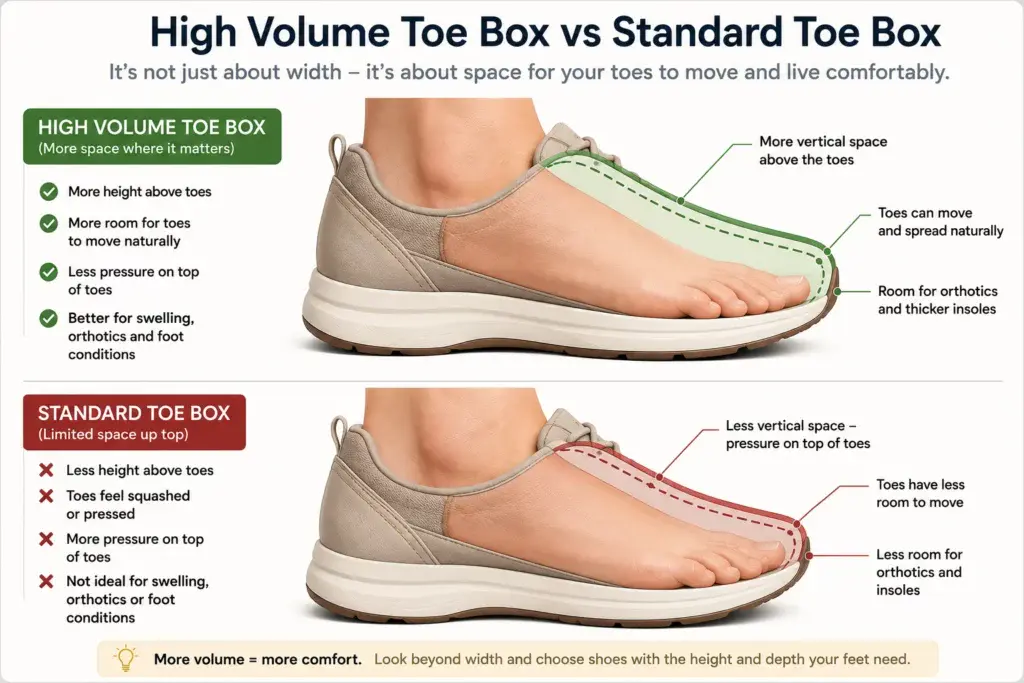
A high volume toe box is the front part of a shoe with extra height above the toes, rather than simply extra width across them. It gives your toes more vertical space and can be particularly helpful if you have swelling, hammer toes, chunky toes or orthotics that raise your foot inside the shoe.
You’ll sometimes see this called a “deep toe box” instead — different wording, same idea.
Cast your mind back to the time you thought you’d bought the perfect pair of wide fit shoes, only to discover that the tops of your toes were still rubbing.
You stand there thinking, “Hang on a minute. These are supposed to be wide.” Well, here’s the thing: width isn’t always the problem.
Sometimes it’s height, or usually a lack of it, that matters. A high volume toe box is exactly what it sounds like: a roomier toe area with more space above your toes.
Looking back, I suppose it was partly my own fault. I’d go to the shoe shop without my orthotics, which was almost a recipe for disaster. I’d happily try shoes on without giving a second thought to the corrective insoles sitting at home. In my mind, if there was enough width, everything would be fine.
Wrong.
Although the insoles supplied with new shoes are often removable, they don’t always take up as much space as orthotics do, particularly when it comes to height. Once I got home and swapped them over, I’d suddenly lost precious room inside the shoe. It wasn’t just the width that mattered anymore; it was the amount of space above my toes as well.
It turned out that the shoe wasn’t necessarily too narrow. It simply wasn’t deep enough.
So, let’s have a proper look at what a high volume toe box means, who may benefit from one and why it could completely change the way you buy shoes.
I have another article which covers the benefits of wide shoes
So, What Exactly Is a High Volume Toe Box?
The easiest way to picture it is to forget about the width of the shoe for a moment. Instead, imagine looking at your shoe from the side.
A standard shoe might have plenty of room across the foot, but the roof of the toe box sits quite low. If your toes naturally sit higher because of hammer toes, swelling or simply the shape of your feet, they’ll press against the top of the shoe.
A high volume toe box gives you extra space above your toes. Think of it as having a higher ceiling rather than wider walls. That extra height allows your toes to sit naturally instead of being constantly pushed down or rubbed.
It’s such a simple difference, yet so many people never realise it’s what they’ve been missing.
Who Usually Benefits From A High Volume Toe Box?
There isn’t one single type of foot that needs extra toe depth. In my experience, it’s often people who have lived with foot problems for years and haven’t been made aware of the issue.
A high volume toe box can be particularly helpful if you have:
- hammer toes
- claw toes
- mallet toes
- bunions
- swollen feet
- arthritis
- diabetes-related foot changes
- orthotics that raise your foot inside the shoe
- naturally high-volume feet.
Even if none of those apply, you might simply have feet that are a little deeper than average. There’s nothing unusual about that.
Feet come in all sorts of shapes, but unfortunately, most “off the shelf” shoes don’t match feet.
Why Shoes Can Feel Tight Across The Toes
One thing I’ve learnt over the years is that our brain tends to blame the width. On occasions that’s absolutely true, but not always
If the pressure is mainly on top of your toes rather than squeezing the sides of your feet, increasing the width may not solve the problem at all.
Instead, your foot simply spreads sideways into the extra width while your toes continue rubbing against the upper. That’s why some people go from one wide fitting to another without ever becoming comfortable.
They’re solving the wrong problem.
The Relief Is Almost Instant
The first thing many people notice once they try extra depth shoes isn’t that the shoes feel bigger.
They sub-consciously stop thinking about their toes, and there isn’t that constant awareness that something is pressing down. Vertical toe room makes a huge difference.
Your toes aren’t fighting for space, the rubbing eases and the pressure points reduce. Walking feels more natural because your feet aren’t trying to protect themselves with every step.
It’s amazing how much energy we waste compensating for uncomfortable footwear.
High Volume Doesn’t Mean Bulky
This is another common misconception.
Years ago, deeper shoes often looked clumsy and lacked any kind of style, but thankfully things have moved on. Many manufacturers now build extra depth into their shoes without making them look oversized and do actually follow fashion trends.
Unless people knew exactly what they were looking for, they’d be hard pushed to notice you were wearing therapeutic shoes
That’s good news because most of us want comfortable shoes without feeling we’re wearing something that belongs in a hospital catalogue.
How To Tell If You Need High Volume Footwear
Here’s a simple little test. Just take a look at the shoes you’ve been wearing recently.
Do you notice:
- marks across the tops of your toes?
- stretched material above your toes?
- wear marks inside the upper?
- rubbing despite buying wider shoes?
- relief when you loosen the laces?
If several of those sound familiar, it may not be extra width you’re looking for. It could be extra volume.
Don’t Forget About The Rest Of The Shoe
Of course, the toe box is only one piece of the puzzle. The best shoes usually combine several features that work together,depending on your feet.
You may also benefit from:
- a wider fitting
- a supportive heel counter
- removable insoles
- extra depth throughout the shoe
- soft uppers
- adjustable fastenings
- rocker soles for certain conditions.
Of course the more you understand these features, the easier shopping for footwear becomes. Instead of hoping a pair will work, you’ll pretty much know what you’re looking for before you even try them on.
The Complete guide to finding your perfect fit is a useful article to read.
The Bottom Line
If you’ve been buying wider shoes and still finding the tops of your toes feel cramped, don’t automatically assume you need an even wider fitting.
As we’ve discussed earlier, the problem is likely to be nothing to do with width at all, and could simply be that your shoes don’t have enough height inside the toe box.
A high volume toe box gives your toes the space they need without necessarily making the shoe feel huge. Once you understand the difference between width and volume, shoe choice becomes far less of a guessing game.
And speaking from experience, anything that makes buying comfortable shoes a little easier is well worth knowing.
Learn how to measure shoe width at home
FAQs
Q: What is a high volume toe box?
A high volume toe box is a toe area with extra vertical space, giving your toes more room above them rather than simply making the shoe wider.
Q: Is a high volume toe box the same as a wide toe box?
No. A wide toe box provides more room across the width of your toes, while a high volume toe box provides more room above them. Some shoes offer both features.
Q: Who needs a high volume toe box?
People with hammer toes, claw toes, bunions, swollen feet, arthritis, diabetes-related foot changes, or anyone with naturally deeper feet often benefit from the extra height.
Q: Can a high volume toe box help with hammer toes?
It can certainly improve comfort by reducing pressure on the tops of hammer toes, although it won’t correct the deformity itself.
Q: How do I know if my shoes don’t have enough volume?
If your toes rub against the top of your shoes, you notice pressure marks, or wider shoes still feel tight over the toes, you may need more volume rather than more width.
About Sue
Hi, I’m Sue Holland, and I know how frustrating it can be to find comfortable shoes when your feet don’t fit the standard mould.
I write from personal experience. I’ve had two hip replacements, two ankle replacements, live with arthritis, flat feet and chronic swelling, and I’ve spent years trying to find footwear that genuinely fits and supports my feet.
That experience inspired me to create WiderFittingShoes.com – a place where you’ll find straightforward advice, practical tips and honest guidance to help you choose shoes that are comfortable, supportive and suitable for your feet.
If I can help save you from buying one uncomfortable pair of shoes, then this website has done its job.
Medical Disclaimer
The information on WiderFittingShoes.com is based on my personal experience, independent research and publicly available information. It is intended for general information only and should not replace advice from your GP, podiatrist, physiotherapist or any other qualified healthcare professional.
Everyone’s feet are different. If you have persistent pain, diabetes, circulation problems or any other medical condition affecting your feet, always seek professional medical advice before making changes to your footwear or treatment.