
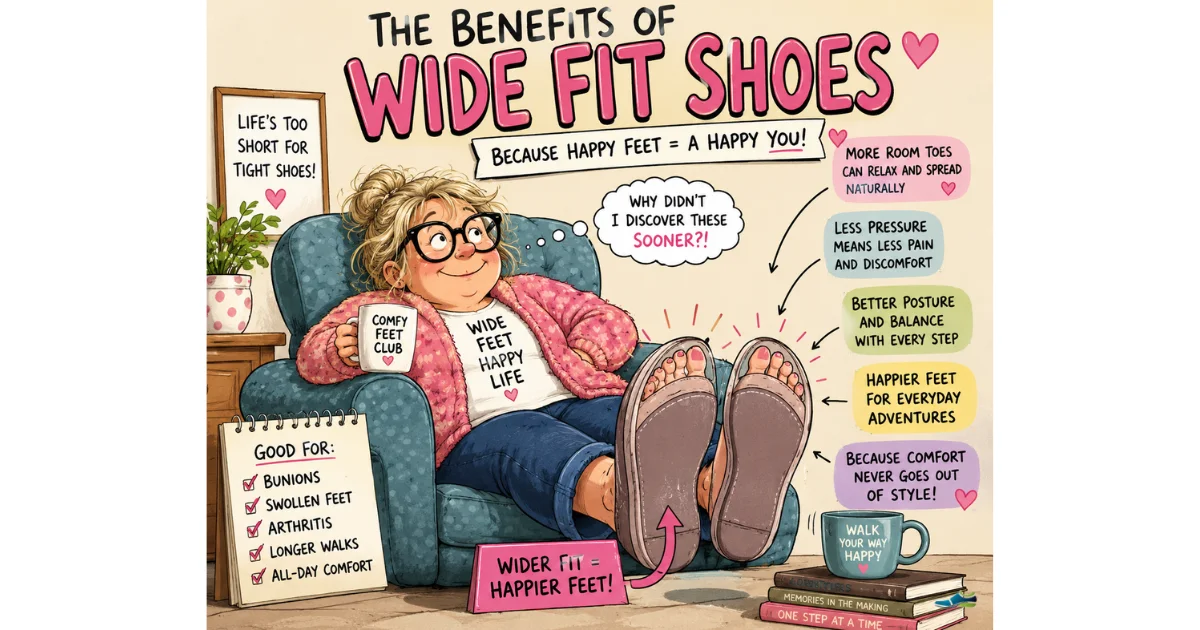
Can a wider fitting shoe really make that much difference?
In many cases, yes. Not because wide fit shoes are magical, but because they simply allow your feet to do what they were designed to do — and the benefits, once you feel them, are hard to ignore.
If your feet ache by the end of the day, your toes feel squashed, or you dread putting on certain shoes, there’s a good chance your shoes simply aren’t giving your feet the room they need.
I’ll admit to something that makes me smile now…
For years, I thought my feet were the problem. I’d blame my arthritis, I’d blame getting older and I’d even blame the shop for stocking uncomfortable shoes. What never crossed my mind was that I might simply have been buying the wrong width.
Looking back, it seems obvious. At the time, though, it wasn’t.
Your feet aren’t supposed to feel trapped. Think about the moment you get home after a long day. What’s one of the first things many of us do?
The shoes come off. Not because we’re lazy, not because of the new carpet, but because our feet have had enough for the day.
That’s become so normal that people almost expect it, and many of us simply accept sore feet as part of everyday life. I don’t. There are many advantages of wide fitting shoes.
To me, a well-fitting shoe should still feel comfortable eight hours later. If it doesn’t, something isn’t right, and it’s worth asking why your feet are desperate to escape the moment you walk through the front door.
It’s about width, not shoe size
This catches people out all the time, and I know because I did exactly the same thing — sizing up when what I actually needed was more width, not more length. It’s a mistake that just trades one problem for another. I’ve written a full breakdown of why this happens in the truth about shoe width, but the short version is this: choosing the correct width gives your feet room where they actually need it, without turning your shoes into flippers.
Your feet change… even if your shoe size doesn’t
Here’s something that really surprised me: my shoe size stayed exactly the same for years, yet my feet clearly hadn’t. Arthritis, swelling, pregnancy, weight changes, simple ageing — all of it can change your feet’s width without ever touching the length. I’ve covered the full detail of why and how in my guide to foot arthritis, but the short version is: it’s often width that shifts, not length, which explains why a shoe that once fit perfectly can start feeling tight for reasons that have nothing to do with buying the wrong size.
The Benefit: More Room, Less Pressure
This isn’t just about comfort.
When shoes squeeze your feet, pressure builds wherever there’s the least amount of space. For one person that might be the start of a bunion, while someone else is struggling with swollen feet after standing all day. It could be arthritis across the toes, or you might simply have naturally broad feet that have never been happy in standard-width shoes.
The causes may all be different, but the problem is exactly the same. There’s simply too much pressure in too little space.
The triggers may all be different, but the problem is exactly the same: there’s simply too much foot trapped in too little space!
Wide fit shoes won’t cure bunions, arthritis or swollen feet, but they can stop your footwear making those problems even worse. That’s a pretty good place to start, and for many people it’s enough to make everyday walking much more comfortable.
Shoes for wide feet are a lot more glamourous than they used to be, so don’t worry if you feel as though they’re all old fashioned, things have changed!
You start walking differently without even noticing
Pain is a funny thing.
The moment something starts hurting, your body quietly looks for ways to protect it. Before you even realise what’s happening, you’re putting a little more weight on one side, shortening your stride or avoiding pushing off properly because it feels too uncomfortable.
The trouble is, the rest of your body has to adapt as well.
After a while your knees, hips or back can start joining in with the complaints, even though the problem may have started with your feet. It’s a bit like a row of dominoes. Once the first one topples, the others often follow.
That’s why I think it’s worth paying attention to sore feet rather than simply putting up with them. Sometimes improving the fit of your shoes is enough to stop that first domino from falling in the first place.
You’ll probably waste less money
Can we have an honest moment?
I think we’ve all bought shoes because they looked trendy and fashionable. Then they’ve sat in the wardrobe gathering dust because every time we put them on, we remembered exactly why we’d stopped wearing them in the first place.
That’s money we’ll never see again.
These days, I’d much rather own five pairs of shoes that I genuinely enjoy wearing than fifteen pairs that only come out when I’m feeling optimistic. Comfortable shoes don’t just earn their place in the wardrobe, they earn it every time you reach for them without a second thought.
Comfort gives you confidence
This is one of the benefits people rarely talk about, yet I think it’s one of the biggest.
When your feet don’t hurt, you stop thinking about them. You enjoy the walk, stay out a little longer and say yes to meeting friends without immediately wondering how far you’ll have to stagger from the car park.
It’s amazing how much confidence comfortable feet can give you. When you’re no longer worrying about every step, you stop planning your day around your feet and simply get on with enjoying yourself.
So, are wide fit shoes worth it?
If your shoes already fit perfectly, probably not.
But if you’ve been squeezing your feet into footwear that’s simply too narrow, changing to the correct width can be one of the easiest improvements you’ll ever make.
I wish someone had explained that to me years ago. It would have saved me a lot of aching feet…..and quite a few expensive mistakes.
If you’re ready to actually shop with this in mind, my Best Wide Fit Shoes for Comfort guide has genuine brand recommendations to start with.
The Bottom Line
The wrong shoe shouldn’t be something you have to “put up with.”
If your feet ache, your toes feel cramped, or you find yourself kicking your shoes off the moment you get home, it may not be your feet that are the problem. It could simply be that your shoes are too narrow.
Choosing a wide fit shoe isn’t about admitting defeat or accepting that you’re getting older. It’s about giving your feet the room they need to work naturally.
Whether your feet are naturally broad, have changed over time, or are affected by conditions such as arthritis, bunions or swelling, the right width can make a remarkable difference to your comfort.
Sometimes, the smallest change really does have the biggest impact.
Read my complete guide to wide fit shoes
Frequently Asked Questions
Q: How do I know if I need wide fit shoes?
A: If your shoes regularly feel tight across the toes or the widest part of your foot, leave red marks on your skin, or become uncomfortable as the day goes on, you may benefit from a wider fitting. It’s also worth considering if you often size up just to gain extra room.
Q: Are wide fit shoes only for people with foot problems?
A: No. Some people naturally have wider feet, while others find their feet become broader with age, pregnancy, weight changes or long periods of standing. Wide fit shoes are designed for anyone who needs extra room, not just those with diagnosed foot conditions.
Q: Should I buy a bigger shoe size instead of a wider fit?
A: Usually not. Going up a shoe size makes the shoe longer as well as wider, which can cause your heel to slip while still not giving your forefoot enough room. Choosing the correct width is often a better solution.
Q: Can wide fit shoes help with bunions or arthritis?
A: Wide fit shoes won’t cure bunions, arthritis or other foot conditions, but they can reduce the pressure that often makes these conditions more uncomfortable. Giving your feet more space may help improve day-to-day comfort.
Q: Will wearing wide fit shoes stop my feet from hurting?
A: It depends on the cause of the pain. If your discomfort is mainly due to shoes that are too narrow, switching to the correct width can make a significant difference. However, persistent or severe foot pain should always be assessed by a healthcare professional.
About Sue Holland
Sue Holland writes from personal experience after years of living with arthritis, flat feet, chronic swelling and the challenges of finding shoes that genuinely fit. Having undergone two hip replacements and two ankle replacements, she understands just how much the right footwear can affect comfort, mobility and everyday life.
Through WiderFittingShoes.com, Sue shares practical advice, honest product recommendations and well-researched information to help others find comfortable shoes that support healthy, happy feet.
Disclaimer: The information on WiderFittingShoes.com is based on Sue’s personal experience and independent research. It is intended for general information only and should not be considered medical advice. If you have persistent foot pain, worsening symptoms or concerns about your health, please seek advice from your GP, podiatrist or another qualified healthcare professional. Always follow the advice of your own healthcare team regarding diagnosis and treatment.