
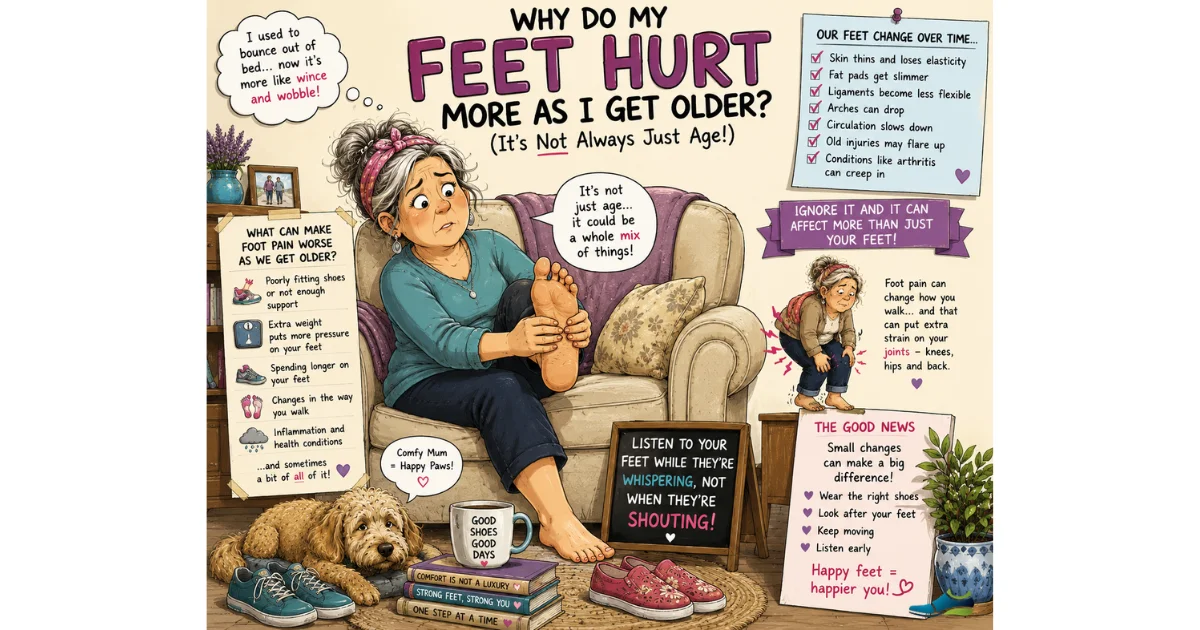
Getting older does affect our feet, but age isn’t always the reason they’re hurting. Changes in foot shape, loss of natural cushioning, arthritis, footwear that no longer fits properly and years of everyday wear can all play a part. The good news is that many of those things can be improved.
Right, can I ask you something?
When did you last get home, kick your shoes off and breathe a sigh of relief because your feet had finally escaped?
If you’re nodding, you’re certainly not on your own, but is the foot pain with age?
For years, I honestly thought it was just part of getting older. I’d say to myself, “Well, what do you expect?” and carry on regardless, convinced that aching feet were simply another unwelcome part of life that nobody could do much about.
Looking back, I wish I’d questioned that a lot sooner.
The truth is, getting older does affect our feet, but age isn’t always the villain we make it out to be. Quite often, it’s a combination of little changes that creep up on us so gradually we hardly notice them until one day we realise, “hang on,” we’re avoiding long walks, standing for too long or even wearing shoes we used to love.
That certainly happened to me.
Your feet have been working hard for years
When you think about it, our feet do a pretty impressive job.
They’ve carried us through work, family life, holidays, shopping trips, gardening, days out and all the thousands of ordinary moments that make up a lifetime. We rarely stop to thank them because, for most of our lives, they simply get on with it.
Then, almost without warning, they start grumbling.
Perhaps your heels ache when you first get out of bed. Maybe the balls of your feet burn after a trip to the supermarket, or your toes feel cramped by lunchtime. Whatever the problem, it’s easy to shrug your shoulders and blame your age.
Sometimes that’s only part of the story.
Your feet don’t stay exactly the same forever
One thing that surprised me was discovering that my shoe size hadn’t really changed, but my feet had.
Looking back, it had probably been changing for years, but because it happened so gradually I never noticed. All I knew was that shoes I’d happily worn for ages were becoming less comfortable, and I couldn’t understand why.
It was only later that I realised my feet had changed more than I’d given them credit for. Once that penny dropped, everything started making a lot more sense.
The shoes haven’t changed. Your feet have. Once I understood that, I stopped asking myself,
“Why have my favourite shoes suddenly become so uncomfortable?”
and started asking a much better question:
“Do these shoes still fit the feet I have today?”
It might sound like a small difference, but those two questions lead you in completely different directions. One assumes the shoes are the problem, while the other asks whether your feet have changed over the years.
Sometimes we make life harder without realising it
I know, I did.
If a pair of shoes felt tight, I’d often assume I needed to put up with them because they were my usual size. It never occurred to me that the width might now be the problem rather than the length.
The funny thing is, we spend years learning our shoe size and then treat it as though it’s fixed for life. In reality, our feet don’t read the labels inside our shoes. They simply respond to how much room they’ve got, how well they’re supported and whether they’re being squeezed into a shape they were never meant to fit.
That’s why I think it’s worth keeping an open mind. Buying a bigger shoe isn’t always the answer because all that really does is make the shoe longer as well as wider. Quite often, what your feet are really asking for is a shoe that’s shaped better for the feet you have today rather than the feet you had twenty years ago.
Read more about the benefits of wide fit shoes and the truth about shoe width
Small changes can affect the whole way you walk
Our bodies are remarkably good at adapting.
If one part of your foot starts hurting, you’ll probably change the way you walk without even noticing. You might put a little more weight on your other foot, shorten your stride or stand differently while you’re waiting in a queue. None of it feels deliberate, but over time those tiny adjustments can leave your knees, hips or back wondering what’s going on.
That’s one reason I don’t like ignoring foot pain.
It’s often your body’s quiet way of saying that something needs a little attention before it turns into something much bigger.
There’s no prize for putting up with sore feet
For a long time, I convinced myself there wasn’t much I could do.
If my feet hurt after a day out, I’d put it down to age. If they ached after standing in the kitchen for an hour, I’d tell myself that everyone my age probably felt the same. Looking back, I think I was trying to normalise something that didn’t actually need accepting.
The more I’ve learned, the more I’ve realised that while we can’t stop the ageing process, we can make life much kinder for our feet. Sometimes that’s as simple as choosing shoes with a little more room, adding a supportive insole or finally replacing a pair of shoes that gave up supporting us years ago, even though we stubbornly kept wearing them because they were our favourites.
None of those things sound particularly exciting, but that’s often the way with feet. It’s usually the small changes that make the biggest difference, and when your feet are happier, you suddenly realise how much they’d been affecting the rest of your day without you even noticing.
Read my complete guide to wide fit shoes
Your favourite shoes might not be your best shoes anymore
Now there’s a thought none of us likes.
I can still remember shoes that I absolutely loved. They looked good, they went with everything and I’d worn them for years without giving them a second thought. Then, somehow, they stopped being comfortable. At first I blamed the shoes, then I blamed my feet, but the truth was probably somewhere in the middle.
My feet had gradually changed, yet I’d expected my old shoes to carry on fitting exactly as they always had. That’s a bit like expecting your favourite pair of jeans from twenty years ago to fit exactly the same today. Sometimes we’re the ones who change so gradually that we hardly notice it’s happening, and there’s nothing wrong with admitting that. In fact, recognising it is often the first step towards feeling more comfortable again.
Listen to what your feet are trying to tell you
One thing I’ve learned over the years is that our bodies are actually quite good at giving us little warnings. It might be a sore heel when you first get out of bed, toes that begin feeling cramped halfway through the afternoon, or an aching forefoot after a shopping trip. On their own they don’t always seem like a big deal, which is probably why so many of us ignore them.
The thing with those little niggles is that they rarely stay in one place. We start making tiny adjustments without even noticing, perhaps walking a little differently or favouring one foot, and before long other joints begin to complain as well. It’s amazing how often a problem that starts in your feet quietly spreads to the rest of your body.
I’ve found it’s far better to listen while your feet are whispering than wait until they start shouting. The sooner you understand what’s causing the problem, the sooner you can start doing something about it.
So, what’s the answer?
The honest answer is that there isn’t just one.
We’re all different, and so are our feet. For one person, losing a little weight may be enough to take the pressure off aching joints. Someone else might discover that better-fitting shoes make all the difference, while another person needs treatment for arthritis or another foot condition before they notice any real improvement.
Further reading about arthritis in the feet
What I don’t think any of us should do is assume that pain is simply the price we pay for getting older.
Our feet have worked hard for us over the years so the least we can do is return the favour.
The Bottom Line
It’s true that our feet change as we get older, but growing older doesn’t automatically mean you have to accept sore feet as part of everyday life. There are loads of comfortable shoes for older feet and they aren’t anything like as dowdy as they used to be.
The more I learned, the more I realised that many of the aches I’d blamed on age were actually being made worse by things I could change. Better fitting shoes, a little more support and paying attention to what my feet were trying to tell me all made a difference.
If your feet have been complaining lately, don’t just shrug your shoulders and assume it’s “one of those things.”
Take a closer look.
Your feet have carried you through a lifetime already. Looking after them now is one of the best investments you can make in your future comfort.
Frequently Asked Questions
Q: Is it normal for your feet to hurt more as you get older?
A: Some changes are a natural part of ageing, but ongoing foot pain shouldn’t simply be dismissed. Changes in foot shape, reduced cushioning, arthritis and poorly fitting footwear can all contribute to discomfort.
Q: Can your feet change shape as you get older?
A: Yes. Feet often become a little broader over time as ligaments relax, arches lower and conditions such as arthritis or swelling develop. That’s one reason shoes that once fitted perfectly may start feeling uncomfortable.
Q: Why do shoes that used to fit now hurt my feet?
A: In many cases, it’s your feet that have changed rather than the shoes. Even if your shoe size stays the same, changes in width, foot shape or support needs can make older footwear feel much less comfortable.
Q: Will buying wider fitting shoes help?
A: If your feet feel squeezed across the toes or forefoot, a wider fitting shoe may improve comfort by reducing pressure. The key is choosing footwear that matches both the length and width of your feet.
Q: When should I seek medical advice about foot pain?
A: If your foot pain is severe, persistent, getting worse or affecting the way you walk, it’s sensible to speak to a healthcare professional or podiatrist. They can help identify the underlying cause and recommend appropriate treatment.
About Sue Holland
Sue Holland writes from personal experience after years of living with arthritis, flat feet, chronic swelling and the challenges of finding shoes that genuinely fit. Having undergone two hip replacements and two ankle replacements, she understands just how much the right footwear can affect comfort, mobility and everyday life.
Through WiderFittingShoes.com, Sue shares practical advice, honest product recommendations and well-researched information to help others find comfortable shoes that support healthy, happy feet.
Disclaimer: The information on WiderFittingShoes.com is based on Sue’s personal experience and independent research. It is intended for general information only and should not be considered medical advice. If you have persistent foot pain, worsening symptoms or concerns about your health, please seek advice from your GP, podiatrist or another qualified healthcare professional. Always follow the advice of your own healthcare team regarding diagnosis and treatment.