
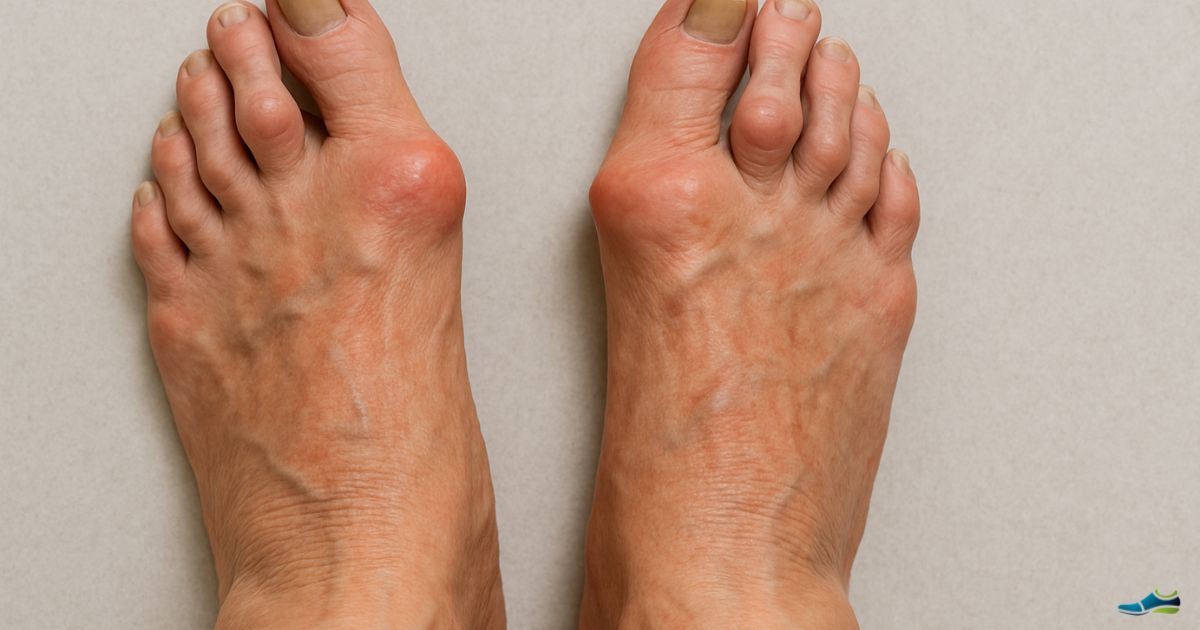
Foot arthritis symptoms commonly include pain, swelling, stiffness and reduced movement in the foot or ankle. Pain may worsen with walking or standing, while stiffness can be particularly noticeable after resting or first thing in the morning. Some people also develop tenderness, changes in joint shape or difficulty walking comfortably.
Arthritis can affect several joints in the foot, including the big toe, midfoot and ankle. The symptoms and treatment can vary depending on the type of arthritis and which joints are affected, but footwear that reduces pressure and supports the foot can often make day-to-day walking more comfortable.
📌 At a Glance
I know this one from the inside, not just the research — here’s everything about foot arthritis, including what it’s actually been like for me.
If you’d rather skip straight to specific questions, jump to the FAQs below.
What Is Foot Arthritis?
Arthritis is a broad term for conditions that affect the joints and can cause pain, stiffness, swelling and reduced movement. In the feet, it can affect different joints, and the symptoms can vary depending on both the type of arthritis and where it is.
Osteoarthritis is one of the forms that can affect the feet. It involves changes within a joint over time, including damage to the cartilage that helps the joint move smoothly. Other forms, including rheumatoid arthritis and gout, have different causes.
Because several other foot problems can cause pain, swelling or stiffness, symptoms alone aren’t enough to tell you which type of arthritis you have — or even whether arthritis is the cause. Arthritis can affect many of the joints in your feet and ankles. Some of the areas commonly affected include:
The ankle: Arthritis can cause pain, stiffness and reduced movement in the ankle, which may make walking more difficult.
The big toe joint: Arthritis here can cause pain and stiffness, particularly when the toe bends as you walk. Severe stiffness of the big toe joint is known as hallux rigidus.
The midfoot: Arthritis in the joints through the middle of the foot can cause pain, stiffness and sometimes swelling, particularly when walking or standing.
If you’re looking for a bigger picture view of foot pain, you might also find our Complete Guide to Foot Pain Relief helpful — it looks at some of the common causes of foot pain and the practical things that may help.
Common Symptoms of Foot Arthritis
Not everyone experiences foot arthritis in the same way, and symptoms can depend on which joints are affected. Common symptoms can include:
- Pain in the foot or ankle, which may worsen with activity
- Swelling or tenderness around an affected joint
- Stiffness, particularly after rest or first thing in the morning
- Reduced movement in the affected joint
- Difficulty walking comfortably
- Changes in the shape or appearance of a joint
These symptoms can also occur with other foot problems, so they don’t necessarily mean you have arthritis. If pain, swelling or stiffness persists or is getting worse, it’s worth having it properly assessed.
Causes of Arthritis in the Feet
There are different types of arthritis, and they don’t all develop for the same reason. Some of the types that can affect the feet and ankles include:
- Osteoarthritis: Develops when joints change and become damaged over time. Previous joint injuries can sometimes increase the risk.
- Rheumatoid arthritis: An autoimmune condition in which the immune system mistakenly attacks the lining of the joints.
- Post-traumatic arthritis: Arthritis that develops following an injury to a joint, sometimes years after the original injury.
- Gout: Caused by urate crystals forming in and around a joint, often causing sudden episodes of severe pain and swelling.
Age, genetics, previous injuries and other factors can all influence the likelihood of developing certain types of arthritis.
What This Actually Feels Like — My Own Experience
I don’t write this page from research alone. My arthritis is mainly in my ankles, with some involvement in the forefoot too, and by the time I had my ankle replacements, it was end-stage — genuinely bad enough that it had stopped me walking altogether.
The pain started deep inside the ankle joint itself, and over time it began radiating upward into my shins and down through the forefoot too. There were moments it felt as though the bones were actually catching on each other with every step — not a sensation I can easily forget. Swelling had already started before surgery, but if I’m honest, it got worse afterwards, at least for a while.
My joint replacements have been genuinely marvellous so far, and they’ve given me back a mobility I’d started to lose entirely. But I think it’s important to be honest here too: having an ankle replacement is major surgery, and my own recovery wasn’t simply a case of having the operation and everything immediately returning to normal.
I don’t say that to alarm anyone. I’d just rather describe what it was actually like for me than make the whole experience sound easier than it was.
If joint replacement is part of your own story too, I’ve written more specifically about the tricky transition after ankle surgery — including what to wear once you’re out of the medical boot, and the mistake I made the first time round.
If the physical side of getting shoes on and off is proving difficult too, I’ve written a separate, practical guide on exactly how I manage that safely, given my own combination of ankle and hip replacements.
And if you’ve ever wondered why “just give it time to break in” never seems to work for you, I’ve written honestly about that too, in why breaking in new shoes isn’t an option when you have foot arthritis.
Arthritis is only part of the picture when it comes to ageing feet — I’ve written more broadly about why feet change with age in Why Do My Feet Hurt More As I Get Older?
Why the Right Shoes Matter
Shoes that are too narrow or poorly suited to the shape of your feet can add pressure to painful joints and make symptoms more uncomfortable.
There’s no single type of shoe that’s right for everyone with foot arthritis, but some features are worth looking for:
- Enough width and depth so painful or swollen areas aren’t being squeezed
- Cushioning that feels comfortable underfoot
- Support that suits your feet without creating extra pressure
- A secure fit so your foot isn’t sliding around inside the shoe
- Removable insoles if you use your own insoles or orthotics
For me, the important distinction has always been between a shoe feeling soft and a shoe actually feeling supportive. They’re not necessarily the same thing.
If pressure around painful joints is making ordinary shoes uncomfortable, you might also find my guide to wide fit shoes useful.
Everyday Ways to Make Arthritic Feet More Comfortable
What helps will depend on the type of arthritis you have and which joints are affected, but some everyday measures may make your feet more comfortable:
- Give painful joints a break from activities that aggravate them
- Wear comfortable footwear that doesn’t squeeze painful or swollen areas
- Keep gently active if you’re able to, rather than pushing through significant pain
- Consider insoles or orthotics if they make walking more comfortable
- Ask a GP, physiotherapist or podiatrist about suitable exercises if stiffness or reduced movement is becoming a problem
If you have a diagnosed form of arthritis, any treatment or exercise advice you’ve been given for that condition should take priority over general suggestions like these.
When to Seek Professional Help
It’s worth seeking medical advice if:
- Foot or ankle pain is persistent, severe or getting worse
- Swelling around a joint doesn’t settle or keeps returning
- Stiffness or pain is affecting your normal walking or everyday activities
- You notice a significant change in the shape of a joint
- You’re not sure what’s causing the pain
If you already have a condition such as rheumatoid arthritis, gout or diabetes and develop new or worsening foot symptoms, speak to the healthcare professional looking after you.
Treatment depends on the type of arthritis, the joint affected and the severity of your symptoms. A GP or specialist can assess the cause and discuss the options that are appropriate for you.
If you have diabetes, looking after your feet is particularly important. I’ve covered this separately in my guide to diabetic neuropathy and footwear, including what to look for when choosing shoes.
Living With Foot Arthritis
Living with foot or ankle arthritis can mean adapting things you once did without thinking about them — and footwear has certainly been one of the biggest changes for me.
I’ve had to become much more particular about what I put on my feet. If a shoe presses against a painful area or doesn’t give me the support I need, I know about it very quickly. I’ve also learned that there’s little point persevering with a shoe in the hope that my feet will eventually get used to it.
What helps one person won’t necessarily help another, particularly because arthritis can affect different joints in very different ways. For me, finding footwear that works with my feet rather than fighting against them has made everyday life considerably easier.
Pain around the foot or ankle isn’t always caused by arthritis. Other problems, including foot bursitis and heel spurs, can also cause pain in particular areas of the foot, and I’ve covered both separately.
Frequently Asked Questions About Foot Arthritis
What are the earliest signs of foot arthritis?
Pain, stiffness, swelling or tenderness around a joint can be early signs. Stiffness may be particularly noticeable after resting or first thing in the morning. These symptoms can have other causes too, so persistent or worsening symptoms are worth getting checked.
Which joints in the foot are most affected?
Arthritis can affect many joints in the foot and ankle. Commonly affected areas include the big toe joint, the joints through the midfoot and the ankle.
Can foot arthritis be mistaken for plantar fasciitis?
Both can cause foot pain, but they affect different structures. Arthritis affects joints, while plantar fasciitis involves the plantar fascia underneath the foot. If you’re unsure what’s causing persistent pain, it’s worth having it properly assessed.
Can exercise help foot arthritis?
Gentle activity can help maintain movement and strength, but what’s appropriate depends on the type of arthritis, the joints affected and your symptoms. If exercise causes significant or persistent pain, a physiotherapist or other healthcare professional can advise you on suitable activities.
What role do orthotics play in foot arthritis?
Insoles or orthotics may help some people by changing how pressure is distributed across the foot or making footwear more comfortable. The most suitable type depends on which joints are affected and your individual feet.
What’s the difference between osteoarthritis and rheumatoid arthritis in the feet?
Osteoarthritis involves changes and damage within joints over time. Rheumatoid arthritis is an autoimmune condition in which the immune system mistakenly attacks the lining of the joints. Both can affect the feet, but they have different causes and may require different treatment.
How does arthritis affect the big toe joint?
Osteoarthritis in the big toe joint can cause pain and stiffness and make it harder for the toe to bend as you walk. Severe stiffness of the big toe joint is known as hallux rigidus.
Will arthritis in the foot get progressively worse?
It depends on the type of arthritis and the individual. Some forms can worsen over time, but the course varies considerably. Treatment and practical measures can help manage symptoms and maintain mobility.
Can surgery be used for foot arthritis?
Surgery may sometimes be considered for severe arthritis when other treatments haven’t provided enough relief. The type of procedure depends on the joint affected and the individual circumstances, and would be discussed with an orthopaedic specialist.
When should I seek medical advice?
Seek medical advice if foot or ankle pain or stiffness is persistent, severe or getting worse, if it’s affecting your normal activities, or if you develop significant swelling or changes in the shape of a joint.
The Bottom Line
Foot arthritis can affect people very differently depending on the type of arthritis and which joints are involved. Pain, stiffness and swelling are common symptoms, but foot pain shouldn’t automatically be put down to arthritis.
From my own experience, footwear really can matter when you’re dealing with painful joints. I’ve learned to look for shoes that give my feet enough room, feel supportive and don’t put pressure on the areas that already hurt.
My own ankle arthritis eventually became severe enough for joint replacement, but that’s my story, not everyone’s. If your foot or ankle pain is persistent, getting worse or affecting your everyday life, it’s worth finding out what’s actually causing it rather than simply trying to accommodate it with different shoes.
Medical Disclaimer: This article is for general information only and isn’t a substitute for medical advice, diagnosis or treatment. If you have persistent, severe or worsening foot or ankle pain, or you’re unsure what’s causing it, speak to your GP, podiatrist or another appropriate healthcare professional.
Sources and Further Reading
About Sue Holland
Sue writes WiderFittingShoes.com from first-hand experience of finding footwear for wide and difficult-to-fit feet. After two hip replacements, two ankle replacements and years of dealing with arthritis, swelling and feet that don’t always behave the same from one day to the next, she shares the practical things she’s learned about shoe fit, width and comfort.