Finding a pair of compression socks that actually keep your legs feeling light and energized can feel like a massive victory. But if you’ve ever spent your day constantly yanking at your hosiery because the fabric is gathering into a tight, pinching band at the back of your leg, you know exactly how frustrating it can be.
I have to admit, I’ve been quite lucky on this front. Because I’m fairly tall, my compression socks naturally tend to sit smoothly just under my knees without shifting or gathering.
But I know from years of researching footwear and chatting with fellow patients that if you have a shorter leg length, or if your joints are managing dynamic shifts, that extra fabric has to go somewhere—and it always chooses the worst possible spot.
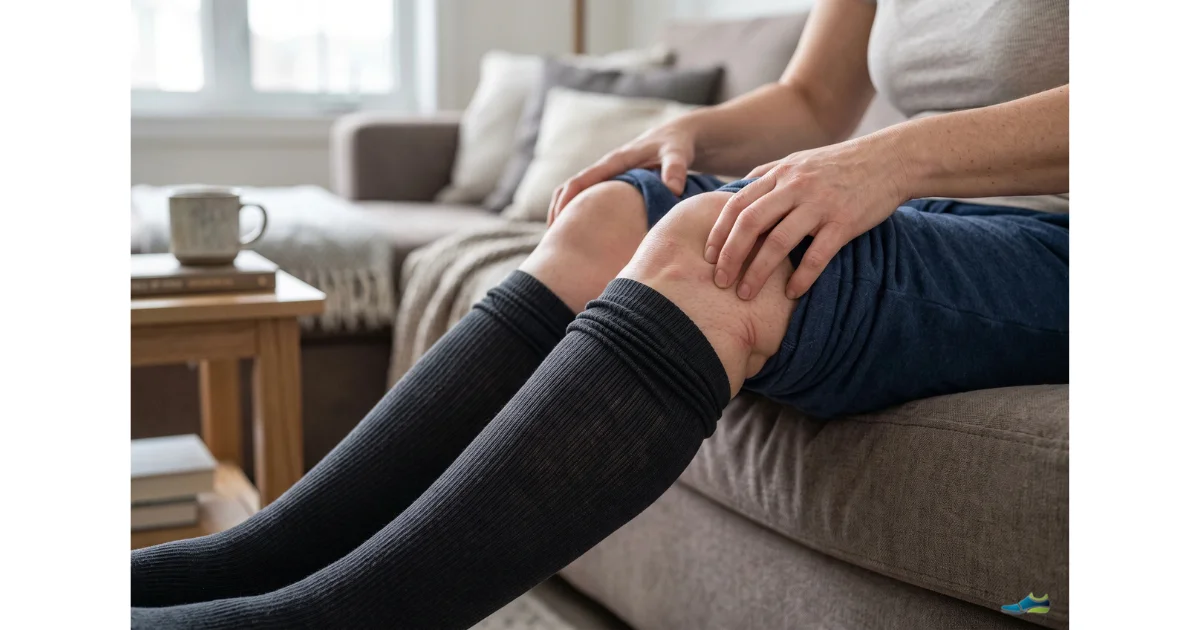
If you peel back your hosiery and notice deep red indentation tracks, raw skin chafing, or localized puffiness sitting right in the fold behind your joint, these painful fit variations shares the exact same characteristics as an incorrect hosiery length profile, a fabric folding bottleneck, or severe lower limb swelling (oedema).
Gathering a changing limb into a sock that is simply too long forces the delicate surface tissue to endure intense mechanical pressure, which completely defeats the purpose of wearing compression in the first place! In my experience recovering from major lower limb operations and managing long-term fluid retention, a tight fabric ridge behind the knee acts like a physical tourniquet that slows your blood flow down completely.
Managing those daily comfort updates safely around the house requires a bit of an extra care routine, starting with knowing exactly what features to look for before you buy. Turning to shorter-length fits or measuring your calf height can do a wonderful job of ensuring the fabric sits completely flush against your skin.
However, choosing compression hosiery engineered from the ground up with a relaxed, non-binding top cuff and a multi-directional flat-knit weave remains the ultimate secret to keeping your local circulation flowing beautifully, keeping your legs energized, and safeguarding your fragile skin folds from painful chafing and deep surface grooves.
Why Standard Compression Socks Fail Our Joints
Most standard high-street compression socks are manufactured to a generic, one-size-fits-all length template. They assume everyone has the exact same distance between their ankle and the bend of their knee.
When you are living with arthritis, recovering from major joint surgeries, or managing daily fluid shifts, your legs require a soft, accommodating envelope. If a sock is too long for your shin, sliding it up your leg means the top band will either roll down or bunch up into a thick, tight tourniquet right in the crease of your knee joint. That constant friction doesn’t just ruin your day; it actively constricts your local circulation and pinches sensitive surface nerves.
What to Actually Look For (Your Comfort Checklist)
To stop the fabric from gathering into an angry band, you need to look for a few specific design elements that support your shape:
- Dedicated Short-Length Sizes: Many premium comfort brands now offer “Short” or “Petite” length versions of their standard compression socks. These are specifically engineered with a shorter vertical rise to sit perfectly below the knee crease.
- Ultra-Wide Top Bands: Look for socks featuring a broad, cross-woven top cuff. A wider band distributes pressure evenly over a larger surface area, allowing it to anchor securely against your calf without rolling or digging in.
- Breathable Bamboo or Merino Blends: Synthetic, low-cost nylon options are incredibly prone to slipping and wrinkling. A high-quality bamboo or fine merino wool blend provides natural, high-friction grip against the skin while allowing moisture to escape.
Sue’s Top Recommended “No-Bunch” Picks
If you are ready to upgrade your hosiery drawer to options that actually stay put, these genuinely well-reviewed styles are a brilliant place to start:
- Relaxan Short-Length Compression Socks: These are a fantastic easy-win if standard socks always feel too long for your shins. They are purpose-built for shorter leg lengths and feature a wonderfully soft, non-binding top band that stays perfectly flat.
- Physix Gear Sport Compression Socks (L/XL Selection): Known for their excellent multi-directional weave, these offer a brilliant balance of firm ankle support and a highly elastic upper cuff that resists sliding down into a bunch.
- Sockwell Moderate Graduated Compression: Crafted from a beautiful merino wool and bamboo blend, these feel incredibly luxurious against fragile skin boundaries and stay beautifully smooth all day long.
Pick 1: Relaxan Short-Length Compression Socks
If you are under 5ft 4in or find that standard medical hosiery always rolls down into a tight band behind your knee, these shorter-length sleeves are the perfect solution to keep your legs comfortable all day long.
Pick 2: Physix Gear Sport Compression
A brilliant, hard-wearing option designed with a wider upper calf circumference to prevent the top band from digging into your skin or gathering behind the joint bend.
Pick 3: Sockwell Moderate Graduated Compression
Perfect if you want a softer, more luxurious fabric feel. The natural bamboo and wool fibers grip the skin gently, meaning they don’t slide or wrinkle during long walks.
Sizing Guidance: Because different hosiery manufacturing houses implement individual grading increments and tension scales, always measure the distance from the floor to the bend of your knee before ordering. Verify your measurements against the brand’s physical sizing tables to ensure the fabric safely accommodates your dynamic volume changes without pinching.
A Simple Practical Trick to Stop the Slide
If you have a pair of socks at home that still want to wrinkle slightly, try this quick routine next time you put them on:
Instead of grabbing the top cuff and yanking the sock up your leg like a standard pair of tights, bunch the sock up completely and slide it over your toes first. Secure the heel pocket exactly where it belongs, and then use the open palms of your hands to gently smooth the fabric upward, inch by inch, toward your calf. This ensures the tension is distributed evenly across your lower extremity, stopping any excess material from gathering at the top.
If your swelling tends to fluctuate wildly throughout the day, my deep-dive guide covering the common causes of foot oedema explains exactly how to manage these frustrating volume shifts comfortably.
Frequently Asked Questions About Compression Socks
Q: Why do my compression socks slide down and bunch at the ankle?
A: If your hosiery is wrinkling down around your ankles, it usually means the upper calf fabric has lost its elasticity, or the sock is too wide for your current leg measurements. In my experience, natural body creams can also make the material slide, which is why checking your size scales regularly against a fresh tape measure is so important for keeping the fabric smooth.
Q: Is it dangerous if compression socks bunch up behind the knee?
A: Visually, when gathered fabric forms a tight, visible tourniquet line across the back of your leg, this localized restriction is highly consistent with disrupted surface blood circulation or nerve pressure. While light wear updates are standard, you should never allow bunched hosiery to constrict your joints; slide the fabric down or smooth it out immediately with flat palms to protect your skin boundaries from painful indentation tracks.
Q: Can I fold the top of my compression socks down if they are too long?
A: No, you should never roll or fold the top band down to shorten them! Folding the cuff doubles the compression tension across that single boundary, creating a tight ring that actively traps fluids in your lower leg and increases swelling (oedema). If your socks sit too high, it is a clear sign you need to switch to a dedicated short-length or petite fitting instead.
Medical Disclaimer: The hosiery material specifications, technical footwear fitting parameters, compression metrics, and conservative volume management habits compiled across this guide are provided strictly for general informational and educational purposes. They do not substitute for personalized professional medical advice, clinical diagnosis, or distinct vascular treatment protocols. Non-healing skin breaks, severe pins and needles, sudden coldness in the toes, or severe asymmetric lower limb swelling require immediate direct professional evaluation and assessment by your qualified GP, a registered podiatrist, or a circulation specialist.