
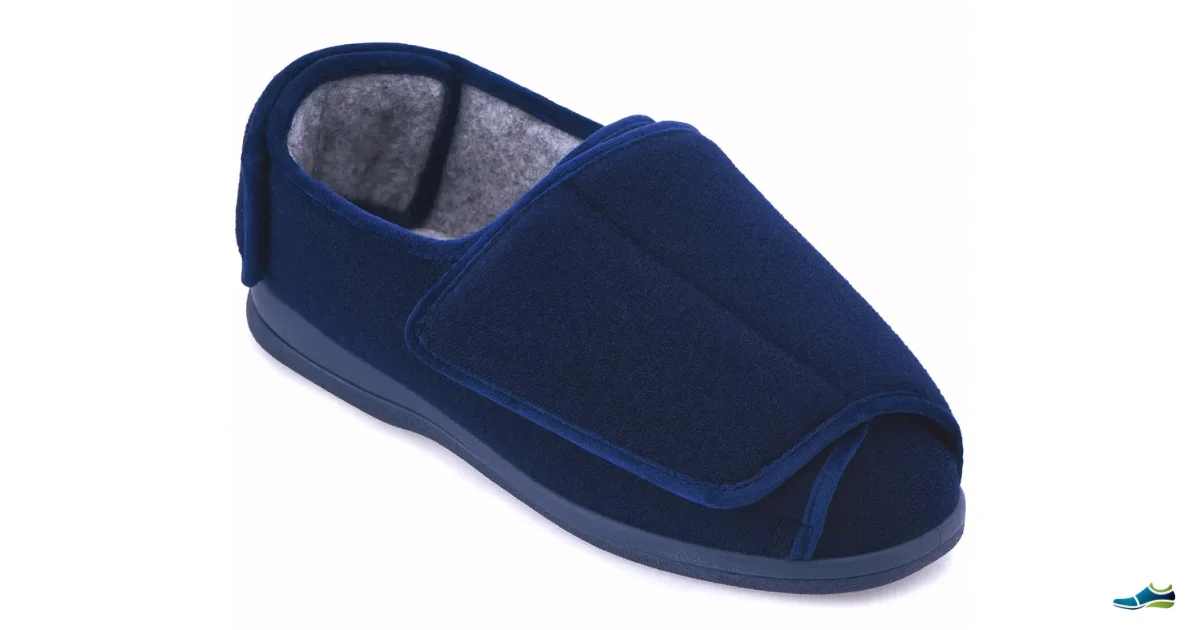
Finding house shoes that accommodate your feet comfortably when you are living with severe foot swelling, thick medical bandages, or post-operative tissue changes can feel like an impossible task. Standard retail models are built on narrow manufacturing molds, meaning they simply squash your joints, restrict blood flow, and cause intense pressure marks by afternoon.
If you examine your lower extremities at the end of a long day and notice a heavy expansion in circumference, a shiny skin tightness across your instep, or a deep pooling of fluid around the ankles, these physical changes shares the exact same characteristics as severe lower limb oedema, localized fluid retention, or changing post-surgical foot shapes. Trying to cram an altered, swollen shape into a rigid, narrow high-street slipper is a guaranteed way to damage fragile skin and cause severe rubbing.
Managing these dynamic tissue fluid fluctuations safely around the living room requires a much more thoughtful approach to your footwear choices. While dropping a temporary cooling wrap over a tender spot or elevating your legs on a cushion can provide wonderful immediate surface comfort, choosing house shoes engineered from the ground up with a completely adjustable, flat-opening frame remains the ultimate secret to supporting your natural gait mechanics, encouraging healthy circulation, and safeguarding your fragile skin boundaries from deep friction tracking and painful seam rubbing.
Affiliate disclosure: This article contains affiliate links. If you buy something through one of these links, I may earn a small commission at no extra cost to you.
What Are Wrap-Around Slippers (And Why Do You Need Them?)
Unlike a traditional house shoe that forces you to push, pull, and slide your foot through a tight, fixed opening, a true wrap-around slipper is designed to open completely flat like a book. The entire upper portion and heel counter unfold seamlessly, allowing you to simply place your foot down onto the cushioned sole plate before folding the soft fabric walls comfortably over your unique shape.
This open architecture completely removes the painful friction of forcing a swollen or bandaged foot into a rigid opening. By utilising heavy-duty, adjustable touch-fastening panels, you can instantly loosen or tighten the fit from morning to evening as your fluid levels naturally fluctuate, managing daytime venous pooling and localized lymphatic stagnation flawlessly.
Top Recommended Wrap-Around Slippers for Swollen Feet
Cosyfeet Emma – Women’s Extra-Wide Wrap-Around Slipper
The Cosyfeet Emma is an ultra-adjustable wrap-around slipper meticulously engineered to accommodate exceptionally swollen, difficult, or bandaged feet comfortably. Built on a massive 6E width profile, this premium house shoe unfolds completely flat so you can step straight onto the footbed without painful pinching. The touch-fastening panels give you total control over everyday tissue fluid fluctuations without compressing your joints.
Cosyfeet Ernest – Men’s Extra-Wide Flat-Opening Slipper
The Cosyfeet Ernest is a specialized deep-volume men’s wrap-around bootee that features a fully opening front panel and an adjustable touch-fastening strap at the back of the foot. It fits up to an ultra-roomy 3H wide equivalent or 6E width configuration, allowing heavily swollen or bandaged feet to rest completely free from compression, supporting a safe, natural stride around the house.
Cosyfeet Elise – Extra-Wide Supportive Bootie Slipper
The Cosyfeet Elise offers wrap-around warmth and vital ankle stability from heel to toe. The broad touch-fastening flap contours beautifully over high insteps and extreme swelling, providing a completely secure, non-slip fit. This supportive structure provides a high-volume shoe chamber that cradles weak joints while preventing your feet from sliding horizontally.
3 Essential Features to Look for in a Wrap-Around Slipper
When you are investing in home footwear to manage complex foot health needs, look for these specific design benchmarks:
- A Removable Cushioned Footbed: This allows you to pull out the stock padding to create vital extra vertical depth, or lets you drop a custom prescription orthotic insert cleanly into the slipper chamber without cramping your toes.
- A Secure Back-Counter Closure: Avoid backless mules or slip-on slides if you experience an unstable gait cycle. Choosing a style with an adjustable touch-fastening strap at the back of the heel counter anchors your foot into the slipper firmly, stopping your heel from slipping vertically out of the shoe.
- An Indoor/Outdoor Slip-Resistant Sole: Ensure the outsole foundation is molded from high-grip, flexible rubber. A stable sole unit protects you from slip-and-fall hazards on slick kitchen tiles and provides enough durability to walk down the garden path safely.
Frequently Asked Questions
What are the best adjustable house shoes for lymphedema?
The best styles feature a flat-opening frame with fully independent touch-fastening flaps. Brands like Cosyfeet specialize in these deep-volume designs, allowing you to adjust the footwear boundaries throughout the day as lymphatic stagnation alters your lower leg circumference.
How to put slippers on over surgical bandages?
Trying to push a bandaged foot into a standard shoe is an absolute shortcut to agonizing blisters and pain. You need a slipper that opens completely flat. Place your bare or bandaged foot directly onto the footbed first, then wrap the loose fabric sides over the dressings and secure the touch-fasteners gently.
Are extra wide slippers safe for elderly fall prevention?
Yes, but only if they feature a closed heel counter and a stable outsole foundation. Avoid backless slippers entirely. For older adults managing severe oedema, choosing a wrap-around slipper with a slip-resistant rubber outsole ensures maximum stability and traction on smooth indoor floors.
Should I measure my feet while the swelling is at its worst?
Yes. Always take your forefoot circumference measurements late in the afternoon or evening when your fluid levels are at their peak. Your footwear needs to accommodate your feet when they are at their largest to avoid restriction.
Medical Disclaimer
The technical footwear sizing parameters, regional width metrics, and conservative comfort suggestions compiled across this guide are provided strictly for general informational and educational purposes. They do not constitute personalized professional medical advice, clinical diagnosis, or distinct orthopedic treatment plans. Progressive structural foot alterations, severe walking pain, or complex volume adjustments related to lower limb swelling require direct professional evaluation and assessment by a qualified GP or registered podiatrist.