
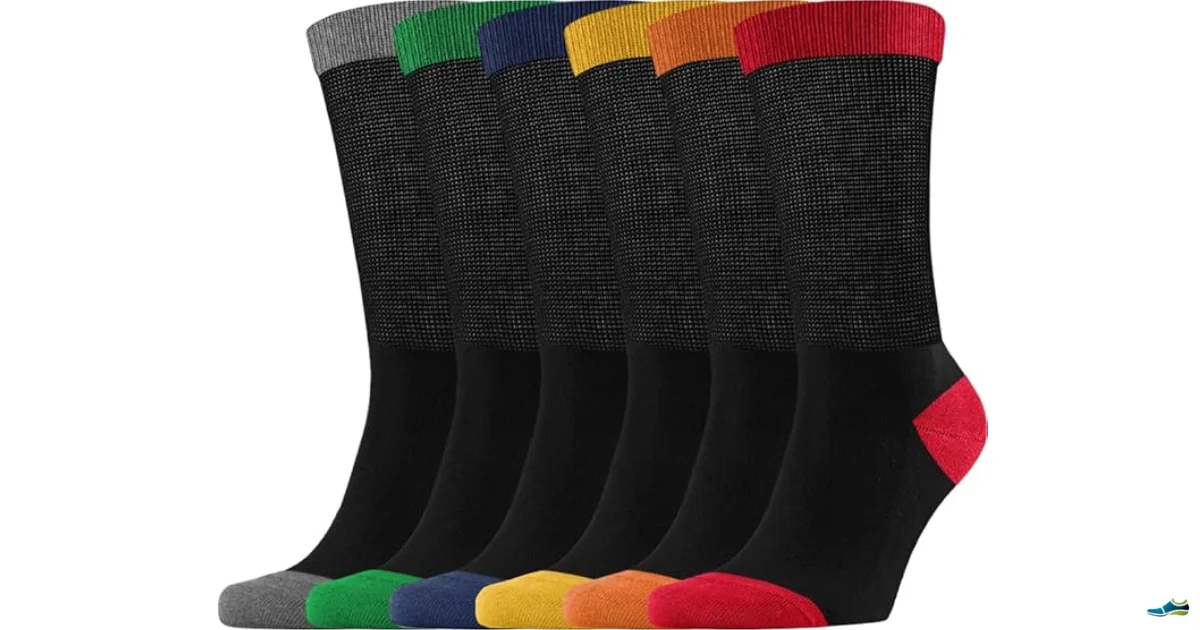
Are non-binding socks really better than ordinary socks?
For many people, yes. Non-binding and diabetic socks are designed to reduce pressure around the ankle, improve comfort and protect sensitive feet without constantly digging into your skin. They’re not just for people with diabetes either. Anyone with swollen ankles, circulation problems or simply tired feet can benefit from them.
Affiliate disclosure: This article contains affiliate links. If you buy something through one of these links, I may earn a small commission at no extra cost to you.
If you’ve ever taken your socks off at the end of the day and found deep marks around your ankles, there’s a good chance your socks have been working against you rather than for you.
📌 At a Glance
- ✔️ Gentle cuffs hold without leaving “ring” marks or welts.
- ✔️ Seam-free toes protect fragile skin and neuropathic feet.
- ✔️ Breathable bamboo and merino blends regulate heat and moisture.
- ✔️ Perfect for anyone who values circulation and comfort — not just those with diabetes.
I’ll be honest, I used to think non-binding socks were only for people with diabetes. I couldn’t have been more wrong — they’re simply some of the most comfortable socks I’ve ever worn, and I’d recommend them to almost anyone.
If your socks dig trenches into your legs, it’s not your circulation that’s weak — it’s the design. Think of them as your feet’s peace treaty: steady support without the squeeze.
If swelling is your main issue, start with Socks & Tights for Swollen Feet (Oedema); it breaks down how cuff width and fibre choice affect comfort through the day.
Why ordinary socks get it wrong
Most high-street socks are built for looks, not circulation. Tight cuffs and rough seams cut into skin, block blood flow and cause those deep ridges around your ankles by lunchtime. “Support” is often marketing code for “suffocating”.
If you’ve ever peeled off a pair that left red welts, you’ve experienced what non-binding socks were designed to fix — comfort that lasts longer than a coffee break.
What makes a true non-binding sock
- Wide, soft cuffs: They hold without strangling. The pressure is spread evenly, not focused on a single band.
- Elastic-light knit: Gentle stretch through the leg and ankle so the sock stays up naturally.
- Seamless or hand-linked toes: No ridge to rub across sensitive joints or bunions.
- Breathable fibres: Let heat escape instead of trapping moisture (a big win for neuropathy and swelling).
- Flat interiors: No bulky threads digging into the skin.
Good pairs feel like they disappear once you’ve got them on — which is the whole point.
What I’d Actually Look For
Dr. Scholl’s Diabetes & Circulatory Socks are a genuinely well-reviewed, widely available option that tick every box above — non-binding top, seamless toe, moisture-wicking. A sensible, familiar place to start if you’re new to this category.
Check Dr. Scholl’s Diabetes & Circulatory Socks on Amazon
What Makes Some Socks Feel So Much More Comfortable?
It’s often the little details you never see that make the biggest difference.
A well-made pair of non-binding socks should feel smooth against your skin from the moment you put them on. If you’ve ever been irritated by a bulky toe seam rubbing on your little toe or bunion, you’ll understand just how important that can be.
Here are a few features worth looking for:
- Smooth or hand-linked toe seams – These help prevent rubbing on sensitive toes, bunions and joints.
- Soft, covered stretch fibres – The elastic is built into the sock rather than sitting directly against your skin, making them feel much gentler.
- Light cushioning under the foot – A little extra padding where you walk most can make long days much more comfortable without making your shoes feel tight.
- A smooth inner finish – Good-quality socks shouldn’t have rough threads or bulky stitching that rubs as you walk.
None of these features are particularly exciting on their own, but together they can make the difference between socks you can’t wait to take off and socks you hardly notice you’re wearing.
What to look for (and what to ditch)
- Look for: “Non-binding”, “loose welt”, “diabetic-friendly”, “extra wide cuff”.
- Avoid: “One size fits all” (translation: “one size fits none”).
- Look for: Bamboo, merino, or cotton-rich blends with a hint of elastane.
- Avoid: Heavy acrylic or nylon — they trap sweat and shrink in the wash.
- Look for: Flat seams or “hand-linked toe”.
- Avoid: Tight ribbing that digs in after an hour.
If you’re still left with marks or tingling, the problem isn’t your legs — it’s your socks.
Who should wear them (hint: almost everyone)
- Swollen feet or ankles? You’ll love the loose hold.
- Diabetes or circulation issues? Non-binding = less pressure, better blood flow.
- Bunions or hammer toes? Seam-free toes stop rubbing where it hurts.
- Just sick of tight socks? You qualify. It’s not a diagnosis — it’s self-respect.
If you’ve ever battled with socks that squeeze your toes or tights that won’t stretch where you need them to, our wide-fit hosiery comfort guide shows how to find styles that actually fit real feet.
Best materials for sensitive feet
Prioritise fibres that move with you: bamboo for cooling, merino for warmth without bulk, and cotton-rich blends with a touch of elastane for recovery. Avoid heavy synthetics — they trap heat and moisture, the enemies of calm skin.
How to check the fit (quick test)
The best test? Put them on mid-afternoon and forget about them. If you notice the cuff, it’s too tight. If your toes feel crowded, the knit’s too shallow. True non-binding socks make you forget you’re wearing them at all.
How diabetic socks differ
Despite the name, diabetic socks aren’t just for people with diabetes. They’re built to reduce friction, moisture, and constriction — three things that cause ulcers, blisters, and inflammation. Think of them as the luxury version of everyday socks.
- No tight ribbing or harsh elastics.
- Seam-free toes to protect fragile skin.
- Moisture-wicking fibres (bamboo, cotton, merino).
- Extra depth and stretch for swelling or bandages.
The golden rule? If a sock leaves a mark, it’s working against you — not for you.
For those who need a touch more lift — say after long hours on your feet — Compression Socks Made Simple explains how to size them so they support rather than strangle.
Care & longevity
- Wash inside out on gentle; skip fabric softener (it kills stretch).
- Air-dry — high heat ruins fibres and shape.
- Replace pairs when cuffs stop recovering or toes thin.
The Bottom Line
Non-binding and diabetic socks aren’t a luxury. They’re simply a more comfortable way to look after your feet. Once you’ve tried a good pair, you’ll probably wonder why you ever put up with socks that dug into your legs in the first place.
Related Reads
- The Best Socks for Standing All Day
- Hosiery for Wide Feet: The Complete Comfort Guide
- Best Thin Socks for Wide Feet
- How to Measure Foot Width at Home
FAQs
Do non-binding socks actually stay up?
Yes. The wider cuff distributes pressure gently, so they stay in place without cutting off circulation. If they slide down, they’re too big or worn out.
Are diabetic socks only for diabetics?
No. They’re perfect for anyone with swelling, sensitive skin, or reduced circulation — not a medical badge, just better comfort tech.
Can tight socks really affect health?
Absolutely. Constant pressure restricts blood flow, increases swelling, and can irritate nerves. Non-binding styles avoid all that.