
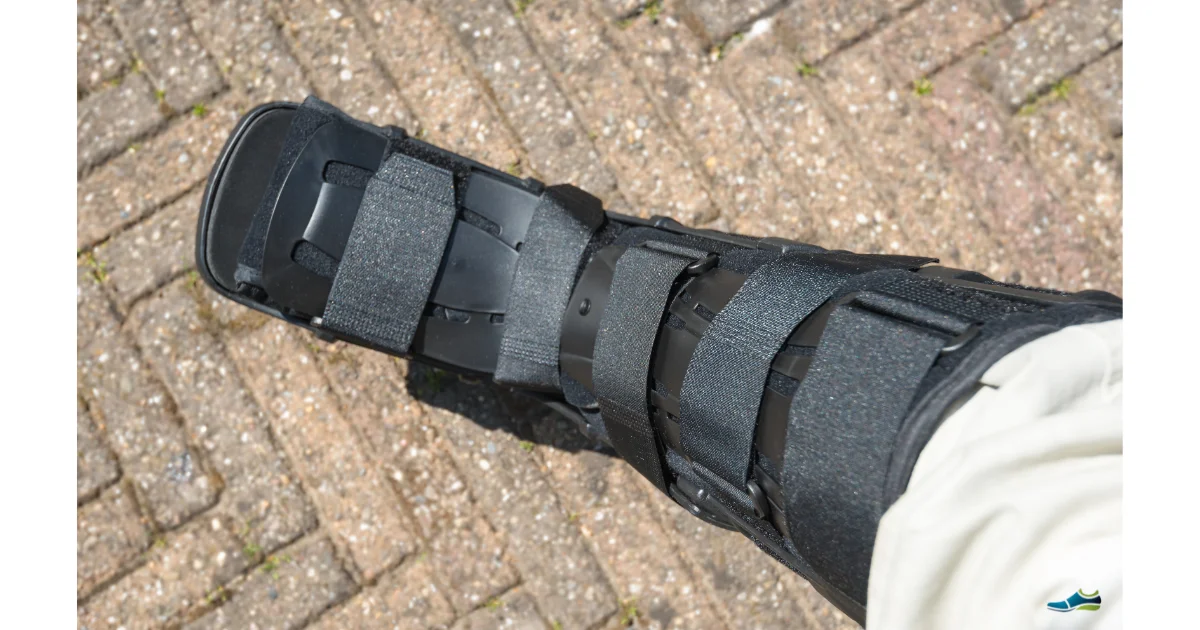
Nobody really prepares you for this bit. You spend weeks, sometimes months, in a medical boot after ankle surgery, and everyone talks about that phase — how heavy it is, how awkward it feels, how strange it is to sleep in it. What nobody really warns you about is the phase that comes after: the gap between coming out of the boot and actually feeling steady in normal shoes again.
You’ll sometimes see this called a “medical boot,” a “surgical boot,” or a “CAM boot” — the terminology varies, but for something as significant as ankle replacement, you’re most likely looking at this larger, more supportive boot rather than the separate, lighter “surgical shoe” sometimes used for smaller procedures.
Affiliate disclosure: This article contains affiliate links. If you buy something through one of these links, I may earn a small commission at no extra cost to you.
I know this phase well from my own ankle replacements. It’s a genuinely sticky one, and honestly, it’s more complicated than “just get back into normal shoes.” There are two sides to it, and I think both deserve saying plainly, because I only really understood the second one in hindsight.
If you are considering ankle replacement surgery, my total ankle replacement recovery guide is real and honest.
Why This Phase Is So Tricky
Swelling doesn’t politely stop the moment the medical boot comes off. In my experience, it can genuinely last up to 18 months after surgery — long after you’ve been told you’re “recovered” in the clinical sense. Coming out of a boot into a normal shoe, while your foot is still changing shape day to day, is exactly the kind of situation that makes footwear choice feel impossible.
Be prepared for your choices to feel genuinely limited during this stretch, and don’t be discouraged by that. Most of your usual shoes simply won’t fit properly while swelling is still settling, however much you might want to just get back into them. Realistically, you’re looking at shoes with a removable insole, real adjustability (laces or straps rather than a fixed slip-on shape), and enough depth and width to accommodate a foot that might look noticeably different from one day to the next. It’s a narrow field, and that’s normal — not a sign you’re doing something wrong.
Supportive Footwear Can Genuinely Help
This is where a properly supportive shoe earns its place — it doesn’t need to be a full boot. Unlike a soft, low-structure shoe, something supportive can give you a more stable base as you gradually get back to normal walking. A removable insole helps too, since it means you can adjust the fit as swelling changes from one day to the next, rather than being stuck with a shoe that either pinches or slops around depending on the day.
This is genuinely why the Waldläufer H-Lana became my everyday shoe rather than just something I wore during recovery — the support that helped me through those tricky early months turned out to be something I simply preferred long-term. My surgeon actually commented at a follow-up appointment on how well-suited the shoe was for my recovery, which was reassuring, because he understood exactly what my ankle needed at that stage of recovery.
The Mistake I Made First Time Round
After my first ankle replacement, I was craving comfort more than anything, so I bought a pair of wide fit memory foam trainers — Skechers, soft as anything. At my follow-up appointment, I could tell straight away my surgeon wasn’t impressed. He recommended a proper, substantial rocker-soled shoe instead.
I hadn’t realised there could be such a difference between a soft, cushioned trainer and the more substantial rocker-soled shoe my surgeon was recommending.
A rocker sole has a curved, more structured base that can reduce the amount of movement needed at the ankle as you walk. That helped me understand why my surgeon preferred that type of shoe during my recovery. The Skechers felt wonderfully soft underfoot, but softness and support aren’t necessarily the same thing.
Second time round, I wore the Waldläufer H-Lana from the very start instead, and my surgeon approved of it — even though it’s only a partial rocker sole, not a full one. That was a genuinely useful lesson in itself: in my case, I didn’t need the most rigid, clinical-looking shoe available. The partial rocker on the H-Lana suited me well, and it was something I was happy to wear day to day.
There was another reason I chose it, too. The removable insole gives you more flexibility if you’ve been given orthotics — as some people recovering from ankle surgery will have been. You can remove the original insole to make room for an orthotic if needed, while still following whatever advice you’ve been given about how long to use it. That kind of flexibility genuinely matters during a recovery where your footwear needs can change as swelling settles.
Check the Waldläufer H-Lana on Amazon
Here’s the thing worth saying plainly, though: nobody actually spelled this out to me when I was discharged after my first surgery — or if they did, I genuinely don’t remember it, and I’d put real money on excitement and relief being exactly why. You’ve just come out of surgery, you’re desperate for a bit of normality and comfort, and “get a rocker-soled shoe, not a soft one” is a very specific, easy detail to miss amid everything else going on. If nobody’s told you this clearly, you’re not alone, and it’s not your fault. It’s exactly why I wanted this written down properly.
The Trap: Using a Boot as a Crutch, Not a Support
Here’s the honest bit I only really understood in hindsight. There’s a real difference between an ankle boot supporting a joint while it heals and gradually learning to manage without that support again. Coming out of the boot is part of the rehabilitation process, alongside rebuilding strength and getting back to normal walking, and it needs to happen at the pace your surgeon or physiotherapist recommends.
How to Tell the Difference, Practically
- Follow your physiotherapist’s guidance on when and how to start reducing reliance on supportive footwear, rather than deciding this alone
- Keep up with any prescribed strengthening exercises alongside wearing supportive footwear, not instead of them
- Expect the transition to be gradual — some days better than others, especially while swelling is still settling
Frequently Asked Questions
How long does swelling last after ankle surgery?
It varies a lot by person and by procedure, but in my own experience it can genuinely continue, at a lower level, for up to 18 months. Always follow your surgeon’s specific guidance for your own recovery.
Is it bad to keep wearing supportive boots after I no longer need the medical boot?
Not necessarily, but once you’ve reached this stage of recovery, it’s worth discussing your footwear with your physiotherapist rather than simply continuing with extra support indefinitely. They can advise you on what’s appropriate as you gradually get back to normal walking and strengthening.
What should I look for in a shoe during this transition phase?
Look for a supportive shoe with enough room for your foot while swelling is still settling. I found a removable insole particularly useful, and some form of adjustment, such as laces or straps, gives you more flexibility as the fit changes. For me, the answer wasn’t simply choosing the softest or most cushioned shoe available.
If the physical side of getting shoes on and off is proving difficult too, I’ve written a separate, practical guide on exactly how I manage that safely, given my own combination of ankle and hip replacements.
Can I wear elevator or raised-heel shoes during recovery?
A raised heel changes the position of your foot and ankle, so this isn’t something I’d experiment with during recovery without asking your surgeon or physiotherapist first. They know what was done during your surgery and where you are in your recovery, so they’re much better placed to tell you whether a particular heel height or shoe is suitable.
If this resonated with you, I’ve written a much fuller account of everything I learned through my own recovery — including the mistakes, the practical techniques, and the brands I trust — in The Wide Fit Shoe Survival Guide.
Medical disclaimer: This article is based on my own experience of ankle replacement recovery and is for general information only. Always follow the advice of your surgeon, physiotherapist or other healthcare professional about your own recovery.
About Sue Holland
Sue writes WiderFittingShoes.com from first-hand experience of finding footwear for wide and difficult-to-fit feet. After two hip replacements, two ankle replacements and years of dealing with arthritis, swelling and feet that don’t always behave the same from one day to the next, she shares the practical things she’s learned about shoe fit, width and comfort.