
Between the arthritis and two hip replacements, my feet have given me their fair share of trouble over the years, and fallen arches were very much part of that story. Flat feet or fallen arches can cause real discomfort, imbalance, and fatigue—especially if you’re on your feet for long periods. The good news is that a few simple exercises can help strengthen your arch muscles, ease the pain, and stop things getting worse. Whether you were born with naturally low arches or, like me, watched them gradually give way over time, these exercises are a gentle step in the right direction.
5 Effective Exercises to Strengthen Fallen Arches
All these exercises are low-impact, easy to do at home, and require no special equipment. Aim for 10–15 minutes per day, 3–5 days a week. Consistency is key!
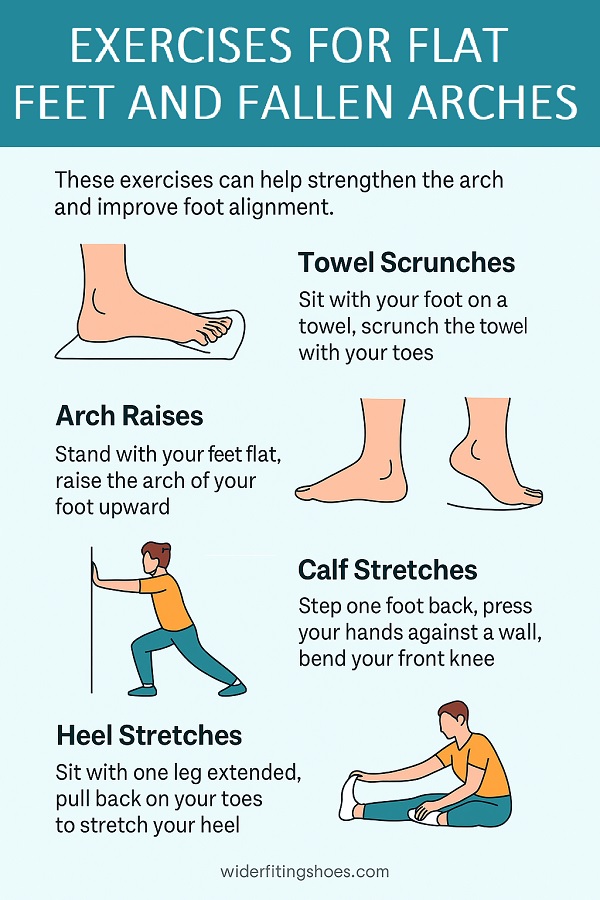
1. Towel Scrunches
Purpose: Strengthens the intrinsic muscles of the foot.
How to do it:
- Place a small towel flat on the floor.
- Sit on a chair and rest one bare foot on the towel.
- Use your toes to scrunch the towel toward you.
- Repeat 10–15 times on each foot.
2. Arch Raises
Purpose: Isolates the muscles that lift and support your arch.
How to do it:
- Stand barefoot with your feet hip-width apart.
- Without lifting your toes, try to lift the arch of your foot.
- Hold for 5 seconds, release slowly.
- Repeat 10 times per foot.
3. Calf Stretches
Purpose: Loosens tight calf muscles, which often pull on the plantar fascia and contribute to flat feet.
How to do it:
- Stand facing a wall with one foot forward and one foot back.
- Bend your front knee while keeping the back leg straight and heel down.
- Lean forward and hold for 20–30 seconds.
- Repeat 2–3 times on each leg.
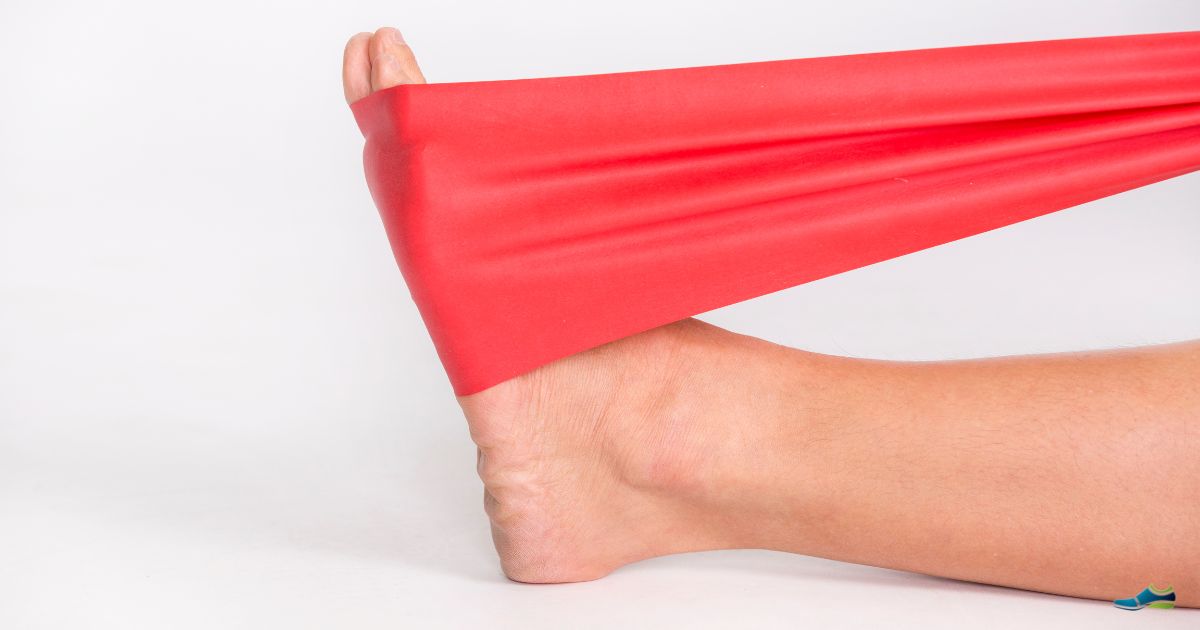
4. Heel Stretches (Plantar Fascia Stretch)
Purpose: Stretches the plantar fascia and Achilles tendon, reducing heel and arch pain.
How to do it:
- Sit with one leg extended in front of you.
- Loop a towel or resistance band around the ball of your foot.
- Gently pull back until you feel a stretch along your arch and heel.
- Hold for 20–30 seconds. Repeat 2–3 times per foot.
5. Toe Yoga
Purpose: Strengthens toe control and arch muscles.
How to do it:
- Sit comfortably and place your bare feet on the floor.
- Try lifting your big toe while keeping the other four grounded.
- Then reverse—keep the big toe down and lift the other four.
- Repeat each action 10 times.
Sue’s tip: I found the towel scrunches the easiest to actually stick with, mainly because I could do them in front of the telly without thinking too hard about it. Little and often beats one big effort you can’t keep up.
What Causes Fallen Arches?
Flat feet occur when the arch of the foot collapses, causing the entire sole to touch the ground. It may be genetic, caused by overuse, or due to aging, obesity, pregnancy, or medical conditions like arthritis or diabetes. In some cases, wearing unsupportive shoes over time contributes to the weakening of arch-supporting muscles. This why exercises for flat feet are crucial for recovery.
Benefits of Strengthening Your Arches
- Improves foot and ankle stability
- Reduces fatigue and foot pain
- Supports better posture and gait
- Prevents overpronation and injury
Additional Tips for Flat Feet Management
- Wear arch-supporting insoles: Look for orthotics or supportive insoles made specifically for fallen arches. Read my article about the best insoles for flat feet
- Choose structured shoes: Avoid floppy or flat-soled shoes. Go for footwear with firm midsoles and wide bases.
- Limit barefoot walking on hard surfaces: Flat feet lack natural cushioning, so prolonged barefoot time can aggravate symptoms.
When to Seek Medical Advice
If your fallen arches are causing persistent pain, swelling, or balance issues, or if you notice uneven wear on your shoes, it’s wise to consult a podiatrist. They may recommend orthotics, physical therapy, or further imaging to assess your foot alignment. Find out what a podiatrist can offer.
Conclusion
Strengthening your arches doesn’t require fancy equipment or a gym membership—just a bit of consistency, patience, and the right exercises. I won’t pretend it undoes years of wear and tear overnight, because it doesn’t. But with time, you may notice less pain, better posture, and greater stability in every step. Start slow, stay steady, and give your feet the support they deserve.
Frequently Asked Questions
Q: Can fallen arches be fixed completely?
A: In some cases, arch support and strengthening can improve symptoms, but if the arch collapse is structural or due to injury, full reversal may not be possible without medical intervention.
Q: How long does it take to see improvement?
A: Most people feel relief within 4–6 weeks of consistent stretching and strengthening exercises.
Q: Are these exercises safe for seniors?
A: Yes, all exercises listed here are gentle and low-impact, ideal for older adults. However, always check with your GP or physiotherapist if you have other health conditions.
Q: Do I need special equipment?
A: Not at all. A towel, chair, and perhaps a resistance band are all you need to get started.
Q: Will I still need insoles?
A: Many people with flat feet benefit from both exercises and supportive insoles. Think of them as complementary—not replacements.
It really is worth doing the exercises for flat feet, it may also be a good idea to see a podiatrist to check the structure of your feet.