
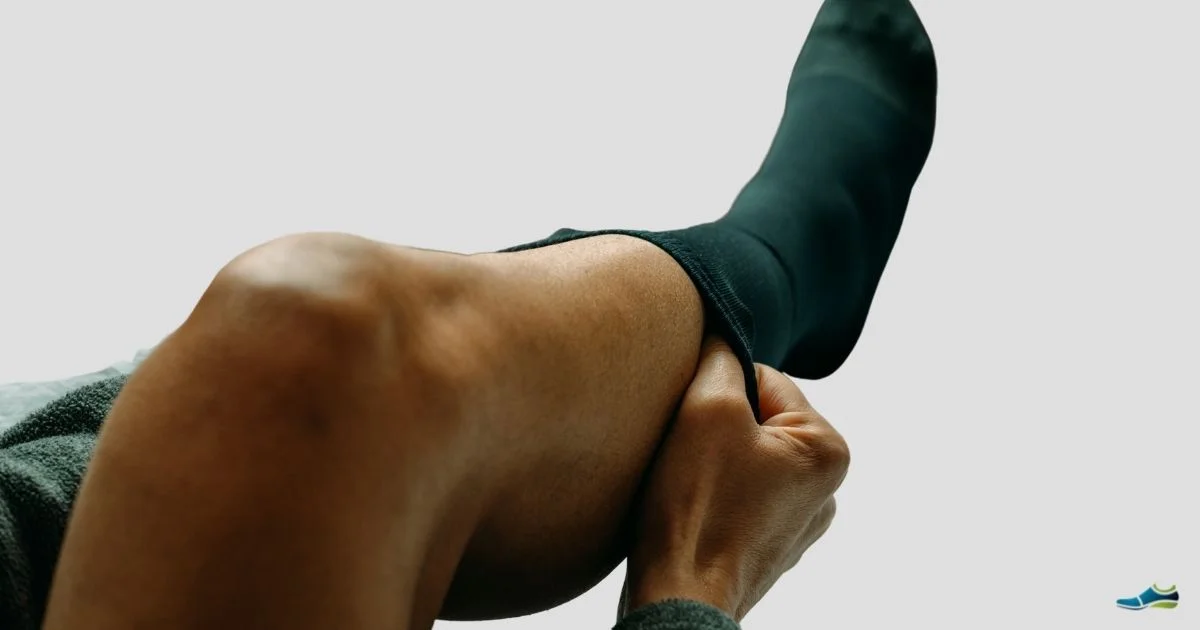
If you’ve ever kicked off your shoes at the end of a long day only to find your feet and ankles feeling swollen, tight or heavy, you’ll know how uncomfortable it can be.
Compression socks can help with some types of swelling and the discomfort that comes with it, but they aren’t a general treatment for every kind of foot pain. Whether they’re appropriate depends partly on what’s causing the problem in the first place.
This is one subject where I can speak from personal experience. I’ve worn compression socks myself, mainly for the swelling that’s never far away with everything else I deal with, and they have helped me — both with the swelling itself and the discomfort that comes with it.
I wouldn’t call them a miracle cure, and what works for me won’t necessarily be right for everybody, but they’ve genuinely earned their place in my regular routine.
If you’re dealing with foot pain more generally, my Foot Pain Relief Guide looks at some of the different reasons feet can hurt and the footwear features that may help with comfort.
Affiliate disclosure: This article contains affiliate links. If you buy something through one of these links, I may earn a small commission at no extra cost to you.
What Are Compression Socks?
Compression socks are specially designed socks that apply pressure to the feet and lower legs. Graduated compression socks are usually tighter around the ankle, with the pressure gradually reducing further up the leg.
They’re commonly used to help with swelling and problems associated with blood pooling in the lower legs. They come in different compression levels, so choosing the right type and fit matters — particularly if you have an existing circulation or nerve problem.
How Compression Socks May Help Relieve Foot Pain
Compression socks aren’t painkillers, and they don’t treat every cause of foot pain. Where they can be useful is when swelling, aching or that heavy, tired feeling in the feet and lower legs is contributing to the discomfort.
Depending on why you’re wearing them, they may help by:
- Reducing swelling in the feet, ankles and lower legs
- Helping with heavy or aching legs, particularly after long periods of standing or sitting
- Supporting blood flow back up the legs through graduated compression
- Making swollen feet feel more comfortable, provided the socks fit correctly and aren’t creating additional pressure
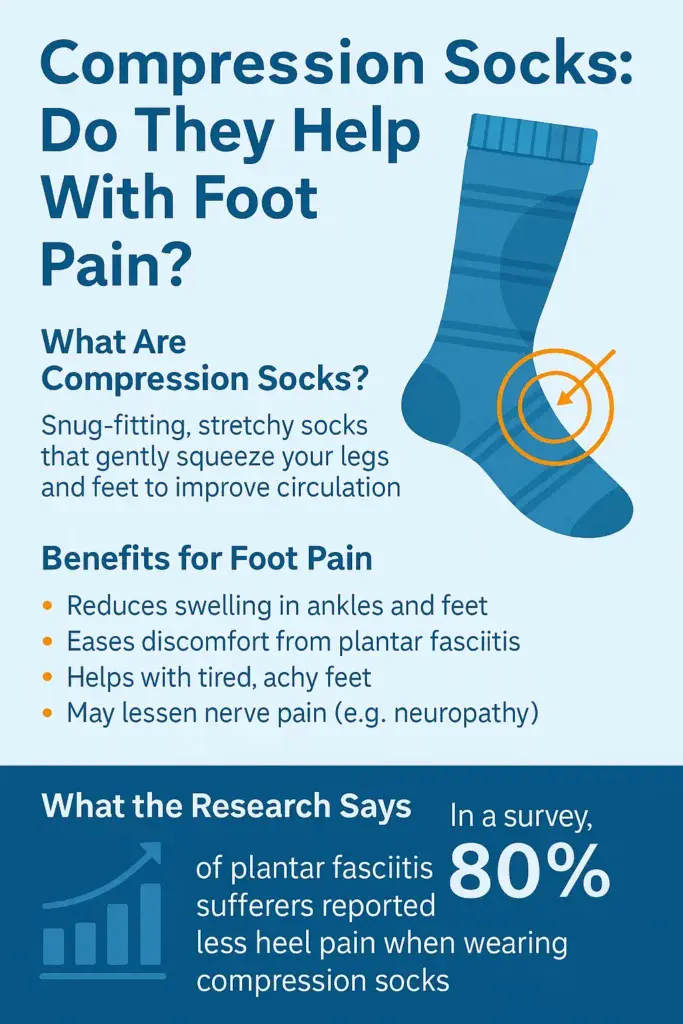
Compression socks are sometimes worn by people with plantar fasciitis because they may feel supportive or comfortable, but they don’t treat the underlying cause of plantar fasciitis. If heel pain is your main problem, my Plantar Fasciitis guide looks at it in more detail.
When Compression Socks May Be Helpful
Compression socks tend to make most sense when swelling or problems with blood pooling in the lower legs are contributing to the discomfort.
They may be used for things such as:
- Swollen feet, ankles or lower legs
- Aching or heavy legs, particularly after spending long periods standing or sitting
- Varicose veins, where compression may be recommended to help with symptoms
- Certain circulation problems, when compression has been recommended by a healthcare professional
What I wouldn’t do is assume that compression socks are suitable simply because your feet hurt. Foot pain has plenty of possible causes, and compression won’t fix problems such as flat feet or plantar fasciitis.
They’re also not automatically suitable for everybody with diabetes or poor circulation. If you have reduced sensation in your feet, known circulation problems or you’re unsure why your feet or legs are swelling, get medical advice before using compression socks.
Are Compression Socks Suitable for Wide Feet?
They can be, but fit becomes particularly important if you have wide or swollen feet. A compression sock is supposed to feel snug, but it shouldn’t painfully squeeze your toes, dig into your skin or create obvious pressure points.
This is something I’ve had to pay attention to myself. With my own swelling, there’s a big difference between compression that feels supportive and a sock that’s simply too tight in the wrong places.
When comparing compression socks, look for:
- Enough room through the foot and toes, rather than concentrating only on calf size
- A size range based on actual measurements, particularly ankle and calf circumference
- Stretchy, comfortable fabric that doesn’t bunch or create obvious pressure points
Don’t rely on your normal shoe or sock size alone. Check the manufacturer’s sizing chart and take the measurements it asks for, because compression socks are designed to fit much more precisely than ordinary socks.
If a pair is painfully tight, causes numbness or creates excessive pressure on your toes or skin, don’t simply assume that’s how compression is supposed to feel.
When to Wear Compression Socks for Foot Pain
When you wear compression socks depends on why you’re using them. In my case, I’m interested in controlling swelling and the uncomfortable heavy feeling that comes with it, rather than wearing them as some sort of performance sock.
They may be useful during the day if your feet and lower legs tend to swell after long periods of standing or sitting. Compression socks are also commonly used during long journeys, although the right compression level and fit still matter.
They’re generally worn while you’re up and about rather than automatically being worn overnight. If you’ve been advised to use compression for a medical condition, follow the instructions you’ve been given rather than relying on a general rule about how many hours to wear them.
If you’re using compression socks for unexplained swelling, or you have circulation problems, reduced sensation or another medical condition affecting your legs or feet, get advice about whether compression is appropriate for you.
What to Look for in Compression Socks for Foot Pain
Choosing compression socks isn’t quite the same as choosing ordinary socks. The amount of compression matters, but so does getting the right size and making sure the sock is comfortable on your particular foot and leg.
Here’s what I’d pay attention to:
- Compression level: Compression is usually measured in mmHg (millimetres of mercury). Different strengths are available, but stronger isn’t automatically better. If you’re unsure which level is appropriate — particularly if you’re using compression for a medical reason — ask a healthcare professional.
- Correct sizing: Follow the manufacturer’s measurement guide rather than simply buying your normal sock size.
- Room around the toes: The foot section shouldn’t painfully squeeze your toes or create another pressure point.
- Comfortable seams: Check that seams aren’t rubbing against sensitive areas of your feet.
- A top that stays in place comfortably: It needs to stay up without painfully digging into your leg or rolling into a tight band.
What I’d Actually Look For
The compression socks I’ve actually used myself are Dr. Scholl’s compression socks. I’ve worn them to help with my own swelling, and they’ve worked well enough for me that I continue to use them.
That’s a personal recommendation rather than a claim that they’ll be right for everybody. With compression socks, the fit and appropriate compression level matter, so I’d still check the manufacturer’s sizing information carefully before buying.
Check Dr. Scholl’s compression socks on Amazon
When to Get Advice Before Using Compression Socks
Compression socks aren’t suitable for everyone, and there are situations where it’s sensible to get medical advice before using them.
In particular, speak to a healthcare professional if you have known circulation problems, reduced sensation in your feet or legs, diabetes with foot problems, or damaged or particularly fragile skin.
It’s also important not to assume that new or unexplained swelling simply needs a pair of compression socks. If one leg suddenly becomes swollen, painful, red or unusually warm, seek medical advice rather than trying to manage it yourself with compression.
The Bottom Line
Compression socks have genuinely helped me with the swelling and discomfort I get in my own feet and lower legs, so they’re something I’m happy to keep using.
But they’re not a general treatment for foot pain. They make most sense when swelling or that heavy, aching feeling in the feet and lower legs is part of the problem, and getting the right fit matters just as much as buying a pair labelled “compression.”
If you’re considering them, check the manufacturer’s sizing carefully and don’t assume that tighter or stronger compression must be better. And if you have circulation problems, reduced sensation, diabetes-related foot problems or unexplained swelling, get appropriate medical advice before using them.
Frequently Asked Questions
Can compression socks help with plantar fasciitis?
Some people with plantar fasciitis may find compression socks comfortable or supportive, but they don’t treat the underlying cause of plantar fasciitis. If heel pain persists, it’s worth finding out what’s causing it rather than relying on compression alone.
Are compression socks suitable for wide feet?
They can be, provided there’s enough room through the foot and toes and the socks fit correctly around the ankle and calf. Check the manufacturer’s measurements rather than relying only on your normal shoe or sock size.
How long should I wear compression socks each day?
There isn’t one wearing time that’s right for everybody. It depends on why you’re using compression and the type you’ve been advised or chosen to wear. If compression has been recommended for a medical reason, follow the advice you’ve been given.
How should compression socks feel?
They should feel snug and supportive, but they shouldn’t be painfully tight or create uncomfortable pressure points. If you develop pain, numbness or other concerning symptoms while wearing them, remove them and get appropriate advice.
Sources and Further Reading
Medical Disclaimer: This article is for general information only and isn’t a substitute for medical advice, diagnosis or treatment. Compression socks aren’t suitable for everyone. If you have circulation problems, reduced sensation, diabetes-related foot problems or unexplained swelling, ask an appropriate healthcare professional whether compression is suitable for you. Seek medical advice promptly for sudden or unexplained swelling, particularly if one leg becomes swollen, painful, red or unusually warm.
About Sue Holland
Sue writes WiderFittingShoes.com from first-hand experience of finding footwear for wide and difficult-to-fit feet. After two hip replacements, two ankle replacements and years of dealing with arthritis, swelling and feet that don’t always behave the same from one day to the next, she shares the practical things she’s learned about shoe fit, width and comfort.