
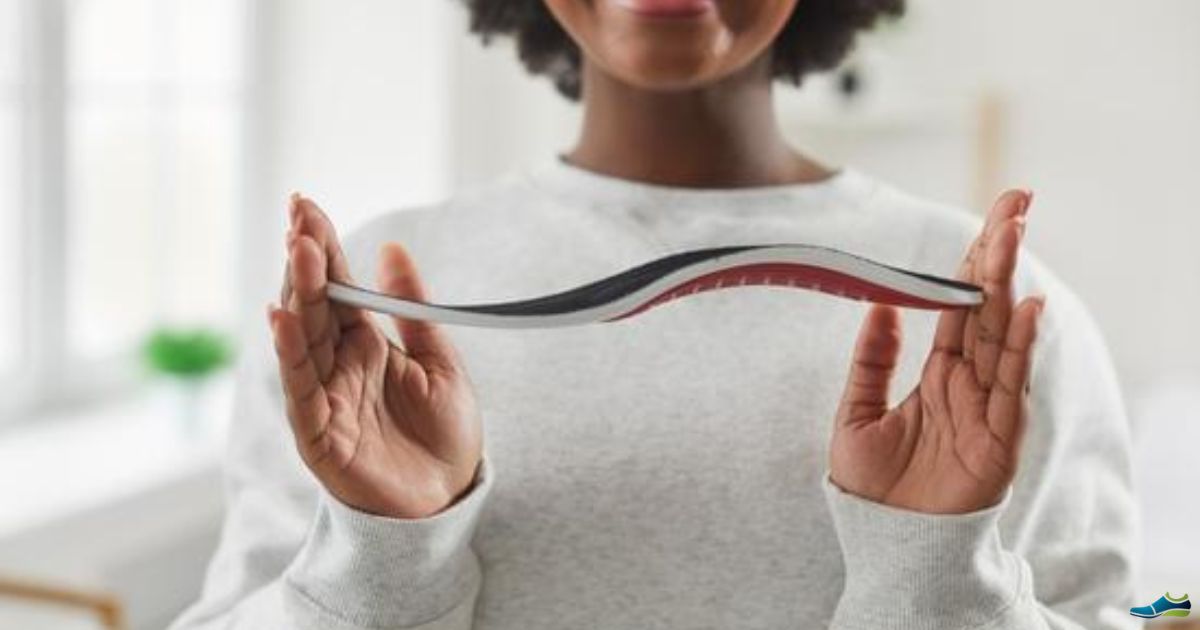
What Are Insoles?
Insoles typically sit as standard inserts inside footwear, but the best insoles for flat feet are engineered to provide firm, contoured longitudinal arch support, a deeply structured heel cup, and targeted underfoot cushioning to distribute structural pressure points comfortably. Visually, when a foot structure experiences a lowering or flattening of the internal baseline arch upon weight-bearing, this physical presentation is consistent with a flat feet profile. Supportive inserts are designed to stabilize the heel and brace the midfoot without forcing the foot profile into a rigid or painful position, allowing them to rest comfortably inside the shoe without restricting overall upper space.
Affiliate disclosure: This article contains affiliate links. If you buy something through one of these links, I may earn a small commission at no extra cost to you.
What are Orthotics then?
Orthotics are specially designed shoe inserts that support and align your feet. Unlike standard insoles (unless they have arch support) orthotics are created to correct foot function, relieve pain, and improve overall posture and balance.
They come in two main forms:
- Custom orthotics: Made specifically for your feet, often prescribed by podiatrists.
- Over-the-counter (OTC) orthotics: Pre-made, available in various sizes and suitable for general support needs.
Why Orthotics Are Important for People With Wide Feet
Individuals with a wider forefoot configuration frequently encounter structural foot adjustments. Over time, these dynamic alignment changes are frequently consistent with a combination of underlying factors, including:
- A progressive lowering of the structural midfoot arch, often recognized as arch collapse or flat feet.
- An inward rolling motion of the ankle joint during the gait cycle, commonly identified as overpronation.
- Localized underfoot soreness near the heel base, sharing characteristics with plantar fasciitis.
- Uneven plantar weight distribution across the metatarsal boundaries.
Orthotics for wide feet can help by offering targeted support, relieving pressure points, and working effectively when paired with wider fitting shoes that allow sufficient room for comfort and function.
Many of these issues are connected — heel pain, arch strain, or swelling often overlap.
Our Complete Foot Pain Relief Guide walks you through how they’re linked and what practical steps bring lasting comfort.
Types of Orthotics
- Rigid Orthotics
- Made from hard materials like plastic or carbon fibre
- Control motion in the foot joints
- Help with knee, hip, and back pain
- Best for dress or work shoes with minimal cushioning
- Soft Orthotics
- Made from foam or gel
- Cushion pressure points and absorb shock
- Ideal for people with diabetes, arthritis, or sensitive feet
- Work best in wide, cushioned shoes with extra depth
- Semi-Rigid Orthotics
- Combine soft and firm materials
- Offer both comfort and structure
- Commonly used by athletes or active individuals
- Fit well in sports trainers or wide fitting walking shoes
- Functional Orthotics
- Correct abnormal foot mechanics
- Suitable for overpronation or supination
- Improve stability and alignment
- Can be worn in everyday or orthotic-friendly wide shoes
- Accomodative Orthotics
- Soft and bulky, designed to relieve specific pressure points
- Ideal for people with diabetic foot ulcers, bunions, or calluses
- Require extra wide or deep shoes to accommodate their shape
Benefits of Orthotics (Especially in Wide Fit Footwear)
Using orthotics-especially with properly fitting wide shoes-can offer a range of health and comfort benefits:
- Relieve foot, knee, and back pain
- Improve arch support and alignment
- Prevent common foot problems like plantar fasciitis
- Enhance comfort during daily walking or sports
- Provide better balance and stability
What I’d Actually Look For
If you’re just starting out and don’t want to commit to custom orthotics straight away, an over-the-counter option is a sensible first step. Dr. Scholl’s Stability Support Insoles are specifically designed for flat feet and overpronation, with a firm heel cup and motion control shell — a genuine step up from a basic cushioned insole, without the cost or wait of going custom.
Sizing Guidance: Make sure to double-check the physical sizing labels and structural alignment charts provided on the manufacturer’s packaging to confirm the insert dimensions comfortably match your unique foot width.
Check Dr. Scholl’s Stability Support Insoles on Amazon
How to Choose Shoes for Orthotics
When selecting wide shoes for orthotics, keep the following in mind:
- Removable insoles: Allow space for your custom or OTC orthotics
- Deep toe boxes: Prevent squashing or pressure on toes
- Adjustable fit: Lace-ups, straps, or Velcro for better security
- Orthotic-compatible design: Look for shoes that specifically mention support features
One more thing worth knowing: if you’re wearing wide fit shoes, it’s worth checking whether your insole is actually shaped for that width too. A standard insole inside a wide shoe can leave gaps at the sides rather than properly supporting your whole foot — I’ve written more about this in Do You Need Wide Fit Insoles, Not Just Wide Fit Shoes?
Orthotics & Wide Fit Shoes-The Perfect Pair
Orthotics or insoles are an excellent way to address foot pain, alignment issues, and walking discomfort. When combined with the right wide fitting footwear, they offer maximum benefit for people who need both support and room to move. if you feel as though a shoe with a built in arch support will be more suitable, read my arch support shoes article here.
The Best Insoles for Flat Feet can be a matter of opinion, I know from experience that when trying insoles or orthotics for the first time, it is difficult to imagine that they’ll ever be comfy. Stick with them, gradually increase use, maybe a couple of hours on day one and then add an hour each day. If you wear them for a straight day, you may have discomfort that leaves you unable to continue with them for a while.
Medical Disclaimer: The general orthotic selection metrics, biomechanical features, and shoe fitting parameters compiled in this guide are provided strictly for general informational and educational purposes. They do not constitute personalized professional medical advice, clinical diagnosis, or distinct orthopedic treatment frameworks. Chronic structural arches adjustments, severe lower limb alignment pain, or specific conditions associated with diabetic foot care require direct consultation with a qualified GP, podiatrist, or orthopedic specialist.