
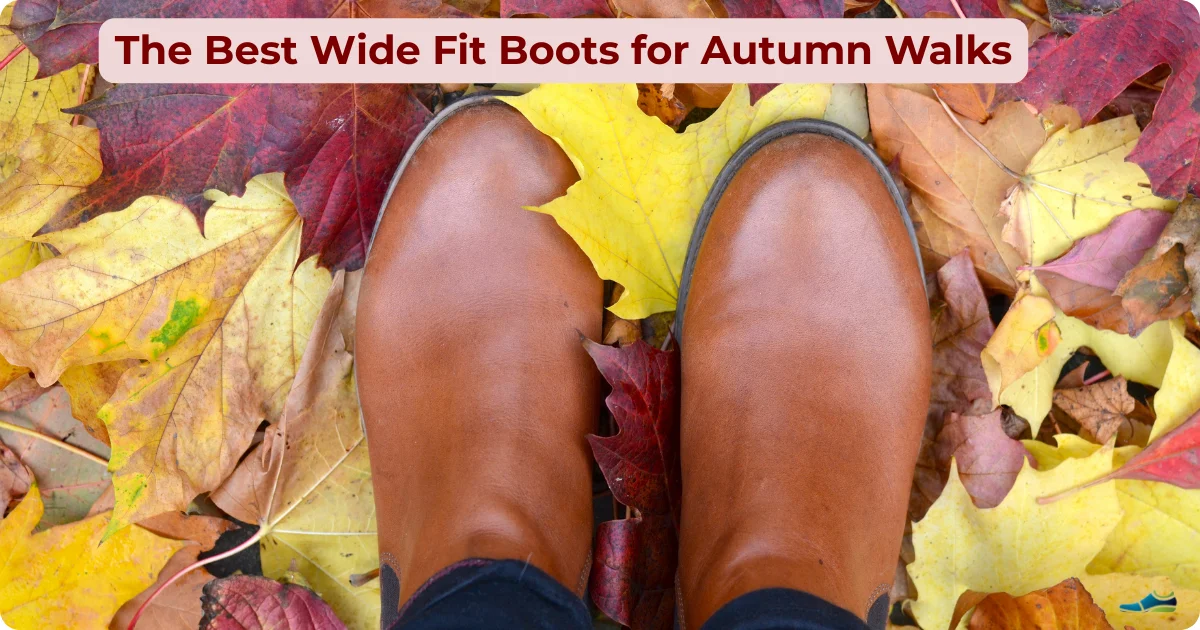
Autumn and winter are made for getting outside: crisp air, golden trees, and that satisfying crunch underfoot. But if your boots pinch across the toes or squeeze the sides of your feet, the enjoyment soon disappears.
The best wide fit boots for autumn and winter should give you genuine room across the forefoot and enough depth over the toes, while still holding your heel securely. Look for good grip on wet leaves or icy pavements, adjustable fastenings, weather-resistant uppers, and enough internal space for the socks or orthotics you normally wear.
Ankle boots are often my own choice for colder weather. I like the extra support around the ankle when the ground gets slippery, and a stylish pair works just as well with winter dresses and everyday clothes as it does with trousers. For longer walks, though, a proper wide-fit walking boot or walking shoe may be the better option.
Affiliate disclosure: This article contains affiliate links. If you buy something through one of these links, I may earn a small commission at no extra cost to you.
The important thing isn’t simply finding a boot labelled “wide fit”. Width, depth, toe-box shape, and heel fit all need to work together. This guide explains what to look for before you buy.
Why Colder Weather Demands the Right Boots
Cold weather terrain is a mixed bag—dry leaves one day, slick pavements and deep puddles the next. Your boots need to adapt. For wide feet, that means enough space through the forefoot, secure midfoot/heel hold for stability, and materials that balance warmth with breathability. Get that trio right and you’ll feel the difference from the first step.
What Makes a Great Wide Fit Boot?
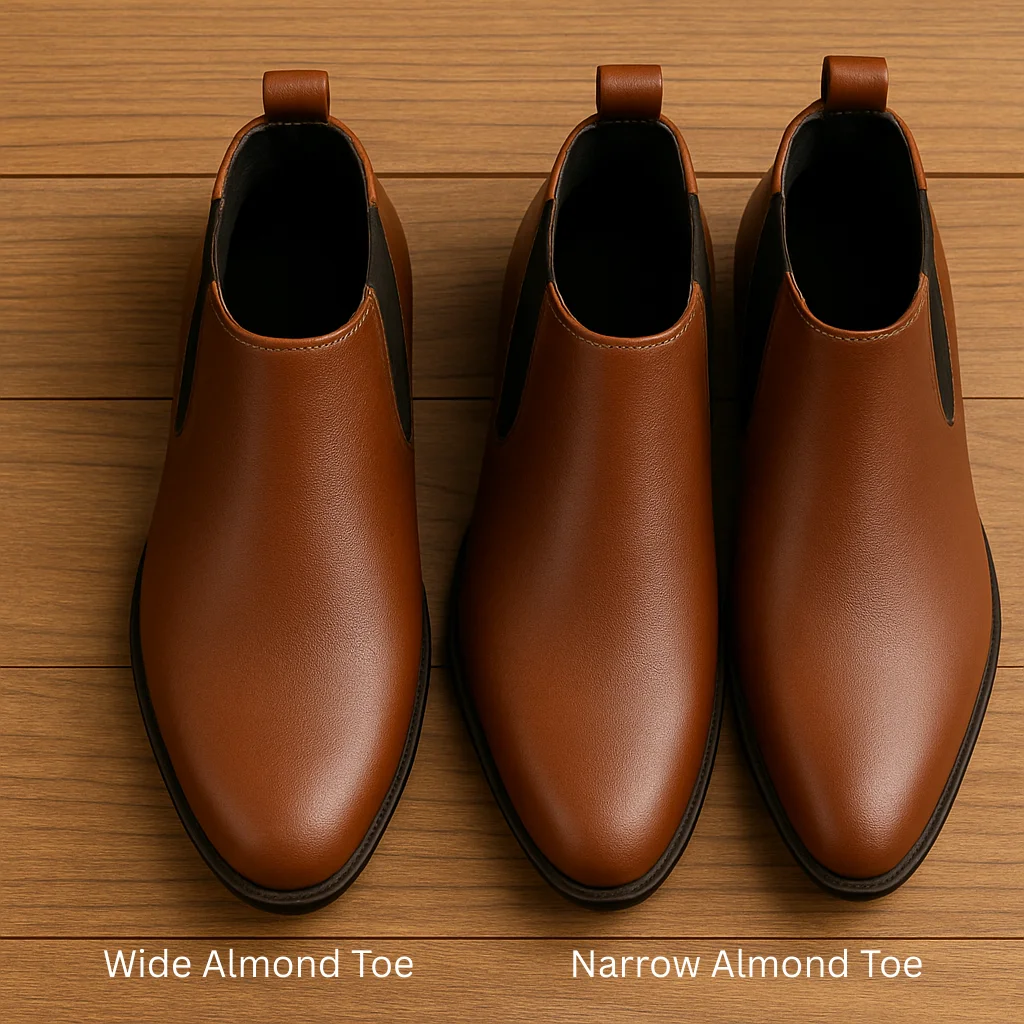
A Roomy Toe Box
When you try boots on, make sure you can move your toes comfortably and that nothing is pressing or rubbing across them. Don’t assume that a boot labelled wide fit will automatically have a roomy toe box either — some styles still taper quite sharply towards the front.
Volume & Depth Through the Forefoot
Wide isn’t only side-to-side — depth matters just as much. This is something I’ve learned from wearing orthotics myself. An orthotic takes up space inside the shoe or boot, so something that appears wide enough can suddenly feel tight across the top of the foot or toes once the orthotic is inside.
Extra depth can also help if you wear thicker woollen socks or your feet swell during the day. If your boots feel tight over the tops of your toes even though the width seems right, you may need a higher-volume toe box rather than an even wider boot. My guide to understanding a high-volume toe box explains the difference.
Secure Midfoot and Heel
A wide forefoot still needs a snug midfoot/heel so you’re stable on uneven paths. Check there’s no heel lift when you walk uphill or down steps.
Cushioning + Support Underfoot
Winter walks can mean everything from hard pavements to uneven paths, so cushioning and stability both matter. The boot should feel supportive underfoot without forcing your foot into an uncomfortable position. If you wear orthotics, removable factory insoles can be particularly useful because they give you more space to accommodate them.
Outsole Grip for Wet Leaves and Ice
Leaves and frosty pavements can be incredibly slippery. Look for a rubber outsole with a well-defined tread that gives you decent grip on wet or uneven ground.
Water Resistance (and Breathability)
Wet weather is inevitable. Options include treated leather uppers (re-proof occasionally) or a waterproof membrane. Pair with breathable linings so you don’t overheat on milder days.
Adjustable Fastenings
Laces are particularly useful for adjusting the fit if your feet swell or you need different amounts of room across the foot and ankle. Side zips make boots easier to get on and off, while elastic panels can provide a little extra give. A boot combining laces with a side zip can offer both adjustability and convenience.
Low or Block Heels
Low and block heels tend to feel more stable on leaf-strewn or wet ground than narrow heels. If you prefer a little lift, keep it modest and stable.
Warm but Not Stuffy
Soft linings can feel lovely in colder weather, but think about where you’ll actually be wearing the boots. Heavy insulation may be useful outdoors but can get uncomfortably warm if you’re regularly going in and out of heated shops or buildings.
How to Get the Right Fit (Quick At-Home Check)
Sock reality test: Try boots with the socks you’ll actually wear for winter walks.
- Check the toe room: Your longest toe shouldn’t touch the end of the boot when standing or walking downhill. You need enough room to move your toes comfortably without so much excess length that your foot slides around.
- Stair test: Walk up and down a step. No heel lift, no sliding into the front.
- Later-day try-on: Feet can become slightly larger as the day goes on, so trying boots later in the day can give you a better idea of how they’ll feel after you’ve been on your feet for several hours.
- Orthotic space: If you use insoles, remove the factory insole and check depth/volume.
If you’re still unsure whether you actually need a wider fitting boot, it’s worth measuring your feet properly first. My guide on how to measure foot width at home takes you through the process step by step.
Common Mistakes to Avoid
- Sizing up to get more width: A longer boot isn’t necessarily a wider one. Going up a size just to get extra room can leave you with heel slip and too much space in front of the toes. Look for the correct width and depth instead.
- Ignoring the shape of the toe box: A boot can be labelled wide fit and still taper too sharply at the toes for your foot shape. Your toes should have room to move without being pushed together.
- Trying boots with the wrong socks: If you’ll be wearing thicker socks through autumn and winter, use those when you try the boots on. A boot that fits beautifully with thin socks can become surprisingly snug with a chunky pair.
- Assuming uncomfortable boots just need breaking in: New boots may soften and become more flexible with wear, but they shouldn’t depend on a painful breaking-in period to fit properly. If your toes are cramped, the boot presses across your forefoot or you’re getting obvious pressure points from the start, the fit probably isn’t right.
Care Tips to Make Your Boots Last
- Dry gently: If soaked, stuff with paper and air-dry away from direct heat.
- Clean & re-proof: Brush off mud, wipe clean, and reapply water-repellent as needed.
- Rotate if you can: Alternating between pairs gives damp boots time to dry thoroughly and can help reduce wear.
- Check the insoles: Replace worn removable insoles when they’ve lost their cushioning or support, and check that replacements don’t reduce the space your feet need inside the boot.
Our Top Picks for the Best Wide Fit Boots This Season
Clarks Ashland Mabel Wide Fit Ankle Boots
The Clarks Ashland Mabel is a leather ankle boot available in a wide fitting, with a low heel and zip fastening. It’s the sort of boot I’d look at for everyday autumn and winter wear rather than serious walking — something for shopping, shorter walks and generally being out and about when the weather turns colder.
Extra Wide Option: Cosyfeet Boots
Cosyfeet is one of the first places I’d look if an ordinary wide-fit boot still isn’t roomy enough. Their women’s footwear is made in an extra-wide 6E fitting, with extra depth and room for swollen feet. Many of their boots also have adjustable fastenings and removable insoles, which can be useful if you wear orthotics.
There are several different styles, so I’d choose according to how much adjustment and opening you need rather than simply picking the one you like the look of most.
If you’d rather not spend an afternoon comparing specs, here’s where I’d point you first.
I’ve already mentioned how much I rate Waldläufer — the Lana is my go-to for everyday wear, and they make a genuinely good range of wide-fitting ankle boots too. If you’re after something with real depth for orthotics as well as width, this is where I’d start looking.
Check Waldläufer wide fit ankle boots on Amazon
Beyond that, keep an eye out for anything with a laced-and-zipped fastening — it gives you the adjustability of laces with the convenience of a zip, which matters more once autumn mornings get rushed and cold fingers don’t want to fuss with laces alone.
Final Thoughts
The best wide fit boots should give your feet enough room without feeling loose or cumbersome. For autumn and winter, I’d also look for good grip, useful adjustment and enough space for the socks you actually intend to wear.
Get those things right and you should have a pair of boots you’ll be happy to reach for when the weather turns colder.
Before buying, you might like our Complete Wide Fit Shoes Guide — it covers everything from measuring to maintenance.
FAQs
Q: How should wide fit boots feel when I first try them on?
A: They should feel comfortable straight away, with enough room for your toes to move and no squeezing across the widest part of your foot. Your heel should feel secure rather than lifting as you walk. New boots may soften with wear, but they shouldn’t need a painful breaking-in period to become wearable.
Q: Should I size up if my boots feel too narrow?
A: Usually not. Going up a shoe size gives you extra length rather than necessarily giving you the width you need. If the length is correct but your foot feels squeezed at the sides, look for a wider fitting instead.
Q: Can I wear thick socks with wide fit boots?
A: Yes, provided the boots have enough width and depth to accommodate them. Try boots on with the socks you actually intend to wear, as thick autumn or winter socks can noticeably change the fit.
Q: What should I look for in wide fit boots for swollen feet?
A: Look for plenty of width and depth, a roomy toe box, soft linings, and adjustable straps or laces that give you some flexibility if your foot size changes with swelling.
About Sue Holland
Sue writes WiderFittingShoes.com from first-hand experience of finding footwear for wide and difficult-to-fit feet. After two hip replacements, two ankle replacements and years of dealing with arthritis, swelling and feet that don’t always behave the same from one day to the next, she shares the practical things she’s learned about shoe fit, width and comfort.