
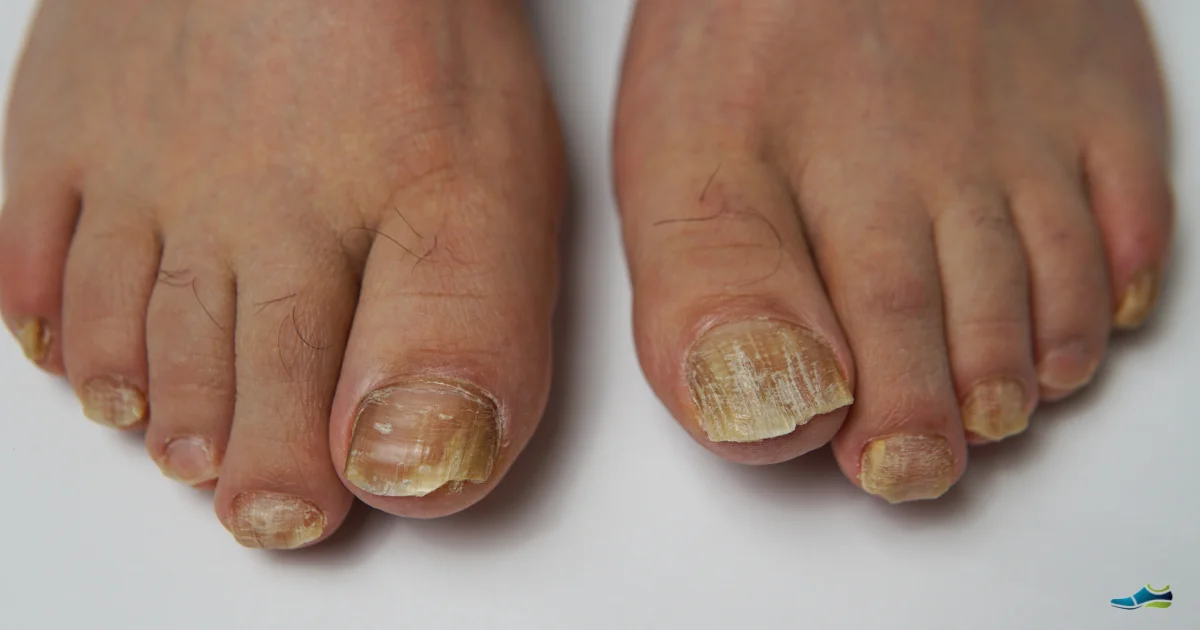
Thick, yellow or crumbly toenails can be a sign of a fungal nail infection (onychomycosis), although other nail conditions can look similar. Fungal nail infections are common and notoriously slow to clear, but treatment can be effective — and good foot hygiene and suitable footwear can help reduce the conditions in which fungus thrives.
Treatment depends on how much of the nail is affected and how severe the infection is. Antifungal nail treatments may be suitable for some infections, while more persistent or extensive cases may need assessment by a pharmacist, GP or podiatrist and, in some cases, prescription antifungal tablets.
Affiliate disclosure: This article contains affiliate links. If you buy something through one of these links, I may earn a small commission at no extra cost to you.
This guide explains what fungal nail infections look like, what can cause them, the treatment options available and how your shoes and socks can help protect sore or thickened nails while you’re dealing with one.
I’ve dealt with a fungal nail infection myself, so I can tell you firsthand: the hardest part isn’t finding a treatment, it’s sticking with one for long enough to actually work. Nails grow slowly, and clearing an infection properly takes consistent treatment over months, not days — there’s no shortcut, whatever the internet tries to tell you.
And on that note, there are plenty of home remedies suggested online for fungal nails — Vicks VapoRub being one I see mentioned regularly. Personally, I’d rather use a treatment that’s actually intended for fungal nail infections and has clear instructions for how it should be used. When treatment can already take months, I don’t particularly fancy spending that time experimenting with something that wasn’t designed for the job.
What I’d Actually Look For
One thing worth checking before buying is what the product actually is. There are lots of products marketed for fungal nails, and they don’t all work in the same way.
Schollmed Once Weekly Fungal Nail Treatment contains amorolfine, an antifungal medicine used to treat certain fungal nail infections. What appealed to me about this particular one is the once-weekly application — after dealing with a fungal nail myself, I know how easy it would be to get fed up with something that needs constant attention for months.
I haven’t used this particular product myself, so I’m not claiming it’s better than the alternatives. Check that it’s suitable for you and follow the instructions supplied with it.
Check Schollmed Once Weekly Fungal Nail Treatment on Amazon
📌 At a Glance
Here’s what this guide covers: what fungal nail infections are, common causes and signs, the treatments available, and the footwear and hygiene habits that may help reduce the risk of them returning.
If you’d rather skip straight to specific questions, jump to the Q&A below.
What Is a Fungal Nail Infection?
What Is a Fungal Nail Infection?
A fungal nail infection develops when fungi infect the nail. Toenails are commonly affected, and the infection can cause a nail to become discoloured, thicker, brittle or crumbly.
It often starts towards the edge of the nail and can gradually spread further across it. Athlete’s foot can also spread to the toenails, which is one reason it’s worth dealing with both if you have them at the same time.
Not every thick, yellow or damaged toenail is fungal, though. Nail injuries and other conditions can sometimes look similar, so if you’re unsure what you’re dealing with, ask a pharmacist, GP or podiatrist rather than assuming it’s a fungal infection.
If your foot pain isn’t limited to this one condition, our Complete Guide to Foot Pain Relief walks you through all the main causes, treatments, and footwear tips to keep every step more comfortable.
Causes and Risk Factors
Fungal nail infections can be more likely when:
- Athlete’s foot spreads to the toenails
- Feet regularly stay warm and damp, particularly inside sweaty footwear
- The nail has been damaged, which can make it easier for infection to develop
- You regularly walk barefoot in communal areas such as changing rooms, showers or around swimming pools
- You’re older or have certain health conditions that make fungal nail infections more likely
Common Signs of a Fungal Nail Infection
A fungal nail infection can cause:
- discolouration — the nail may become white, yellow, brown or darker
- thickening of the nail
- a brittle or crumbly texture
- changes in the shape of the nail
- the nail to lift away from the nail bed
- discomfort, particularly if a thickened nail is pressing against your shoe
- These changes don’t automatically mean you have a fungal infection. Other nail problems can look similar, so if you’re unsure, it’s worth asking a pharmacist, GP or podiatrist.
Why Footwear Matters
Footwear won’t treat a fungal nail infection, but keeping your feet dry and reducing pressure around an affected nail can make things considerably more comfortable. Tight shoes can also put extra pressure on a thickened or damaged toenail — something you’ll definitely notice when you’re walking.

References
- NICE CKS – Fungal nail infection: Prevalence
- Sigurgeirsson B, et al. (2020). Prevalence of onychomycosis in the general population: A systematic review. J Eur Acad Dermatol Venereol
Fungal Toenail Treatment Options
At-home & over-the-counter
- Antifungal nail treatments – medicated nail lacquers or solutions are available from pharmacies. Follow the instructions carefully because fungal nail treatment usually needs to be continued for months.
- Keep the nail trimmed – keeping an affected nail short can make it easier to manage, but don’t aggressively file, scrape or dig underneath it. If a nail is very thick or difficult to cut, a podiatrist can help.
- Treat athlete’s foot at the same time – if you also have athlete’s foot, treating the skin infection can help reduce the chance of fungus spreading or returning.
- Keep feet and footwear dry – change damp socks, allow shoes to dry between wears and follow any advice supplied with antifungal products you’re using.
Prescription options
If pharmacy treatment hasn’t worked, the infection is severe or several nails are affected, speak to your GP. They may take a nail sample before deciding whether prescription antifungal tablets are appropriate.
Antifungal tablets aren’t suitable for everyone and can interact with other medicines, so this is something that needs to be assessed by a healthcare professional.
What Results to Expect
Toenails grow slowly, so even when treatment is working, it can take quite a while before you can see the difference. Healthier-looking nail gradually grows out from the base, and a big toenail can take a year or longer to grow out completely.
That’s one of the frustrating things I found with a fungal nail — you have to judge progress over months rather than expecting the existing damaged nail suddenly to look normal again.
Prevention & Hygiene Tips
- Treat athlete’s foot if you have it, as the infection can spread to the toenails.
- Change damp or sweaty socks rather than leaving your feet sitting in moisture.
- Allow shoes to dry properly between wears. If you have another pair available, alternating them can give each pair more time to dry.
- Keep toenails comfortably short so they’re less likely to repeatedly hit the front of your shoes.
- Wear flip-flops or pool shoes in communal showers, changing rooms and around swimming pools.
- Don’t share nail clippers or files, and keep your own nail tools clean.
Best Footwear for Fungal Nails
If a fungal nail has become thick or tender, the right footwear won’t cure the infection, but it can make the affected toe considerably more comfortable while treatment does its job.
Look for:
- Enough width and toe-box height so the affected nail isn’t pressing against the shoe.
- A roomy toe shape that doesn’t squeeze the toes together.
- Breathable uppers where practical, particularly if your feet tend to become hot or sweaty.
- Socks that keep your feet comfortable and manage moisture well.
- Adjustable fastenings if swelling or nail tenderness makes the fit vary.
If the shoe feels wide enough but the top of a thickened nail still rubs against it, you may actually need more toe-box depth rather than more width. My guide to high-volume toe boxes explains the difference.
When to Get Professional Advice
It’s worth speaking to a pharmacist, GP or podiatrist if:
- You’re not sure it’s a fungal infection. Nail injuries, psoriasis and other nail problems can sometimes look similar.
- Several nails are affected, or the nail is painful, very thick or difficult to manage yourself.
- The skin around the nail becomes painful, red or swollen.
- You’ve used a pharmacy treatment correctly for the recommended length of time and it hasn’t helped.
- You have diabetes, poor circulation or a weakened immune system. In these circumstances, get professional advice before treating a troublesome nail yourself.
Fungal nail infections can sometimes occur alongside or follow athlete’s foot, so it’s worth checking the skin between your toes and around your feet as well.
FAQs
Do I need antifungal tablets or can I use a nail treatment?
Some fungal nail infections can be treated with antifungal nail treatments available from a pharmacy, although treatment can take many months. If the infection is severe, several nails are affected or pharmacy treatment hasn’t helped, speak to your GP. Prescription antifungal tablets may be considered if they’re suitable for you.
Can I wear nail polish?
Check the instructions for any fungal nail treatment you’re using. Ordinary nail polish may not be recommended alongside some medicated nail treatments, and covering the nail can also make it harder to see how it’s changing as it grows out.
Can shoes cause a fungal nail infection to come back?
Shoes themselves don’t cause a fungal infection to return, but repeatedly wearing damp or sweaty footwear can create the sort of warm, moist conditions fungi like. Let shoes dry properly between wears, change damp socks and deal with athlete’s foot if you have it.
How long does a fungal toenail infection take to clear?
It can take months. Even when treatment is successful, the damaged part of the nail doesn’t suddenly return to normal — healthier-looking nail has to grow out from the base. A big toenail can take a year or longer to grow out completely.
Something Odd I Noticed After My Ankle Surgery
I had a fungal infection affecting my big toenail for quite some time. After my ankle surgery in January 2025, I noticed that the nail started to improve — even though I hadn’t been treating the fungal infection myself.
When I left hospital, my foot and ankle were still heavily stained by the povidone-iodine antiseptic used before surgery. That naturally made me wonder whether the iodine had anything to do with the improvement.
I can’t possibly know whether it did. The timing may have been completely coincidental, and I certainly wouldn’t recommend using surgical antiseptic as a DIY fungal nail treatment. But after having the infection for so long, seeing the nail start to change after my operation was interesting enough that I thought it worth mentioning.
The Bottom Line
Fungal toenails are frustrating mainly because nothing happens quickly. I know from having one myself that it’s very tempting to keep looking for something that will sort it out faster, but treatment and healthy nail growth both take time.
Footwear won’t cure the infection, but giving a thickened or tender nail enough room — particularly enough depth above the toe — can make a big difference to comfort while you’re dealing with it.
If you’re not sure that the nail problem is fungal, treatment isn’t working, or you have another condition that makes foot problems more significant, get professional advice rather than simply trying one treatment after another.
Related Reading
Medical Disclaimer: This article is for general information only and isn’t a substitute for medical advice, diagnosis or treatment. If you’re unsure what’s causing changes to your toenails, the problem is painful or worsening, or you have diabetes, poor circulation or reduced sensation in your feet, speak to a GP, pharmacist or podiatrist before treating it yourself.
About Sue Holland
Sue writes WiderFittingShoes.com from first-hand experience of finding footwear for wide and difficult-to-fit feet. After two hip replacements, two ankle replacements and years of dealing with arthritis, swelling and feet that don’t always behave the same from one day to the next, she shares the practical things she’s learned about shoe fit, width and comfort.