
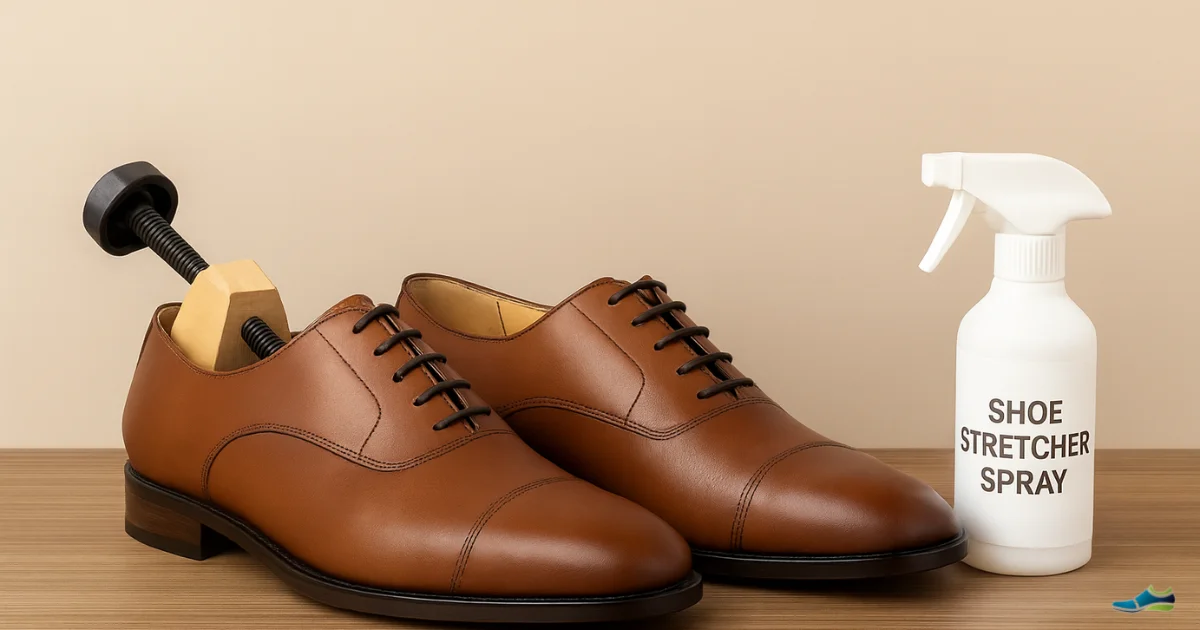
For some of us, finding the right pair of shoes can feel like winning the lottery. But what happens when those shoes pinch a little too tightly across the toes or rub uncomfortably at the sides?
Affiliate disclosure: This article contains affiliate links. If you buy something through one of these links, I may earn a small commission at no extra cost to you.
You don’t have to use shoe stretcher spray to stretch shoes, but it can make the job easier, particularly with leather, suede and other suitable materials. The spray doesn’t actually stretch the shoe itself. It helps soften and relax the material so that a shoe stretcher — or your foot — can create a little extra room more easily.
I’ve used shoe stretcher spray with remarkable results. Manufacturers generally talk about gaining a few millimetres, but in my own experience I’ve achieved considerably more than that with some shoes. I’ve taken pairs that felt almost impossible to tolerate on my feet and stretched them until they were genuinely comfortable to wear.
I always use a shoe stretcher rather than relying on my feet to break tight shoes in. Perhaps that’s payback for my teenage years, when as long as I could force my feet into a pair of fashionable shoes, discomfort didn’t seem to matter quite so much!
So, do you actually need the spray? Not necessarily. In this guide I’ll explain when it helps, when you can manage without it, and how to use it with or without a shoe stretcher.
Read my Shoe Stretch Spray Reviews and choose your favourite
What Exactly Is Shoe Stretcher Spray?
Shoe stretcher spray is simply a specialized liquid solution made to relax and soften the stiff fibers in natural materials like leather, suede, and nubuck.
Many formulas rely on glycerine as a softening agent—which always makes me smile because my mum used to rub the inside heels of our stiff new shoes with a bar of Fairy Household Soap for the exact same reason!
In my experience, a quality spray is an absolute life-saver when you are trying to ease painful hotspots. If you take a close look at your feet and notice a prominent bony widening at the big toe joint, a rigid upward arching of the smaller digits, or fluctuating fluid puffiness over the top instep slope, these physical shape changes closely resemble the typical development of progressive bunions, severe hammer toes, or localized swelling (oedema).
Stiff, unyielding leather walls place intense mechanical pressure across these exact areas, which is why a targeted treatment helps the fibres relax so you aren’t forcing your joints to endure agonizing pain.
Navigating decades of severe arthritic joint inflammation and post-surgical foot changes has taught me that breaking in rigid shoes manually can easily cause terrible blisters and skin chafing. Utilizing a specialized liquid stretcher spray offers a wonderful immediate solution by softening stubborn pressure zones.
However, ensuring your footwear is fundamentally built on a wide or extra-wide last remains the ultimate secret to protecting your skin integrity, keeping your joints perfectly aligned, and preventing your vulnerable bones from painfully grinding against hard internal leather seams. When applied directly to the tight areas of a shoe, it helps the material expand more easily, reducing resistance when pressure is applied with a shoe stretcher.
Think of it like conditioning your skin before a massage — it helps reduce friction and makes the whole process smoother and more effective.
How to Use Shoe Stretcher Spray with a Shoe Stretcher
Using the spray is simple, but it works best when paired with a shoe stretcher rather than relying on it alone.
👑 My Personal Choice: Foot Matters Shoe Stretching Spray
After testing multiple formulas on stiff, unyielding leather shoes, Foot Matters is the exact brand I consistently rely on to ease tight spots.
It deeply saturates and softens genuine leather, nubuck, and suede fibers quickly, allowing you to gain maximum expansion width when you crank your shoe stretcher overnight. It dries completely clear without leaving any stiff lines or chemical stains.
- Best For: Breaking in stiff new leather boots, widening tight toe boxes, and stretching shoe insteps.
- Key Benefit: Alcohol-based formula that evaporates quickly without damaging or warping premium footwear.
Sizing Guidance: While a specialized expanding spray can quickly soften natural leather fibers, it cannot alter a shoe’s fundamental base architecture. Always verify your starting fit against the manufacturer’s physical width specification tables to ensure you aren’t trying to force an extra-depth volume out of a shoe that is simply constructed too narrow.
Here’s a straightforward approach:
- Identify the pressure points – Is it the toe box, the instep, or around the heel that feels tight?
- Apply the spray – For ordinary stretching, start by applying the spray to the area that needs extra give. I’ve found that a light application can help, but when I’ve needed considerably more stretch, thoroughly wetting the inside of the shoe has allowed me to get noticeably more adjustment from the stretcher. Check the manufacturer’s instructions first, particularly with delicate, dyed or unfamiliar materials.
- Insert the shoe stretcher – Place the stretcher into the shoe and adjust it gradually. For targeted relief, use bunion plugs or spot stretchers if your stretcher has them.
- Leave it overnight – Allow at least 6–8 hours for the material to relax and reshape.
- Test and repeat if needed – Try the shoe on the next day. If it still feels snug, repeat the process until you’re comfortable.
I have written a post, Do Shoe Stretchers Work? it’s worth a read, before you start stretching
How To Use Shoe Stretcher Spray without a Shoe Stretcher
- Check your shoe material: Most shoe stretcher sprays work better with genuine leather. Check the product label to ensure your shoes are compatible with the spray.
- Apply the spray to the tight areas: Spray the inside of the shoe, concentrating on the areas that need stretching. I personally use more product when I’m trying to achieve a greater stretch, but remember that without a shoe stretcher your own foot is providing the stretching pressure. Start cautiously and follow the instructions for the particular spray and shoe material.
- Put on thick socks: Wear thick socks to cushion your feet and provide the increase in foot size necessary for stretching.
- Wear the shoes: Put on the shoes and walk around for at least half an hour to allow the spray to soften the material. Your natural foot movements will stretch the shoes to your foot’s shape.
- Allow the shoes to dry: Let the shoes dry completely between stretching sessions to prevent damage and ensure the best results.
- Repeat if necessary: You may need to repeat the process a few times to achieve the desired fit.
The Advantages of Using Shoe Stretcher Spray
That can be particularly useful when you’re trying to ease one specific pressure point rather than widen the whole shoe. If you have a bunion, hammertoe or another area that rubs, you can apply the spray where it’s needed and use a plug or suitable stretcher to concentrate the pressure there.
I’ve also found spray useful when stretching shoes gradually over several sessions. You’re still in control of how far the stretcher moves, but the material is more willing to give rather than having to be forced.
A spray alone won’t reshape stiff shoes — it’s most effective when paired with the right type of stretcher. If the problem is lack of room above the toes rather than width, a toe box stretcher may be more appropriate.
What Happens If You Stretch Shoes Without Spray?
You can stretch shoes without using spray, particularly if the material already has some give. However, with stiffer leather or suede I’ve found the process can take longer and require more gradual adjustment.
- Slower progress – Stretching dry leather or stiff fabric can take multiple attempts.
- Uneven stretching – Shoes may loosen in one area while remaining tight in others.
- Risk of damage – Without softening, leather may crack, crease, or warp when forced.
- More discomfort – It often means wearing the shoes longer before they feel broken in, which can cause blisters or ongoing pain.
When You Might Not Need It
Not every pair of shoes requires a stretcher spray. You might not need one if:
- The shoes are made from very soft leathers or fabrics that already stretch easily.
- You only need a very small adjustment — perhaps a few extra millimetres across one tight area — and the shoe stretcher alone can achieve it.
- You prefer to break in shoes gradually by wearing them around the house with thick socks.
Still, even in these cases, many people find that a spray makes the process quicker and more predictable.
Tips for Getting the Best Results
- Go slowly – Stretch shoes in small increments to avoid overstretching.
- Focus on problem areas – Apply spray only where it’s needed, not all over.
- Give it time – I usually leave my stretchers in overnight, but follow the instructions supplied with your spray and stretcher. Gradual stretching is better than trying to force a big change in one go.
- Pair with quality stretchers – A well-made shoe stretcher and a good spray complement each other perfectly.
- Test first – If your shoes are delicate (like suede or dyed leather), always test the spray on a hidden area to check for discoloration.
If your problem is pressure on the tops of your toes rather than the sides of your feet, a standard width stretcher may be the wrong tool. My FootFitter Toe Box Raiser review looks at a specialist stretcher designed to create extra height inside the toe box.
Conclusion
Shoe stretcher sprays aren’t strictly essential, but they can make a world of difference if you’re dealing with tight, stiff shoes that just won’t give. They help speed up the stretching process, protect delicate materials, and make it easier to target specific problem areas.
If you don’t use one, you’ll probably still get some results — just slower, with more risk of damage and discomfort along the way. For anyone who regularly stretches leather or has sensitive feet, it’s a small investment that can save both time and shoes.
Curious how different sprays perform in real life? Read my Shoe Stretcher Spray Reviews to see which ones actually helped loosen tight leather — and which fell flat.
FAQs
Do I need shoe stretcher spray to stretch shoes?
No. A shoe stretcher can work without spray, particularly on softer materials. However, I’ve found that using stretching spray makes suitable materials easier to work with and can make the stretching process quicker and more effective.
What materials does shoe stretcher spray work best on?
Leather, suede, nubuck and some fabrics generally respond best, although this varies between products. Synthetic materials may not respond in the same way, so always check the instructions on the spray before using it.
Can I use shoe stretcher spray without a shoe stretcher?
Yes. You can apply the spray to a tight area and wear the shoes with thicker socks while the material is pliable. However, I prefer using a shoe stretcher because it gives me much more control and means my feet don’t have to do the uncomfortable part of the stretching.
Can shoe stretcher spray stain leather or suede?
It can depend on the product and the shoe material. I’ve personally used stretching sprays on polished leather, suede and nubuck without experiencing staining, but I would still test a small hidden area first, particularly on light colours or delicate finishes.
How much shoe stretcher spray should I use?
There isn’t one amount that suits every stretching job. For a small adjustment, I find a lighter application can be enough. When I’ve thoroughly wetted the inside of suitable shoes, I’ve personally been able to achieve considerably more adjustment with the stretcher. I wouldn’t automatically saturate every shoe, though — check the spray instructions and test delicate or unfamiliar materials first.
How long should I leave a shoe stretcher in after using spray?
I usually leave mine in overnight and then check the fit. If the shoe still needs more room, I prefer another gradual stretching session rather than forcing a large adjustment in one go. Always follow the instructions supplied with both the spray and your stretcher.
Do I need spray if I’m buying my own shoe stretcher?
You don’t strictly need it, but it genuinely helps. The stretcher provides the pressure; the spray softens the material so that pressure can actually work rather than fighting against stiff, unyielding leather. You’ll usually get a better result, faster, using both together than the stretcher alone.
Medical Disclaimer: The footwear modification techniques, structural leather stretching parameters, and conservative joint comfort metrics compiled across this guide are provided strictly for general informational and educational purposes. They do not constitute personalized professional medical advice, clinical diagnosis, or distinct orthopedic rehabilitation routines. Persistent unresolved joint pain, progressive toe rigidness, or severe lower limb swelling require direct professional assessment and evaluation by your qualified GP or a registered podiatrist.