
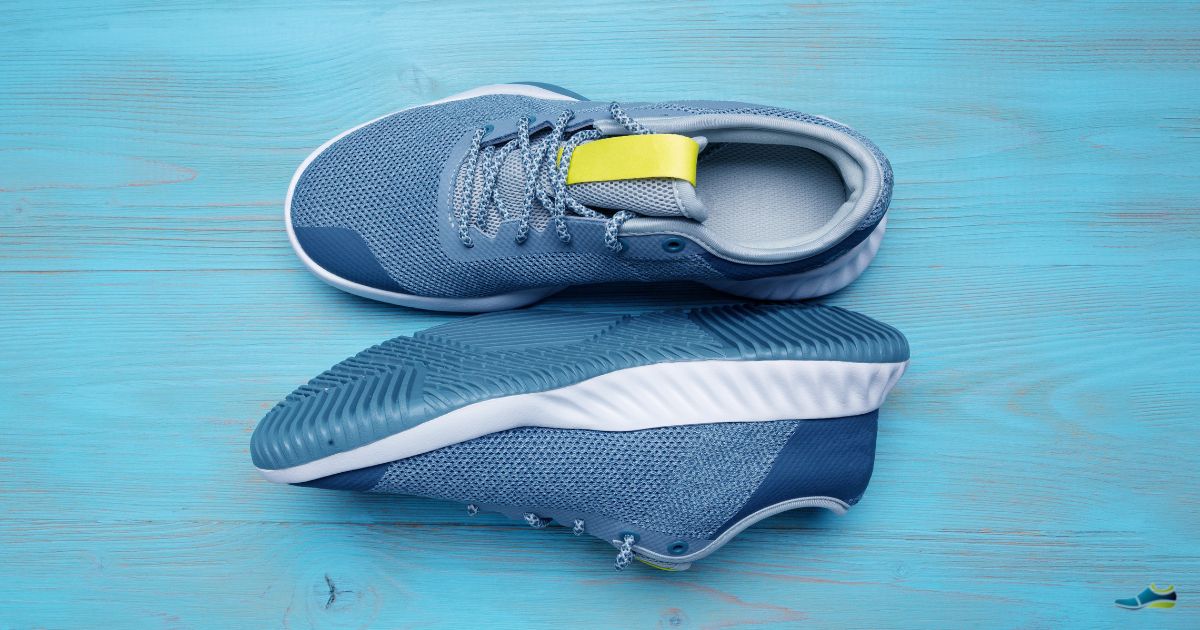
When shopping for running or walking shoes, you may have come across the term “heel-to-toe drop.” Put simply, it’s the difference in height between the heel and the front of the shoe, usually measured in millimetres. It can affect how a shoe feels and how your foot and lower leg move, particularly when running. In this guide, I’ll explain what heel-to-toe drop means, why it matters and what to consider when choosing your shoes.
If you’re struggling with ongoing discomfort, you’ll find even more guidance in our Complete Guide to Foot Pain Relief, which explains common causes, simple treatments, and the best footwear habits for happier feet.
I’ll be honest, drop isn’t something I paid much attention to for years — not until I noticed that some of my shoes seemed to leave my calves aching by the end of the day while others didn’t. Since then, I’ve tended to stick with a moderate drop, somewhere around 6–8mm, in my everyday shoes, because that’s what I’ve personally found comfortable.
What Does Heel to Toe Drop Mean?
The heel to toe drop—also known simply as “drop”—refers to the difference in height (measured in millimetres) between the heel and the forefoot in a shoe. For example, a shoe with a 10mm drop means the heel is 10mm higher than the forefoot.
Heel-to-toe drop can affect how your foot and lower leg move and how forces are distributed during walking or running. It’s discussed most often in running shoes, although you’ll also see drop measurements given for some walking and everyday footwear.
How Heel to Toe Drop Affects Your Gait
Here’s how different drop levels typically affect the way you move:
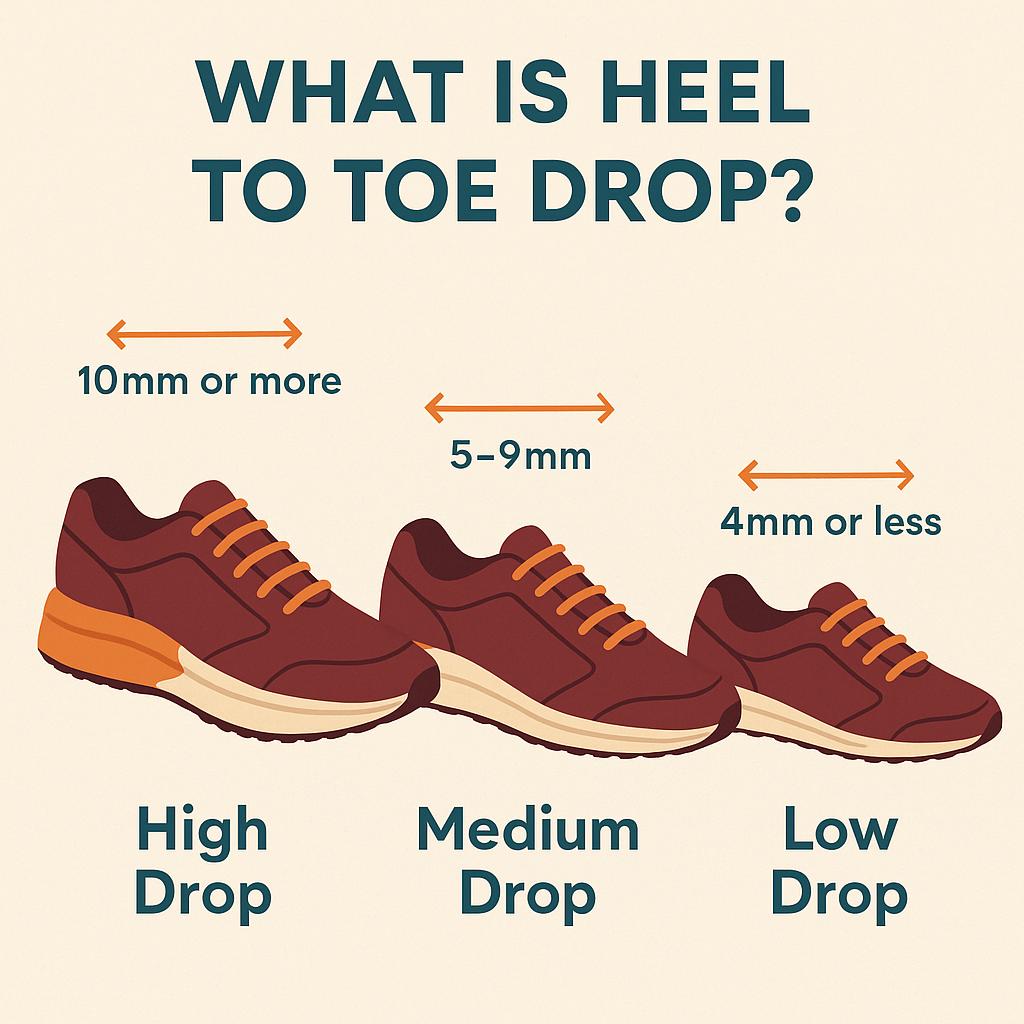
- High drop (10mm+): The heel sits noticeably higher than the forefoot. Higher-drop shoes are common among traditional cushioned running shoes and can reduce the amount of ankle movement required compared with a lower-drop shoe.
- Medium drop (5–9mm): Sits between traditional high-drop and low-drop footwear and is common in many running and walking shoes.
- Low drop (1–4mm): There is relatively little height difference between the heel and forefoot. Moving to a lower drop can change the demands placed on the foot, ankle and calf, so it’s sensible to make a substantial change gradually.
- Zero drop (0mm): The heel and forefoot sit at the same height within the shoe. Zero drop doesn’t necessarily mean minimalist or barefoot — a zero-drop shoe can still have plenty of cushioning.
With my own history of ankle surgery and arthritis, I’ve found very flat shoes uncomfortable, particularly after being on my feet for a long time. That’s my own experience rather than a rule for everyone, but it’s one reason I now pay more attention to heel drop when choosing shoes.
If you’re dealing with Achilles tendonitis specifically, it’s worth reading my guide on the best shoes for Achilles tendonitis too.
How Heel-to-Toe Drop Can Affect Comfort and Movement
There’s no single heel-to-toe drop that’s right for everyone. Different drops can change how a shoe feels and alter the demands placed on different parts of the leg and foot.
Does Heel Drop Matter in Wide-Fitting Shoes?
Wider fitting shoes cater to people with broader feet, bunions, swelling, or foot deformities. If you’re not sure whether you actually need a wider fitting shoe, it’s worth measuring your feet first. You can follow my simple guide to measuring your foot width at home.
But heel drop still matters even if the width fits perfectly. Here’s what to consider:
- Orthotics: If you wear orthotics or supportive insoles, make sure there’s enough room inside the shoe for them and check whether your podiatrist or other healthcare professional has recommended a particular type of footwear.
How to Find a Shoe’s Heel-to-Toe Drop
The easiest way to find a shoe’s heel-to-toe drop is to check the manufacturer’s specifications for the individual model. It’s usually given in millimetres and is calculated as the difference between the heel and forefoot stack heights.
Trying to measure it accurately yourself can be difficult because the outside of the shoe doesn’t necessarily show where your foot sits inside it. If a manufacturer doesn’t publish the drop, I’d treat any home measurement as an estimate rather than an exact figure.
Choosing the Right Drop for Your Needs
When deciding what heel drop is right for you, consider the following factors:
1. Your Activity
- Running: There’s no single best drop for every runner. Your usual footwear, running style, comfort and any history of problems with your feet or lower legs can all influence what feels right. If you’re making a substantial change in drop, particularly towards a much lower drop, give yourself time to adjust.
- Walking: Comfort is more important than aiming for a particular number. If you’ve found a certain type of walking shoe comfortable over long distances, its heel drop can be a useful reference when comparing other shoes.
- Casual wear: Again, there’s no ideal number for everyone. Think about how the whole shoe feels rather than choosing it on heel drop alone.
2. Foot Type and Health
If you have an existing foot or ankle problem, choosing a heel drop isn’t simply a matter of matching a diagnosis to a number. What feels comfortable can depend on the individual, the condition and the rest of the shoe. If you’re being treated for persistent foot or ankle pain, follow any footwear advice you’ve been given by your podiatrist, physiotherapist or other healthcare professional.
For more information, see my guides to shoes for flat feet and plantar fasciitis pain relief
3. Shoe Fit
Heel drop is only one part of how a shoe fits and feels. With wider-fitting shoes, you still need enough width across the forefoot, enough room around the toes and a secure overall fit. If your toes feel cramped from above even when the width is right, you may need extra height inside the front of the shoe. My guide to choosing a high volume toe box explains why.
Features such as toe box shape, shoe volume and extra shoe depth can all affect comfort just as much as heel drop.
Infographic: Understanding Heel-to-Toe Drop
Final Thoughts
Heel-to-toe drop is only one feature of a shoe, but understanding what it means can be useful when comparing different styles. If you’ve noticed that you find some shoes more comfortable than others, checking their heel drop may help you identify another feature worth considering when you shop.
Choosing comfortable footwear isn’t just about heel drop. Shoe width, toe box design, shoe volume and the right support all work together. If you’d like to understand how these features fit together, take a look at my Complete Guide to Finding Your Perfect Fit.
If you’re comfortable in your current shoes, their heel drop can give you a useful reference point. If you decide to make a substantial change — particularly to a much lower drop — it’s sensible to make the transition gradually rather than changing everything at once.
📘 Drop is one piece of a much bigger fit puzzle. If you’d like the full picture — width, drop, toe box and everything else I’ve learned through years of trial and error — it’s all in The Wide Fit Shoe Survival Guide.
Frequently Asked Questions
Q: What is considered a high heel-to-toe drop?
A: A heel-to-toe drop of around 10mm or more is generally described as high drop. However, heel drop and cushioning are separate features, so a higher-drop shoe isn’t necessarily more cushioned.
Q: Is a zero-drop shoe better?
A: Not necessarily. Zero-drop simply means that the heel and forefoot sit at the same height. Some people find zero-drop shoes comfortable, while others prefer some difference in height. If you’re used to a higher drop, it’s sensible to transition gradually rather than making a sudden change.
Q: Can heel drop affect knee pain?
A: Heel-to-toe drop can change the way forces are distributed through the lower limbs, but knee pain has many possible causes and there isn’t one drop that’s right for everyone. If you have persistent knee pain, don’t rely on changing shoe drop as a treatment — speak to an appropriate healthcare professional.
Q: Do all wide-fit shoes have the same drop?
A: No. Heel drop varies across all shoe types, even among wide-fit styles. Always check the specifications.
Medical disclaimer: This article is for general information and isn’t a substitute for medical advice. If you have persistent foot, ankle or leg pain, or you’re unsure what type of footwear is suitable for you, speak to your GP, podiatrist or physiotherapist.
About Sue Holland
Sue writes WiderFittingShoes.com from first-hand experience of finding footwear for wide and difficult-to-fit feet. After two hip replacements, two ankle replacements and years of dealing with arthritis, swelling and feet that don’t always behave the same from one day to the next, she shares the practical things she’s learned about shoe fit, width and comfort.