
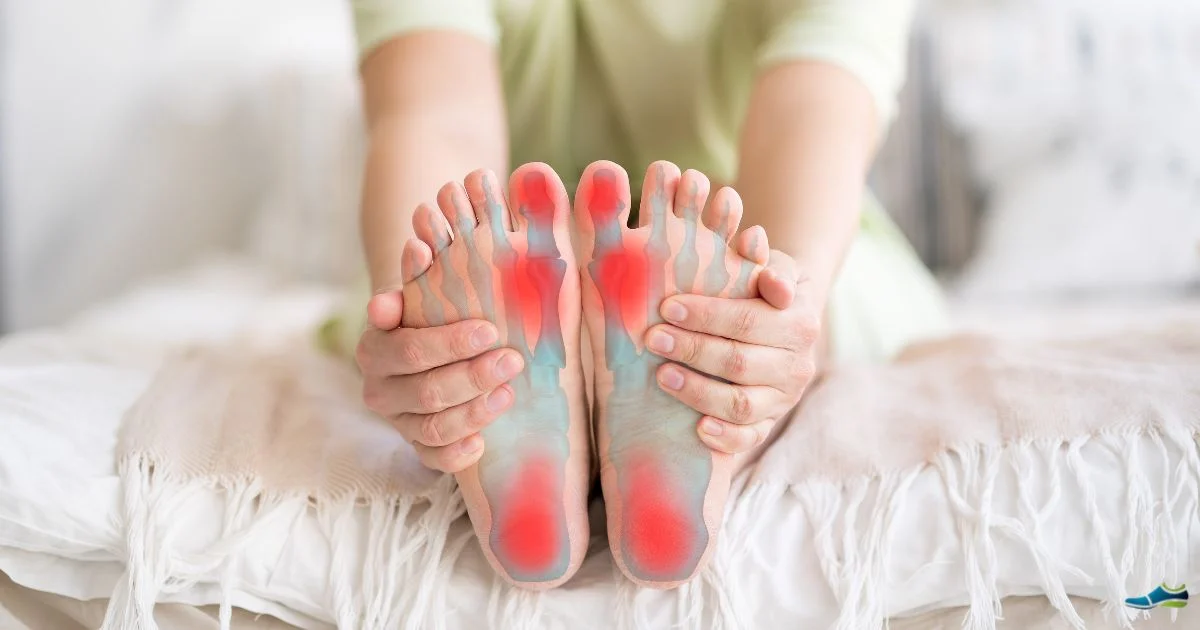
To get relief from plantar fasciitis, rest your foot when possible, apply a wrapped ice pack to the painful area, and gently stretch the sole of your foot and heel. Wear shoes with cushioned heels and good arch support, and consider insoles or heel pads for extra comfort. Avoid walking barefoot on hard surfaces and reduce activities that aggravate the pain while it settles.
If you’ve been searching for how to get relief from plantar fasciitis, this guide brings together everything you need to know: causes, symptoms, immediate relief, longer-term fixes, and practical prevention.
I’ve had a brush with this myself, and I count myself lucky — mine only lasted five or six days. I resisted the temptation to switch straight into very soft, heavily cushioned shoes because, for my feet, cushioning without enough support often isn’t comfortable.
I stuck with supportive shoes while it settled. I can’t say that’s why mine cleared so quickly, but it certainly felt better than putting my already troublesome feet into something soft and floppy.
If foot pain is affecting your daily comfort, you might also find our Complete Guide to Foot Pain Relief helpful — it looks at some of the common causes of foot pain and the practical things that may help.
Affiliate disclosure: This article contains affiliate links. If you buy something through one of these links, I may earn a small commission at no extra cost to you.
📌 At a Glance
Here’s everything I know about plantar fasciitis — the causes, quick relief, and what actually helps long-term.
If you’d rather skip straight to specific questions, jump to the FAQs below.
What is Plantar Fasciitis?
The plantar fascia is a strong band of tissue running underneath your foot from the heel towards the toes. It helps support the arch of your foot and absorbs some of the stresses involved in walking and standing.
Plantar fasciitis is a common cause of pain underneath the heel and foot. The pain is often particularly noticeable when you take your first steps after sleeping or resting, and may ease somewhat once you start moving.
Those symptoms can also have other causes, though, so heel pain alone doesn’t necessarily mean you have plantar fasciitis.
Common Causes and Risk Factors
Plantar fasciitis can develop when the plantar fascia is repeatedly placed under more strain than it can comfortably handle. Several things may increase the likelihood of developing it, including:
- Footwear that doesn’t provide enough support or cushioning for your feet
- Lots of running, walking or standing
- A sudden increase in exercise or activity
- Tight calf muscles
- Foot shape and the way your foot moves when you walk
- Being overweight, which can increase the load on your feet
If your arches have flattened or your feet roll inward when you walk, this can affect how pressure is distributed through your feet.
It’s worth checking out: The Causes and Symptoms of Flat Feet
Symptoms of Plantar Fasciitis
- Sharp heel pain, often worse first thing in the morning
- Pain after periods of rest that eases as you move
- Discomfort that increases with prolonged standing or activity
- Tenderness at the bottom of the heel
- Pain that sometimes radiates along the arch
These symptoms are commonly associated with plantar fasciitis, but other conditions can also cause pain around the heel and arch. If you’re unsure what’s causing yours, particularly if the pain is severe or persistent, it’s worth getting it properly assessed.
Immediate Relief from Plantar Fasciitis
If your plantar fasciitis is painful, there are several simple things you can try to make your foot more comfortable while it settles:
- Cold therapy: Apply a wrapped ice pack to the painful area for up to 20 minutes at a time, or gently roll your foot over a cold or frozen bottle.
- Reduce aggravating activity: Cut back temporarily on activities that make the pain worse, particularly running or prolonged walking on hard surfaces.
- Gentle stretching: Calf and plantar fascia stretches may help reduce tension and improve flexibility.
- Supportive footwear: Choose comfortable shoes with cushioning and suitable arch support, and avoid walking barefoot on hard floors.
- Pain relief: A pharmacist can advise whether an over-the-counter painkiller or anti-inflammatory treatment is suitable for you.
Treatment and Longer-Term Relief
Plantar fasciitis often improves with time, but it can take a while to settle. Continuing with simple measures that reduce irritation and improve flexibility may help during recovery.
At-Home Care
- Regular gentle calf and plantar fascia stretches
- Reducing activities that aggravate the pain while it settles
- Wearing comfortable, supportive footwear
- Trying insoles or heel pads if they make your shoes more comfortable
- Avoiding walking barefoot on hard surfaces if this makes the pain worse
Professional Care
If your symptoms aren’t improving, a GP, physiotherapist or podiatrist can assess what’s causing the pain and discuss whether further treatment would be appropriate.
Depending on your individual circumstances, this might include physiotherapy or other treatments for persistent plantar fasciitis. Surgery is rarely needed.
What I’d Actually Look For
Night splints are sometimes used for plantar fasciitis, particularly when pain is troublesome with those first few steps in the morning. They hold the foot in a position that keeps the calf and plantar fascia gently stretched while you sleep.
The PRO 11 Wellbeing night splint is one example I’ve found on Amazon. I haven’t used this particular splint myself, so I’m not recommending it from personal experience, but it’s the type of design I’d look at if I wanted to try a night splint.
Check PRO 11 Wellbeing night splint on Amazon
Fit tip: Check the manufacturer’s sizing guide before ordering. A night splint should feel secure without being painfully tight or putting uncomfortable pressure on your toes or foot.
Why the Right Shoes Matter for Plantar Fasciitis
Shoes won’t cure plantar fasciitis, but comfortable, supportive footwear can make a painful foot easier to live with while it settles.
For me, this is where the difference between soft and supportive really matters. Lots of cushioning can feel lovely when you first put a shoe on, but that doesn’t necessarily mean the shoe gives your foot the support it needs.
Things I’d look for include:
- Good cushioning under the heel and through the midsole
- Suitable arch support that feels comfortable under your foot
- A secure fit so your foot isn’t moving around excessively inside the shoe
- Enough width and depth for your foot without squeezing it
- Removable insoles if you need room for your own insoles or orthotics
Reducing Strain on Your Feet
There’s no guaranteed way to prevent plantar fasciitis, but a few sensible habits may help reduce unnecessary strain on your feet:
- Increase walking, running or other exercise gradually rather than suddenly
- Wear shoes that are comfortable and supportive for the activity you’re doing
- Replace badly worn footwear when the cushioning or support has deteriorated
- Keep your calves and feet flexible with regular gentle stretching
- Give your feet time to recover if an activity starts causing pain
When to Get Medical Advice
It’s worth speaking to your GP, physiotherapist or podiatrist if:
- The pain is severe, getting worse or isn’t improving with self-care
- Heel pain is affecting your normal walking or everyday activities
- You have numbness, tingling, significant swelling or redness around the foot
- You’re unsure whether plantar fasciitis is actually causing the pain
- You have diabetes or problems with circulation and develop a new foot problem
Frequently Asked Questions About Plantar Fasciitis
How do I know if my heel pain is plantar fasciitis?
Plantar fasciitis commonly causes pain underneath the heel, particularly with the first few steps after sleeping or resting. Other conditions can cause similar symptoms, though, so persistent or severe heel pain is worth getting assessed.
Can plantar fasciitis go away on its own?
Plantar fasciitis often improves over time, although recovery can be gradual. Reducing activities that aggravate it, gentle stretching and comfortable, supportive footwear may help while it settles.
What’s the quickest way to ease plantar fasciitis pain?
There isn’t one treatment that works immediately for everyone. Resting from aggravating activities, cold therapy, gentle stretching and supportive footwear are some of the simple measures commonly used to make the foot more comfortable.
Can I keep exercising with plantar fasciitis?
That depends on how painful it is and the activity you’re doing. It may help to temporarily reduce activities that aggravate the pain and choose lower-impact alternatives while your foot settles.
Are night splints worth trying?
Night splints are sometimes used when plantar fasciitis causes troublesome pain with the first steps in the morning. They won’t suit everyone, but they are one option you could discuss with a physiotherapist or podiatrist if morning pain is a persistent problem.
Can plantar fasciitis affect both feet?
Yes. Plantar fasciitis can affect one foot or both feet.
How long does plantar fasciitis take to improve?
There’s no fixed recovery time. Some cases settle relatively quickly while others can persist for several months. If your symptoms aren’t improving, it’s worth getting advice rather than simply continuing to put up with the pain.
Are custom orthotics better than ordinary insoles?
Not necessarily for everyone. Some people find ordinary supportive insoles comfortable, while others may benefit from professional assessment and individually prescribed orthotics. What matters is finding an option that’s appropriate and comfortable for your feet.
Is walking barefoot bad for plantar fasciitis?
Some people find walking barefoot, particularly on hard floors, makes their heel pain worse. If that’s the case for you, wearing comfortable supportive footwear indoors may help.
When should I get plantar fasciitis checked?
Get medical advice if the pain is severe, getting worse, affecting your normal activities or isn’t improving with self-care. You should also seek advice for symptoms such as numbness, significant swelling or redness, or if you have diabetes or circulation problems and develop a new foot problem.
The Bottom Line
Plantar fasciitis can be remarkably painful for something involving such a relatively small area of the foot. I was lucky that my own bout only lasted five or six days, but I know that isn’t everyone’s experience.
There’s no single quick fix that works for everybody. Reducing whatever is aggravating the pain, gentle stretching and wearing comfortable, supportive shoes may all help while it settles.
And don’t assume every pain underneath your heel is plantar fasciitis. If it’s severe, getting worse or simply isn’t improving, it’s worth finding out what’s actually causing it rather than trying to treat it yourself indefinitely.
Medical disclaimer: This article is for general information only and isn’t a substitute for medical advice, diagnosis or treatment. If you have severe, persistent or worsening heel pain, or you’re unsure what’s causing it, speak to your GP, podiatrist or physiotherapist.
About Sue Holland
Sue writes WiderFittingShoes.com from first-hand experience of finding footwear for wide and difficult-to-fit feet. After two hip replacements, two ankle replacements and years of dealing with arthritis, swelling and feet that don’t always behave the same from one day to the next, she shares the practical things she’s learned about shoe fit, width and comfort.