
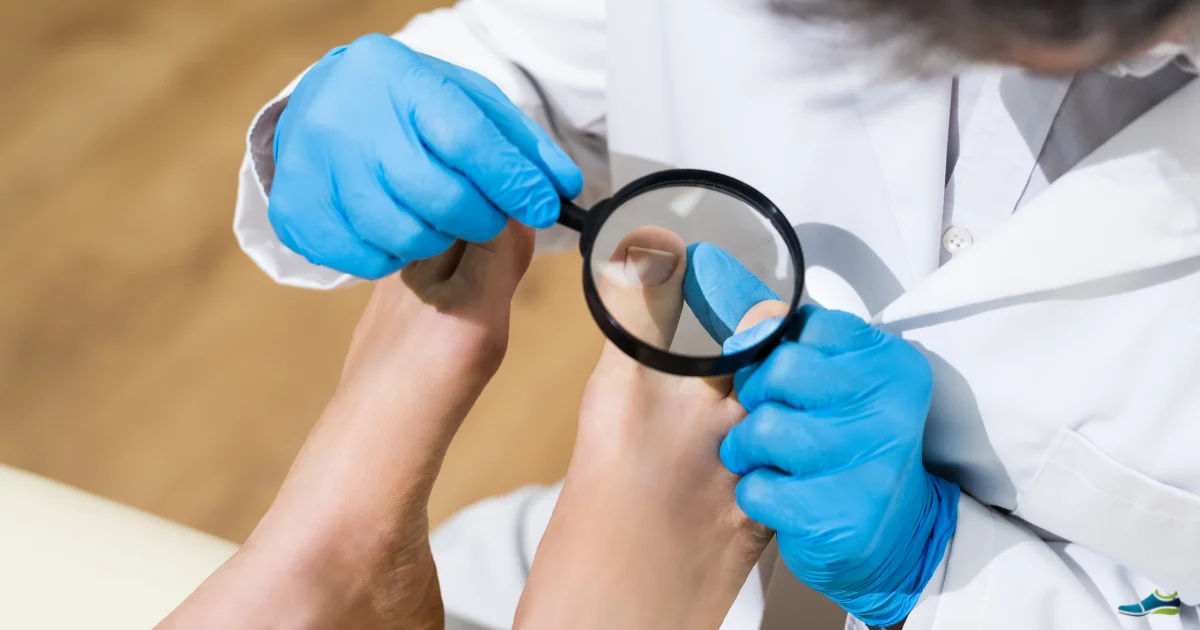
Few things make walking more miserable than an ingrown toenail. That sharp sting every time your toe catches the inside of a shoe can make something seemingly minor surprisingly painful.
Some mild ingrown toenails can be managed at home, while others need professional treatment. And although footwear can’t treat an ingrown nail, giving a sore toe enough room can make walking considerably more comfortable while it settles or is being treated.
This guide looks at what causes ingrown toenails, what can help, when to get professional advice, and what to look for in shoes if you’re prone to them.
Affiliate disclosure: This article contains affiliate links. If you buy something through one of these links, I may earn a small commission at no extra cost to you.
I’ll be honest, nail care isn’t usually the headline act when you’re dealing with arthritis and joint replacements — but after enough years of appointments and check-ups, you learn that the small things (like a properly trimmed nail) genuinely matter just as much as the bigger issues. It’s one of those areas where seeing a professional early really does save you trouble later.
What Are Ingrown Toenails?
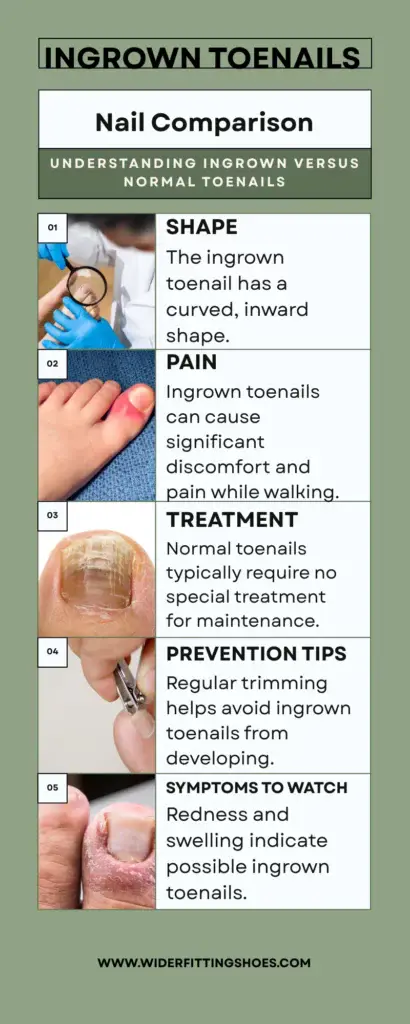
An ingrown toenail happens when the edge or corner of the nail grows into the skin beside it. It most commonly affects the big toe and can make the area sore, red and swollen.
If it becomes more inflamed or infected, you may also notice increasing pain or discharge. But not every sore or red area around a toenail is necessarily an ingrown nail, so if you’re unsure what’s causing it, it’s worth getting it checked rather than trying to dig at the nail yourself.
One thing I can certainly relate to is how much difference shoe pressure makes when a toe is already sore. After my own foot and ankle problems, the last thing I’d want is a tender nail edge being squeezed inside a tight toe box.
Looking for a bigger picture view of foot pain? You’ll find it in our Complete Guide to Foot Pain Relief — a practical overview that covers every cause from heel to toe and how to ease it fast.
Causes and Risk Factors
Ingrown toenails can be more likely when:
- Toenails are cut too short or the corners are rounded, allowing the surrounding skin to grow over the nail edge.
- Shoes put repeated pressure on the toes, particularly if the toe box is narrow or shallow.
- The toe or nail has been injured, whether from stubbing it or repeated pressure.
- Your nails are naturally very curved or thick, which can make the edges more likely to press into the surrounding skin.
- Your feet sweat heavily, which can soften the skin around the nail.
If you have diabetes, reduced sensation in your feet or poor circulation, it’s particularly important to get professional advice about foot and nail problems rather than trying to deal with an ingrown nail yourself.
Common Signs of an Ingrown Toenail
An ingrown toenail can cause:
- Pain or tenderness along one or both edges of the nail
- Redness and swelling around the nail edge
- Skin beginning to grow over or bunch up around the nail
- Discharge or pus if the area has become infected
These symptoms can have other causes, so if you’re not sure what’s going on — particularly if the toe is becoming increasingly painful, red or swollen — get professional advice rather than trying to cut into the nail yourself.
How Footwear Plays a Role
Footwear won’t treat an ingrown toenail, but it can make a painful one considerably more comfortable — or considerably more miserable. If the side or top of your toe is already sore, squeezing it into a narrow or shallow toe box simply adds more pressure to an area that doesn’t need it.
While the nail is sore, look for:
- A wide, deep toe box so the affected toe isn’t being squeezed from the sides or above
- Soft uppers that don’t press against the tender nail edge
- Enough length so your toes aren’t hitting the front of the shoe
- A secure fit through the midfoot so your foot isn’t constantly sliding forwards
Treatment Options
At‑home care
- At-home care
- If the ingrown toenail is mild and there are no signs of infection, simple measures may help while it settles:
- Keep the foot clean and dry
- Wear roomy shoes or sandals that don’t press against the affected toe
- Avoid cutting down the side of the nail or trying to dig out the offending corner yourself
- Let the nail grow out naturally rather than repeatedly cutting it shorter
- If you’re unsure whether it’s safe to manage yourself, ask a pharmacist, GP or podiatrist.
Professional treatment
If the nail is particularly painful, keeps growing in or has become infected, a podiatrist or GP can assess what treatment is appropriate.
For recurring or more troublesome ingrown toenails, part of the nail may sometimes be removed. A treatment can also be applied to the nail root to reduce the chance of that troublesome section growing back.
Antibiotics aren’t automatically needed for an ingrown toenail and should only be used when prescribed for an infection.
Prevention Tips
You can’t prevent every ingrown toenail, particularly if your nails are naturally very curved, but a few simple habits may reduce the chances of problems:
- Trim toenails straight across rather than cutting deeply down the sides or rounding the corners
- Don’t cut them excessively short
- Choose shoes with enough width, depth and length so your toes aren’t being squeezed or repeatedly hitting the front
- Change damp or sweaty socks and give footwear time to dry between wears
- Get professional help with nail cutting if you struggle to reach or safely manage your toenails
Best Footwear for Ingrown Toenails
If you’ve got a sore ingrown toenail, the main job of your shoes is simple: don’t make it hurt more.
Look for:
- Plenty of toe-box width so the sides of your toes aren’t being squeezed together
- Enough depth above the toes so the upper isn’t pressing down on the affected nail
- Soft uppers with minimal seams around the toe area
- Enough length to stop the affected toe hitting the front of the shoe
- A secure fit further back so your foot isn’t sliding forwards as you walk
Don’t automatically solve the problem by buying a longer shoe, though. If the length is already right, you may simply need more width or toe-box depth. That’s particularly important if the nail has become thick as well as sore.
What I’d Actually Look For
If your toenails are thick or difficult to cut, ordinary little nail clippers can be awkward to use. A larger toenail clipper with longer handles and a wider jaw may be easier to control, particularly if hand strength or dexterity isn’t what it used to be.
RONAVO podiatrist-style toenail clippers are one example I found on Amazon. I haven’t used this particular pair myself, so I’m not recommending them from personal experience, but they’re the type of larger clipper I’d look at if standard nail clippers were becoming difficult to manage.
If you can’t safely cut your own toenails — particularly if you have diabetes, poor circulation or reduced sensation in your feet — get professional advice rather than struggling with them yourself.
Check RONAVO toenail clippers on Amazon
When to See a Doctor or Podiatrist
Get professional advice if:
- The pain is severe or getting worse
- Redness or swelling is spreading, or there’s pus or other discharge
- The ingrown toenail keeps coming back despite sensible nail care and footwear
- You’re struggling to cut or manage the nail safely yourself
- You have diabetes, poor circulation or reduced sensation in your feet — in these circumstances, don’t try to dig out or treat an ingrown nail yourself
If you’re simply not sure whether the problem actually is an ingrown toenail, that’s also a perfectly good reason to have it checked.
If the nail itself has also become thick, discoloured or crumbly, my guide to fungal toenails explains some of the other changes that can affect toenails.
FAQs
Can I remove an ingrown toenail myself?
Don’t try to dig out or cut down the side of an ingrown nail yourself. Mild cases may settle with simple measures such as keeping pressure off the toe and allowing the nail to grow out, but a painful, infected or persistent ingrown nail should be professionally assessed.
How long does an ingrown toenail take to settle?
There’s no fixed timescale. A mild problem may improve as the irritation settles and the nail grows, while an infected or recurring ingrown toenail can take longer and may need professional treatment.
Can tight socks contribute to ingrown toenails?
Very tight socks can add pressure around an already sore toe, particularly when they’re worn inside narrow or shallow shoes. If a nail is painful, avoid anything that noticeably squeezes the affected toe.
Is partial nail removal permanent?
Not necessarily. Sometimes only the troublesome section of nail is removed and allowed to regrow. In other cases, part of the nail root is treated to reduce the chance of that edge growing back. A podiatrist can explain which approach is appropriate for the individual nail.
Medical Disclaimer: This article is for general information only and isn’t a substitute for medical advice, diagnosis or treatment. If an ingrown toenail is painful, worsening, appears infected or keeps returning, speak to a GP, pharmacist or podiatrist. If you have diabetes, poor circulation or reduced sensation in your feet, get professional advice before trying to treat an ingrown toenail yourself.
Sources and Further Reading
About Sue Holland
Sue writes WiderFittingShoes.com from first-hand experience of finding footwear for wide and difficult-to-fit feet. After two hip replacements, two ankle replacements and years of dealing with arthritis, swelling and feet that don’t always behave the same from one day to the next, she shares the practical things she’s learned about shoe fit, width and comfort.