
Finding and buying a lovely pair of wide-fitting trainers should be a relief, but for many of us, the trouble doesn’t stop at the width of the toe box. Another problem can be a tight instep — the area across the top of your foot between your toes and ankle.
I consider myself lucky because I don’t have a naturally high instep. However, following both of my ankle surgeries — and for approximately 18 months afterwards — the persistent swelling on the top of my feet caused this exact same painful problem. Even “wide fit” shoes would pinch across the top of my foot.
So if your trainers fit nicely everywhere else but feel far too tight across the top, there are a few things you can try before giving up on them.
Affiliate disclosure: This article contains affiliate links. If you buy something through one of these links, I may earn a small commission at no extra cost to you.
If you have a naturally high instep, or your feet sometimes swell across the top, you may find that even wide-fitting trainers feel uncomfortably tight across the instep.
When a trainer fits perfectly everywhere else, you don’t necessarily want to give up on it.
Depending on what the trainer is made from and how tight it is, you may be able to create a little more room across the instep. Sometimes, though, simply changing the way you lace it can make enough difference without stretching anything at all.
Before trying to alter your trainers, it’s worth checking that you aren’t fighting a losing battle with the wrong size or width to begin with. You can use my Home Foot Width Calculator to check your foot width before trying to modify the footwear.
Here are the methods I’d try, starting with the simplest and least invasive.
The Lacing Hack: Parallel (Window) Lacing
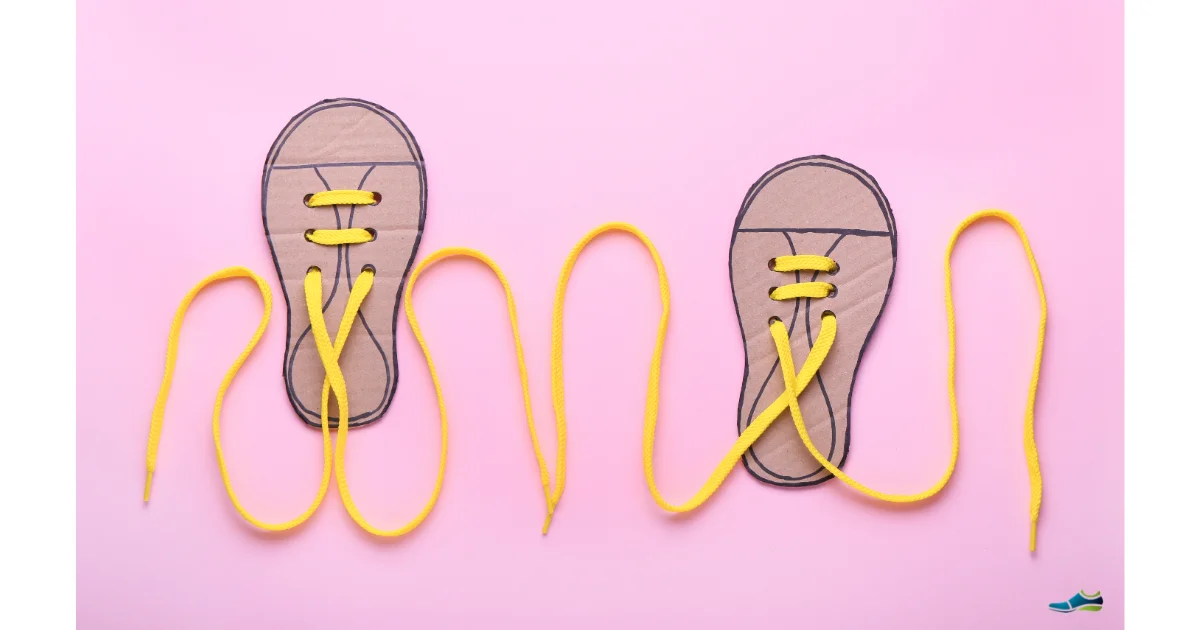
Before you buy a stretching tool or spray, the first thing I’d try is changing the way your trainers are laced. Standard criss-cross lacing can put extra pressure across the highest part of your instep, whereas changing the lacing pattern can leave that area with a little more breathing room.
How to do Parallel Lacing:
- Unlace your trainer completely.
- Thread the lace through the bottom two eyelets so you have a straight horizontal bar.
- Instead of crossing the laces diagonally, run each lace up the inside of the shoe to the next eyelet on the same side.
- Bring the lace out through the eyelet and run it straight across to the opposite side, creating another horizontal bar.
- Continue up the shoe to create a ladder-like pattern.
Why it can help: By removing the diagonal crosses over the instep, you reduce the amount of lace pressing directly across that area. Sometimes that small change is all you need.
The video below shows another lacing technique designed to take pressure away from a particular high spot on the instep. I’ve found that either method is a great place to start.
The Next Step: An Instep or Multi-Way Shoe Stretcher
If changing the lacing isn’t enough, the next option is to see whether the trainer can be stretched slightly across the instep.
A standard shoe tree is mainly there to help maintain the shape of a shoe, whereas a Multi-Way Shoe Stretcher can apply pressure in specific areas. Depending on the design, some can increase width as well as create a little more room across the instep.
If width isn’t the problem and you simply need more room across the top of the foot, a dedicated vamp stretcher may be a better — and sometimes cheaper — option.
How to use an instep stretcher:
- Check that the stretcher is suitable for the type and material of trainer you have, and follow the manufacturer’s instructions.
- Position the stretcher so the raised instep section sits beneath the area that feels tight.
- Adjust it gradually until it is applying gentle pressure to the upper.
- Leave it for the period recommended by the stretcher manufacturer, then remove it and check the fit.
- If it still needs more room, repeat gradually rather than trying to achieve the whole stretch in one go.
Can a Shoe Stretching Spray Help?
A shoe stretching spray can sometimes help soften suitable materials while you gently stretch a tight area, but this is one method where I’d be cautious. Trainers can contain several different materials, finishes, dyes and adhesives, and what’s harmless to one pair may damage another.
If you use a commercial shoe stretching spray, check that the manufacturer says it is suitable for the material of your trainers and follow the instructions on the bottle. I’d also test it on a small, inconspicuous area first.
If you decide to use a stretching spray:
- Check that it is suitable for the trainer material.
- Test a small hidden area first.
- Apply it only as directed by the manufacturer.
- Stretch the tight area gradually, either by wearing the trainers if they are comfortable enough to do so or by using a suitable stretcher.
- Check the result before repeating the process.
Knowing When to Walk Away
Some materials are more willing to stretch than others, and even then there’s a limit to what you can achieve. Leather and some softer materials may give a little, while many synthetic trainer uppers can be far less forgiving. Construction matters too, so there comes a point when more stretching simply isn’t the answer.
If you’ve changed the lacing and carefully tried an appropriate stretching method but the trainer still presses painfully across the top of your foot, I’d stop there. A shoe that needs a battle every time you put it on probably isn’t the right shoe for your foot.
In that situation, look for trainers with more depth through the upper and plenty of adjustability. Brands such as Cosyfeet and DB Wider Fit Shoes are worth exploring because they offer footwear designed for people who need more room than a standard shoe provides.
If you’re trying to make shoes more comfortable because stiff materials are aggravating arthritic feet, you can also read my guide to why traditional breaking-in advice doesn’t always work for arthritic feet.
The Bottom Line
If your trainers feel tight across the instep, don’t immediately reach for the most aggressive stretching method you can find. Start with the simple things.
Changing the lacing may be enough to take pressure off the top of your foot. If it isn’t, a suitable instep or multi-way stretcher may create a little extra room, and a stretching spray can sometimes help with materials that are suitable for it.
But there’s a limit. If a trainer still hurts after sensible adjustments, don’t keep attacking it in the hope that one more trick will suddenly make it fit.
Sometimes the best shoe-stretching technique is knowing when to stop stretching the shoe.
About Sue Holland
Sue Holland writes from lived experience — she’s had two hip replacements, two ankle replacements, flat feet, arthritis and chronic swelling. Her goal is to help readers find real-world comfort, not just theory.
Medical Disclaimer: This article is for general information only and isn’t a substitute for medical advice, diagnosis or treatment. If tight footwear is causing persistent pain, numbness, skin damage or unexplained swelling, seek advice from an appropriate healthcare professional or podiatrist. If you have diabetes, reduced sensation or circulation problems, get professional advice about any foot or skin problems rather than relying on footwear adjustments alone.