The treatment for athlete’s foot usually starts with an over-the-counter antifungal cream, combined with good foot hygiene to keep the skin dry and prevent reinfection. This guide explains the causes, symptoms, treatment options, prevention tips and footwear habits that can help clear the infection and stop it coming back.
I’ll be honest, this isn’t one I’ve dealt with in any memorable way myself — if I’ve had a mild dose at some point over the years, it wasn’t bad enough to stick in my memory, which tells you something about how manageable it usually is when caught early. What I do know, from years of paying close attention to footwear and hygiene through everything else I’ve dealt with, is how much a good shoe rotation and the right socks genuinely matter here.
Affiliate disclosure: This article contains affiliate links. If you buy something through one of these links, I may earn a small commission at no extra cost to you.
📌 At a Glance
Here’s everything I know about athlete’s foot — what causes it, what actually clears it up, and how to stop it coming back.
If you’d rather skip straight to specific questions, jump to the Q&A below.
What Is Athlete’s Foot?
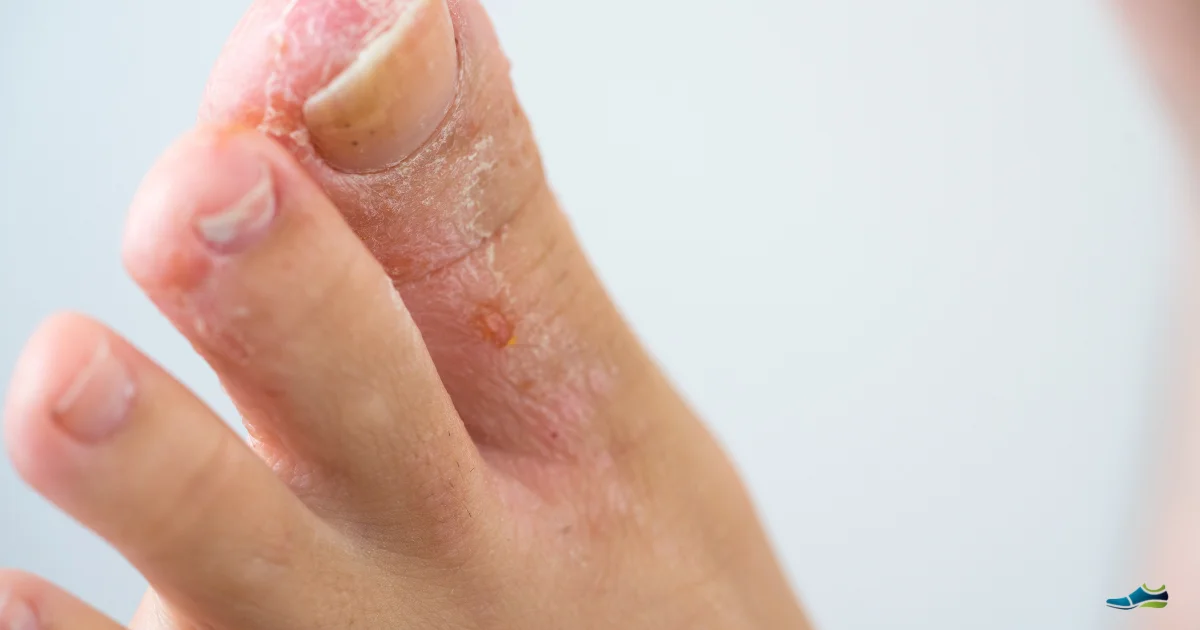
Athlete’s foot (tinea pedis) is a contagious fungal skin infection that thrives in warm, damp conditions. It usually begins between the toes but can spread to the soles, toenails, and even hands if untreated.
If your foot pain isn’t limited to this one condition, our Complete Guide to Foot Pain Relief walks you through all the main causes, treatments, and footwear tips to keep every step more comfortable.
Causes of Athlete’s Foot
- Fungi (dermatophytes) growing on moist, sweaty skin
- Wearing tight or non-breathable shoes
- Walking barefoot in communal showers, pools, or gyms
- Re-using damp socks or shoes without drying properly
- Sharing towels, shoes, or bedding with an infected person
Symptoms of Athlete’s Foot
- Itchy, stinging, or burning skin between the toes
- Peeling, cracked, or reddened skin
- Small blisters that may ooze
- Dry, scaly skin on soles or sides of the feet
- Thickened or discoloured toenails if the fungus spreads
Fast Relief From Athlete’s Foot
- Over-the-counter antifungals – creams, sprays, or powders used consistently for 2–4 weeks (and continued for a week after symptoms clear).
- Keep feet dry – towel between the toes; use a separate foot towel to stop spreading fungus.
- Change socks often – at least daily; twice if sweaty. Opt for cotton blends or moisture-wicking socks.
- Disinfect shoes – antifungal sprays or UV shoe devices stop re-infection.
- Avoid scratching – scratching spreads fungus and risks secondary infection. Soothing powders or sprays can ease the itch.
What I’d Actually Look For
Scholl’s Athlete’s Foot Spray is a genuinely well-established option, using tolnaftate as the active antifungal ingredient. If you want to properly stop reinfection too, their Antifungal Shoe Spray is worth pairing with it — treat the foot, then disinfect the shoe, so you’re not just reinfecting yourself from the same pair.
Check Scholl’s Athlete’s Foot Spray on Amazon
How Long Does Athlete’s Foot Take to Clear?
Mild cases often improve within a week of treatment, but most antifungal creams should be continued for two to four weeks, and for around a week after symptoms disappear, to reduce the risk of the infection returning.
Footwear Habits to Stop Athlete’s Foot Coming Back
- Rotate shoes daily — allow at least 24 hours to air out
- Choose breathable materials — mesh or leather let moisture escape
- Moisture-wicking socks — avoid nylon or synthetic that traps heat
- Sandals or flip-flops in communal showers/pools
- Never share shoes — fungal spores can live inside for weeks
- Replace very old trainers if they never dry properly.
Prevention Tips
- Wash feet daily and dry thoroughly (especially between toes)
- Change socks after exercise or dampness
- Keep toenails short and clean
- Disinfect shared bathroom floors
- Treat toenail fungus early to prevent reinfection
- Athlete’s foot can inflame toes, making ingrown nails worse
When to See a Doctor
- If OTC treatment fails after 4 weeks
- When cracks, pus, or spreading infection appear
- If you have diabetes or poor circulation
- If toenails are thickened or painful (fungal nails often require longer treatment)
Recurring athlete’s foot can often lead to fungal nail infections or even painful blisters if left untreated.
FAQs
How do you get athlete’s foot?
Athlete’s foot is caused by a fungal infection that thrives in warm, damp environments such as sweaty shoes, communal changing rooms and swimming pools. The fungus spreads through direct contact or contaminated surfaces.
What is the fastest way to get rid of athlete’s foot?
Using an antifungal cream or spray exactly as directed, keeping your feet dry, changing socks regularly and disinfecting your shoes usually provides the quickest relief. Continue treatment even after symptoms improve. I’ve found that simply rotating shoes and allowing them to dry properly between wears makes a surprising difference to keeping feet healthier.
Can athlete’s foot go away on its own?
Mild cases sometimes improve, but most infections continue to spread without treatment. Using antifungal medication reduces symptoms more quickly and helps prevent the infection returning.
How long does athlete’s foot take to clear?
Most mild cases begin improving within a week, but treatment usually needs to continue for two to four weeks. Continuing for around a week after symptoms disappear helps prevent recurrence.
Can shoes keep giving me athlete’s foot?
Yes. Fungal spores can survive inside shoes, especially if they stay damp. Rotating footwear, allowing shoes to dry thoroughly and using antifungal sprays can reduce the risk of reinfection.
What socks are best for athlete’s foot?
Breathable, moisture-wicking socks help keep feet dry and reduce the warm, damp conditions that fungi prefer. Changing socks whenever they become damp is equally important.
Can I still exercise with athlete’s foot?
Yes, but keep treating the infection, wear clean moisture-wicking socks and dry your feet thoroughly after exercise. Avoid walking barefoot in communal changing rooms.
When should I see a doctor about athlete’s foot?
See a doctor if the infection hasn’t improved after four weeks of treatment, becomes painful, spreads, affects your toenails or if you have diabetes or poor circulation.
📌 Summary
Athlete’s foot is common, contagious, and stubborn — but with consistent treatment and better footwear habits, you can control it and stop it coming back. Keep your feet clean, dry, and well-ventilated, and don’t forget to rotate shoes and wear sandals in communal areas.
Medical Disclaimer: This article is for general information only and is not a substitute for professional medical advice. Athlete’s foot can resemble other skin conditions, so if you’re unsure what’s causing your symptoms, speak to a pharmacist, GP or registered podiatrist. Seek prompt medical advice if you have diabetes, poor circulation, spreading redness, increasing pain or signs of a bacterial infection.
About Sue Holland
Sue writes WiderFittingShoes.com from first-hand experience of finding footwear for wide and difficult-to-fit feet. After two hip replacements, two ankle replacements and years of dealing with arthritis, swelling and feet that don’t always behave the same from one day to the next, she shares the practical things she’s learned about shoe fit, width and comfort.