
When did you last buy a pair of shoes that were almost perfect? They looked great, they felt comfortable everywhere except one annoying spot, and you found yourself wondering whether a shoe stretching spray could rescue them.
That’s exactly where I found myself.
Yes, shoe stretcher spray does work, but only when it’s used for the right job. In my experience, it works particularly well on leather, suede and nubuck when you’re trying to ease a tight spot or gain a little extra room. It won’t turn badly fitting shoes into the right size, and the spray itself doesn’t physically stretch the shoe — it softens and relaxes the material so it can stretch more easily.
Affiliate disclosure: This article contains affiliate links. If you buy something through one of these links, I may earn a small commission at no extra cost to you.
I’ve personally used both Foot Matters Shoe Stretching Spray and Shuu Shoe Stretch Spray on light and dark nubuck, suede and polished leather. I’ve never had either leave marks or stains, and both have produced excellent results when used with a shoe stretcher.
Of the two, I prefer Foot Matters simply because I find it less messy to apply. Shuu is more like a mousse, which makes it slightly harder to aim accurately. Performance-wise, though, I honestly can’t fault either of them.
Shoe stretching has become a bit of a hobby of mine over the years. It has rescued several pairs I might otherwise have given away, and considering the price of decent shoes these days, a bottle of stretching spray and a little patience can be money well spent.
There are limits, though. Stretching spray is best for small fit adjustments and pressure points. It won’t correct shoes that are the wrong size, dramatically increase their width or create the extra depth needed for swollen feet or bulky orthotics.
The results I have achieved exceed the claims made by the manufacturers and I have been delighted with the stretched shoes, with the added bonus that it has saved me a small fortune.
If you regularly struggle with narrow shoes rather than one particular tight spot, my Wide Fit Shoes Guide explains how to find roomier footwear from the start.
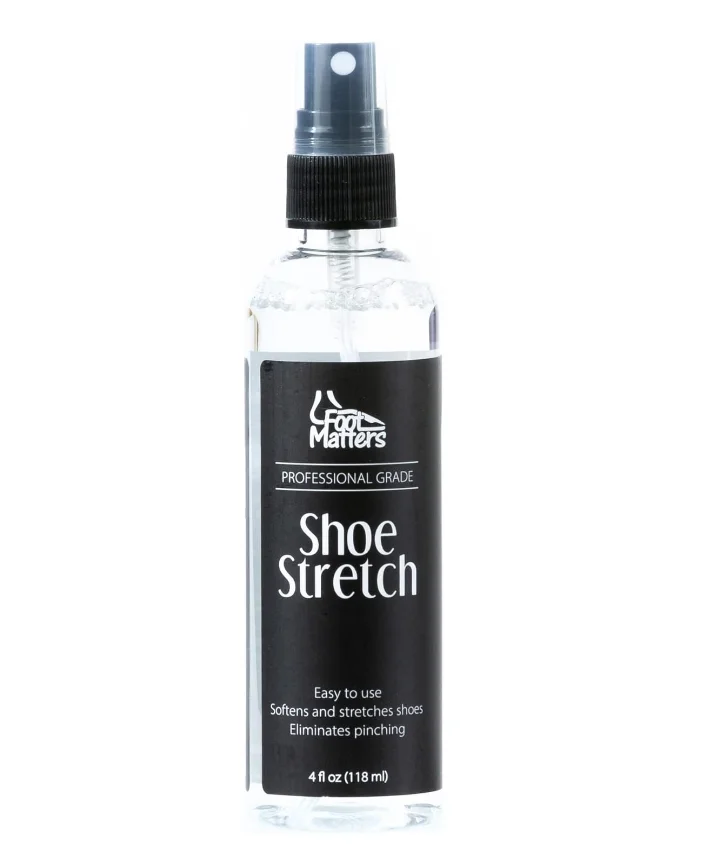
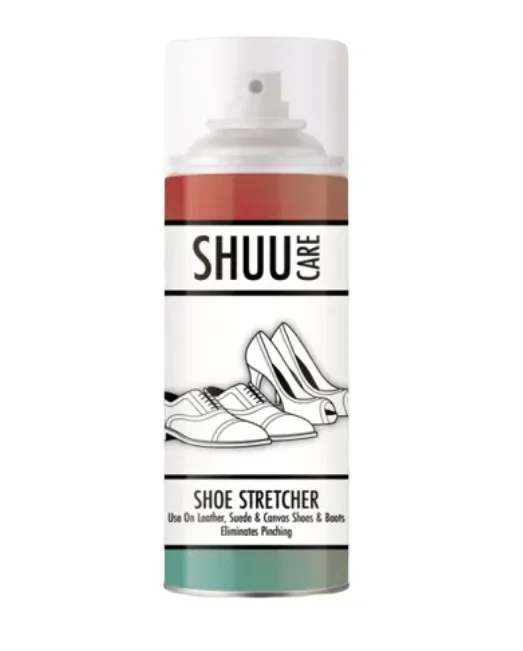
Check Prices on Amazon
Foot Matters Shoe Stretching Spray
Shuu Shoe Stretch Spray
What is Shoe Stretcher Spray, Anyway?
For the uninitiated, stretcher spray is a liquid you spray on tight spots of your shoes. It softens the leather, suede, or fabric fibres, so when you use a shoe stretcher (or even your own foot), the material gives a little more easily. In theory, it makes your shoe more forgiving. In practice? Well, the reviews are mixed… and funny.
Does Shoe Stretcher Spray Really Work?
Yes—but only if you’re trying to solve the right problem.
Works for
✔ leather
✔ suede
✔ small pressure points
✔ breaking shoes in
Doesn’t work for
✘ shoes that are substantially too narrow
✘ wrong size
✘ plastic
✘ shoes needing substantially more toe-box depth
What Do Customer Reviews Say About Shoe Stretching Spray?
This has not been a particularly easy task as the two products shown, being the two that I have used personally, have around 70,000+ reviews between them. As you can imagine, not all of these were practical answers and some were really stupid, but a fairly reasonable conclusion could be reached.
The Good Reviews
The positive reviews tend to tell a very similar story. People get the best results when they’re trying to solve a small fit problem rather than rescue a pair of shoes that simply doesn’t fit.
Leather and suede seem to respond particularly well, especially when the spray is used with a proper shoe stretcher and left to work gradually. Many reviewers mention using it to ease pressure around bunions, across the widest part of the foot or on one particular spot that rubs.
Another common theme is that patience pays off. Rather than trying to force a big stretch in one go, people generally report better results from applying the spray, stretching the shoe gently and repeating the process if necessary.
That certainly matches my own experience. I’ve used stretching sprays on suede, nubuck and polished leather without staining or marking the shoes, and I’ve had some excellent results.
For shoes that already fit reasonably well but need just a little more room, the positive reviews make a convincing case for giving stretching spray a try.
The Bad Reviews
The negative reviews are interesting too, because quite a few seem to come down to expectations rather than the spray doing absolutely nothing.
Shoe stretching spray can help soften suitable materials, but it can’t perform miracles. If a shoe is considerably too small, far too narrow or simply the wrong shape for your foot, spraying more product onto it isn’t going to turn it into a comfortable shoe.
Synthetic materials are another common source of disappointment. They don’t necessarily respond to stretching in the same way as leather or suede, so results can be much less predictable.
Some reviewers also say they noticed very little difference after the first attempt. That doesn’t surprise me. Stubborn areas can need another gentle stretch rather than applying huge amounts of spray or forcing the stretcher further than the shoe can comfortably take.
Taken together, the poorer reviews reinforce something quite useful: shoe stretcher spray works best for small adjustments, on suitable materials, with realistic expectations. If the shoes fundamentally don’t fit, stretching spray probably isn’t the solution.
What Shoe Stretch Sprays Are Good At
When you use a shoe stretcher spray on the right type of shoe, it really can make life easier. Leather and suede respond particularly well because the spray helps relax the fibres while the shoe stretcher gently does its job.
I’ve found it especially useful for easing pressure over bunions, sore joints and those awkward little spots that seem to rub no matter what you do. It’s also reassuring to know the leather is less likely to dry out or crack while you’re stretching it.
For me, the biggest advantage has simply been rescuing shoes that I thought were destined for the back of the wardrobe. Considering what a decent pair of shoes costs these days, that’s saved me far more than the price of a bottle of spray.
Where Shoe Stretch Sprays Fall Short
As good as they are, they’re not miracle workers.
If your shoes are made from hard synthetic materials, don’t expect dramatic results because many man-made materials simply don’t stretch in the same way as leather.
The same applies if the shoes are the wrong size or the wrong shape for your feet. A stretching spray might relieve a small pressure point, but it won’t transform a narrow shoe into a wide fit or create the extra depth needed for bulky orthotics or swollen feet.
Sometimes the answer isn’t more stretching at all. It’s choosing footwear with the right width, depth and toe box from the beginning.
Getting the Best Results
One thing I’ve learned is that stretching spray works best as part of a team rather than on its own. If you’re wondering whether it’s worth buying a stretcher as well, my guide to whether shoe stretchers really work explains what they can and can’t do.
Apply a light, even spray to the tight area, insert a quality shoe stretcher and leave it overnight. It’s tempting to keep adding more spray, but I’ve never found that helps. Patience usually produces better results than flooding the leather.
If you’re working on suede, nubuck or coloured leather, it’s still sensible to test the spray on a small hidden area first, even though I’ve never personally had any staining problems.
And perhaps the biggest lesson of all is to keep your expectations realistic. If you’re trying to gain a few millimetres where your shoe pinches, you’ll probably be pleasantly surprised. If you’re hoping to turn a shoe that’s two sizes too small into the perfect fit, you’re going to be disappointed.
Final Verdict. Are Stretcher Sprays worth it?
Looking at reviews across the board, the verdict is pretty simple: shoe stretcher spray works… if you use it correctly, on the right materials, and with realistic expectations.
It’s not a miracle potion, and it won’t turn your size 8’s into size 10’s. But if you’ve got nice leather shoes that pinch a bit — especially around bunions or pressure points — most reviewers agree it’s a lifesaver.
If you’ve got a pair of “painful to wear” shoes at the back of the wardrobe — probably as part of a growing collection — then yes, I think stretching spray is well worth the modest cost and a bit of patience.
If your shoes are made from synthetic materials, or they’re simply the wrong shape for your feet, stretching spray probably isn’t the answer. In those situations you’re usually better off choosing shoes with more width, more depth or a higher-volume toe box from the outset.
Not sure how stretcher spray works or when to use it? Start with my guide to how shoe stretcher sprays actually work — it explains the science and simple steps before you buy.
FAQs
Q: Does shoe stretcher spray really work?
A: Yes, shoe stretcher spray can work well when used for small fit adjustments. It helps soften and relax suitable shoe materials so they can stretch more easily. I’ve had particularly good results using it on leather, suede and nubuck alongside a shoe stretcher.
Q: Do I need a shoe stretcher as well as the spray?
A: Not necessarily, but a shoe stretcher usually gives you more control and a better result. The spray softens the material; the stretcher provides the gentle pressure needed to create extra room. Some people wear the shoes while they’re still slightly damp with spray, but I prefer using a proper stretcher.
Q: What materials does shoe stretching spray work best on?
A: Natural materials such as leather, suede and nubuck generally respond best because their fibres can relax and stretch. Results on synthetic materials are much less predictable, so always check the manufacturer’s instructions before using the spray.
Q: Does shoe stretcher spray work on suede and nubuck?
A: It can. I’ve personally used stretching sprays on both suede and nubuck, including light and dark colours, without staining them. However, finishes and dyes vary, so I would still test a small hidden area before treating the whole shoe.
Q: Can shoe stretcher spray damage or stain shoes?
A: It’s possible, particularly with delicate finishes or if too much product is applied. I haven’t experienced staining or marking with the sprays I’ve used, but always follow the product instructions and test it on an inconspicuous area first.
Q: Can shoe stretching spray make tight shoes wider?
A: It can help create a small amount of additional room when combined with a suitable width stretcher. However, it won’t transform a substantially narrow shoe into a true wide-fit shoe. If your feet regularly feel squeezed, buying the correct width is usually the better solution.
Q: Can shoe stretcher spray help with a tight toe box?
A: Potentially, provided the shoe material is suitable and you use the correct type of stretcher. A toe box raiser can create a little extra height over the toes, while other stretchers increase width. Stretching spray helps the material relax during the process, but it can’t completely reshape a shoe with insufficient depth.
Q: How long should I leave a shoe stretcher in after using the spray?
A: Follow the instructions supplied with both the spray and your stretcher. I prefer a gradual approach and usually leave the stretcher in overnight rather than trying to force a large adjustment quickly. If the shoe is still tight afterwards, another gentle treatment is safer than overstretching it in one go.
Prefer to get some new shoes? Read my Complete Guide To Wide Fit Shoes.
Medical Disclaimer: This article is for general information only and is based partly on my personal experience. It is not a substitute for professional medical advice. If you have persistent foot pain, swelling or a medical condition affecting your feet, speak to your GP or a registered podiatrist before attempting to stretch uncomfortable footwear.
About Sue Holland
Sue writes WiderFittingShoes.com from first-hand experience of finding footwear for wide and difficult-to-fit feet. After two hip replacements, two ankle replacements and years of dealing with arthritis, swelling and feet that don’t always behave the same from one day to the next, she shares the practical things she’s learned about shoe fit, width and comfort.