
We’ve all been there — you fall in love with a pair of shoes, only to find they pinch, squeeze, or rub when you first wear them. Whether it’s across the toes, the instep, or around a bunion, tight shoes are more than just annoying — they can cause blisters, corns, and lasting discomfort.
Unfortunately some shoes, no matter how often you wear them never give to your feet, and it’s your feet that call it a day first. Most of us have been there, still insisting that they’ll be ok, but it’s groundhog day again.
One common solution is the shoe stretcher. But do shoe stretchers work, or are they just another gimmick that ends up gathering dust in the cupboard? Yes, shoe stretchers really do work, particularly on leather and suede, provided you only need a modest amount of extra room. They can ease tight areas, add a little width and relieve individual pressure points, but they can’t turn badly fitting shoes into the right size. Let’s look at what they can realistically do and when they’re worth using.
Affiliate disclosure: This article contains affiliate links. If you buy something through one of these links, I may earn a small commission at no extra cost to you.
One thing that’s worth mentioning is that shoe stretchers aren’t always the complete answer. If your shoes feel tight over the tops of your toes, it may not be a width problem at all. Sometimes the shoe simply doesn’t have enough internal height. That’s where understanding high volume toe boxes can make all the difference. Choosing shoes with extra depth in the first place often means you won’t need to stretch them at all.
If you’re stretching shoes often, it may be time to switch to true wide-fit footwear — learn more in our Wide Fit Shoes Guide
Do They Actually Work?
Yes — shoe stretchers can be highly effective when used correctly. Here’s what you can realistically expect:
- Width increase – a shoe stretcher can often create a few extra millimetres across a tight area, which may be enough to make a noticeable difference to comfort.
- Length increase – two-way stretchers may provide a small amount of extra room lengthways, but don’t expect them to turn shoes that are genuinely too short into the correct size.
- Spot relief – targeted plugs can make a big difference if you have bunions, hammertoes, or corns.
- Breaking-in aid – stretchers can soften the “new shoe stiffness,” making shoes more comfortable from the start.
- Height Increase – Toe box height – specialist toe box stretchers can create extra room above the toes, helping to reduce rubbing against the top of the shoe.
A Sturdier Wooden Option to Consider
If you intend to stretch more than one pair of shoes, a solid wooden model with metal adjustment parts may be a better investment than one of the cheaper plastic alternatives. The Esvioniq wooden shoe stretcher adjusts both width and length and includes pressure-relief plugs for targeting areas around bunions, corns or other troublesome spots.
There are seven size options, so check the selected size carefully before ordering. The package contains one reversible stretcher rather than a pair, meaning you’ll need to stretch each shoe separately. I haven’t personally tested this particular model, and it currently has only a small number of customer ratings, but its hardwood body and metal mechanism appear more substantial than many inexpensive plastic designs.
View the Esvioniq wooden shoe stretcher on Amazon UK
Not sure which design your shoes need? My guide to the best shoe stretchers for toe-box relief explains the difference between width stretchers, toe-box raisers, pressure-point tools and boot stretchers.
They won’t, however, magically turn a size 6 into a size 7, nor can they change the basic shape of a shoe. If the toe box is too pointed, the shoe is too shallow, or it simply doesn’t suit your foot shape, stretching can only do so much. In those cases, choosing a shoe designed with the right width, depth and toe box shape is usually the better answer. Think of them as fine-tuning, not total transformation.
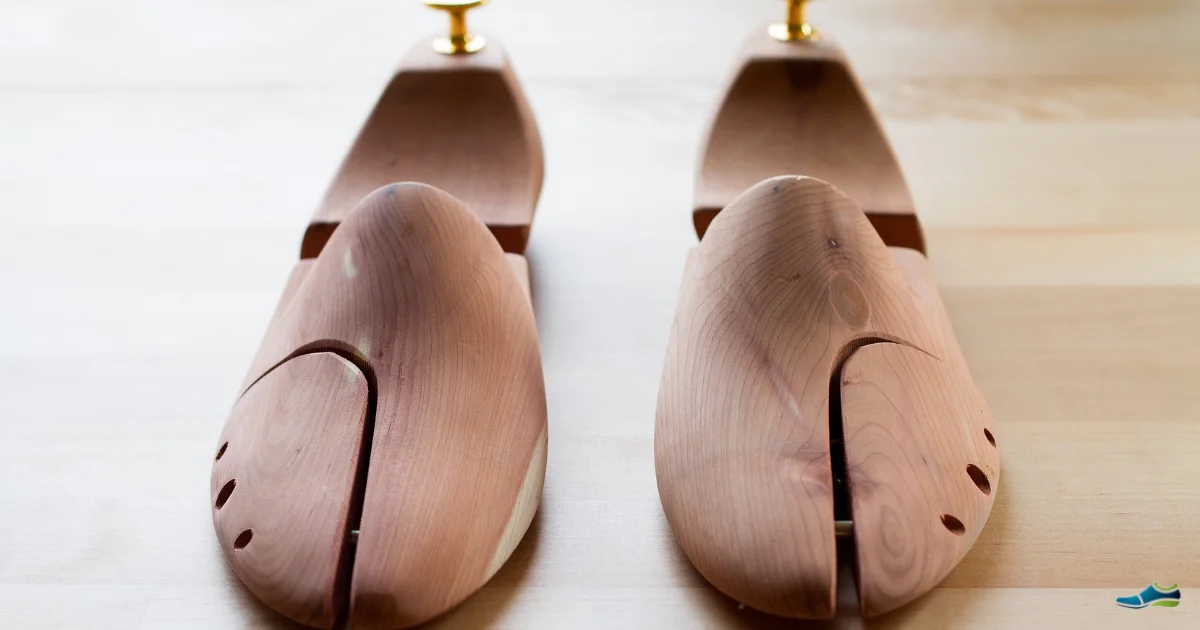
What is a Shoe Stretcher?
A shoe stretcher is a device designed to expand the fit of a shoe. They come in different types:
- Two-way stretchers – widen shoes across their width and length.
- One-way stretchers – usually focus on width only.
- Boot stretchers – built to handle taller shafts of boots.
- Spot stretchers or plugs – target specific pressure points like bunions or corns.
- Toe Box Raiser/Stretchers – increase height of the toe box, perfect for hammer toes.
Most are made of wood or durable plastic with adjustable metal parts that allow gradual expansion.
Not all shoe stretchers do the same job.
Most people think about widening a shoe, but some specialist stretchers are designed to create extra space above your toes instead. If the tops of your toes are rubbing rather than the sides, a toe box raiser may be a better solution. They can be harder to find these days, but they work in a completely different way from a standard shoe stretcher.
How Do Shoe Stretchers Work?
Shoe stretchers apply gentle, consistent pressure from the inside. Instead of forcing your foot to break in the shoe (which can be painful), the stretcher slowly encourages the shoe’s material to relax and reshape.
For best results, many people pair stretchers with shoe stretcher sprays or liquids, which soften leather and fabric fibres, making them more pliable. The stretcher then holds the shoe in the new shape until it sets.
Benefits of Using Shoe Stretchers
1. Comfort Without Pain
Instead of enduring weeks of blisters while breaking shoes in, you can start wearing them comfortably much sooner.
2. Cost Savings
If you own shoes that are too tight to wear but too expensive to throw away, a stretcher can bring them back into rotation.
3. Custom Fit
Everyone’s feet are unique. A good stretcher lets you tailor shoes to your specific shape, whether that’s a wide forefoot, a high instep, or a sensitive bunion.
4. Shoe Preservation
Stretchers allow gradual, even expansion, which is much safer for leather than forcing it to stretch while walking.
Shoe Stretchers aren’t just for your new shoes
If you have found yourself with one or more foot conditions to contend with, it’s fair to assume that you have a wardrobe full of footwear that doesn’t fit as they once did and are gathering dust.
Now is definitely the right time to consider a set of shoe or boot stretchers, particularly if the shoes are in good order, still fashionable and were expensive when new.
Aside from the initial cost of the stretchers, once set to your feet, the results are very personalised and something no amount of money can buy in a shop. The results can be like having someone else wear them in without you having to endure the discomfort.

Queen Elizabeth II didn’t have to suffer through breaking in new shoes. Her senior dresser, Angela Kelly, had the same shoe size and would wear in the Queen’s handmade new shoes for her. Most of us don’t have an Angela Kelly handy, but a good shoe stretcher may be the next best thing.
Limitations of Shoe Stretchers
While they work well, they aren’t a perfect solution in every case:
- Material matters – leather and suede stretch beautifully, but synthetics and stiff plastics don’t respond as well.
- Limited stretch – you’ll usually only gain a half-size adjustment. If shoes are far too small, they can’t be saved.
- Patience required – stretching is gradual; leaving the stretcher in overnight or longer is usually necessary.
- Care needed – overstretching can deform shoes or make them too loose.
When Are Shoe Stretchers Most Useful?
- For leather shoes that are too tight
- Breaking in dress shoes without weeks of sore feet
- Relieving pressure from bunions or corns
- Widening vintage or second-hand shoes that fit closely
- Making seasonal shoes wearable again after your feet swell (e.g., during summer or pregnancy)
When They Might Not Be Worth It
- Shoes made from synthetic materials that won’t stretch much.
- Footwear that’s more than a size too small.
- Shoes already badly worn or fragile, where stretching could cause damage. (read about choosing shoes to reduce foot pain)
Alternative Ways to Stretch Shoes at Home
While shoe stretchers are the most reliable option, a few other methods can give you a little extra comfort in a pinch:
1. Thick Socks & Gentle Wear-In
Slip on a pair of thick socks, then wear your shoes around the house for 20–30 minutes. The added bulk stretches the shoe slightly while protecting your feet from blisters.
- Works best with leather or canvas.
- Don’t overdo it — too much pressure can distort the shoe’s shape.
2. The Freezer Trick – One I’d Be Cautious About
You’ll often see advice online suggesting that you fill freezer bags with water, place them inside tight shoes and freeze them overnight. As the water freezes and expands, the idea is that it pushes against the inside of the shoe and stretches it.
It may create some extra room, but personally I wouldn’t risk a good pair of shoes this way. You have very little control over where the pressure is applied, and delicate materials, adhesives and finishes may not appreciate being frozen or exposed to moisture.
A proper shoe stretcher allows you to increase the pressure gradually and target the area that actually needs more room. If the shoes are valuable or made from delicate leather or suede, a cobbler is the safer option.
3. Professional Stretching Services
Cobblers often offer stretching with specialised machines that apply heat and pressure in controlled spots. This is especially useful for delicate materials or expensive pairs you don’t want to risk at home.
These tricks won’t replace a stretcher if you need serious width or toe box space, but they can make tight shoes more wearable for casual use.
Tips for Best Results
- Use a shoe stretcher spray to soften the material before stretching.
- Work in small increments — tighten gradually rather than forcing expansion.
- Leave it overnight or up to 24 hours for stubborn shoes.
- Always test first if using sprays on delicate leathers or suedes.
- If stretching boots, get a boot-specific stretcher for proper reach.
Frequently Asked Questions
Q: How much can a shoe stretcher actually stretch a shoe?
A: Usually about half a size in width and a few millimetres in length. They’re best for easing tight spots, not changing shoe size completely.
Q: Do shoe stretchers work on all shoe types?
A: They’re most effective on leather and suede. Canvas can stretch a little, but synthetics and plastics rarely respond well.
Q: Can I damage my shoes with a stretcher?
A: Only if you overdo it. Gentle, gradual adjustments are safe, but rushing can crack leather or deform the shoe.
Q: Do I need a spray with a shoe stretcher?
A: Not essential, but sprays speed things up by softening fibres, giving a smoother stretch and reducing the chance of cracking.
Q: Can I stretch shoes in the freezer?
A: You’ll often see this method recommended online, but I wouldn’t use it on shoes I cared about. Expanding ice may create some extra room, but the pressure is difficult to control and moisture or freezing temperatures could affect some materials, finishes or adhesives. A shoe stretcher gives you much more control.
Q: Will thick socks help loosen shoes?
A: Wearing thick socks while walking around at home can ease snugness in leather or canvas shoes. It’s slower than a stretcher but handy for softening new shoes without too much effort.
Conclusion
So, do shoe stretchers work? Absolutely — provided your shoes are made from stretchable materials and you only need a modest adjustment. They’re one of the simplest, most cost-effective tools for easing discomfort, extending shoe life, and avoiding the pain of breaking in tight shoes.
They may not work miracles, but for anyone who has struggled with pinching shoes, they’re a worthwhile addition to your footcare tool kit.
“Think of them as fine-tuning, not total transformation.”
If your shoes are very well worn, there may not be any stretch left so it may be worth considering a fresh start, my Complete Guide to Wide Fit Shoes will explain the things to look for.