
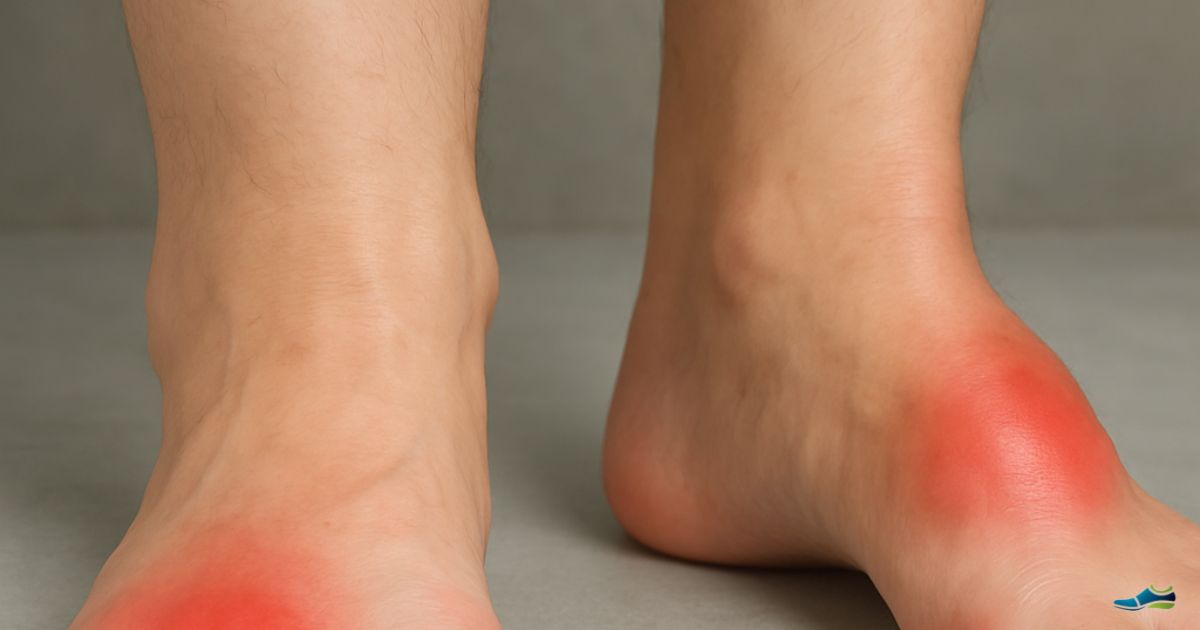
Bursitis in the foot can make every step feel sore, swollen, and tender. It happens when the bursae — small, fluid-filled sacs that cushion joints and reduce friction — become inflamed. While bursitis can affect many parts of the body, in the foot it often develops around the heel, beneath the ball of the foot, or around the big toe joint, although other toe joints can occasionally be affected.
Unlike arthritis, bursitis affects the tiny fluid-filled sacs that cushion your foot joints. It can cause sharp, localised pain — often at the heel or ball of the foot — that worsens with pressure or friction.
To relieve foot bursitis, rest the affected foot and avoid activities or footwear that put pressure on the painful area. Apply a wrapped ice pack for around 10 minutes at a time, and wear roomy, well-cushioned shoes that don’t rub the inflamed bursa. A pharmacist can also advise on suitable pain relief if needed.
Affiliate disclosure: This article contains affiliate links. If you buy something through one of these links, I may earn a small commission at no extra cost to you.
📌 At a Glance
I’ve pulled together everything I know about foot bursitis here — what it is, what actually helps, and when it’s worth seeing someone about it.
If you’d rather skip straight to specific questions, jump to the Q&A below.
What Is Foot Bursitis?
Bursitis is the inflammation of a bursa — the small sac that cushions bones, tendons, and muscles near joints. In your feet, bursae are found near the heel and under the ball of the foot, making them vulnerable to irritation.
When inflamed, they fill with extra fluid, creating swelling, heat, and pain.
If your foot pain isn’t limited to this one condition, our Complete Guide to Foot Pain Relief walks you through all the main causes, treatments, and footwear tips to keep every step more comfortable.
Common Causes of Foot Bursitis
- Wearing shoes that are too tight, too narrow, or lacking enough internal space around the forefoot.
- Repetitive stress from running, jumping, or long hours standing.
- Foot deformities such as bunions or hammertoes.
- Poorly cushioned footwear that increases friction and pressure.
- Sudden increase in activity or exercise without gradual build-up.
Sometimes the problem isn’t simply shoe width. If the front of your shoes feels tight across the top of your toes as well as at the sides, you may benefit from a high volume toe box, which provides extra height inside the front of the shoe.
Can the Wrong Shoes Cause Bursitis?
The short answer is yes, they can contribute to it, but they’re not always the whole story.
Bursitis develops when one of the tiny fluid-filled bursae in your foot becomes irritated and inflamed. If that area is then subjected to repeated pressure or friction every time you walk, it never really gets the chance to settle down.
Think of it like repeatedly knocking a bruise. The first knock may have caused the injury, but if you keep catching the same sore spot day after day, it’s unlikely to heal properly.
That’s where footwear can make a real difference.
Many people assume they simply need a wider shoe, but width is only one part of getting the fit right. If your shoes press down on the top of your foot, squeeze your toes together, or force your foot into a shape it doesn’t naturally want to be, they can increase pressure on already sensitive tissues.
Cushioning matters too. As shoes wear out, the midsoles gradually lose their ability to absorb impact. Every step then sends a little more force back through your feet, particularly around the heel and ball of the foot where bursitis commonly develops.
Heel height also plays a part. Higher heels shift more of your body weight onto the front of your foot, increasing pressure around the forefoot and toes. If you’re already prone to bursitis in that area, even a modest heel can make symptoms worse over time.
From my own experience, there’s another point that’s easy to overlook. If you wear orthotics, they take up space inside your shoes. I found that even when a shoe was advertised as a wide fit, adding my orthotics reduced the internal depth enough for the top of my toes to rub. That’s when I realised that shoe depth can be just as important as shoe width. A high volume toe box provides extra space above your toes as well as around them, which can make a surprising difference if your footwear feels tight once orthotics are in place.
The aim isn’t to find a shoe that cures bursitis, because shoes can’t do that. What they can do is remove the repeated pressure that’s irritating the inflamed bursa, giving it a much better chance to settle while the rest of your treatment does its job.
If your shoes feel tight even though they’re the right width, don’t automatically go up a size. Sometimes the problem is the amount of space above your foot rather than the width across it. Looking at the overall shape and depth of the shoe can make a much bigger difference to comfort than simply choosing a longer shoe. If you think this might be the issue, my article on high volume toe boxes explains why extra depth can sometimes be just as important as extra width.
Symptoms to Watch For
- Localised pain and tenderness around the heel or ball of the foot.
- Swelling and warmth in the affected area.
- Stiffness or discomfort that worsens when walking or standing.
- Pain when pressing directly on the inflamed spot.
These symptoms often mimic plantar fasciitis or metatarsalgia, which is why proper diagnosis matters.
Treatment Options
At-Home Care
- Clean gently if the skin is irritated.
- Apply ice packs for 10–15 minutes to reduce swelling.
- Rest and avoid activities that worsen pain.
- Use cushioned insoles or blister pads to protect the area.
- Switch to wide-fit shoes with soft uppers and shock-absorbing soles. If you’re unsure whether you actually need a wider fitting shoe, my guide to measuring your foot width at home shows you how to check accurately.
Professional Care
- Anti-inflammatory treatments (oral or topical, prescribed if necessary).
- Physical therapy to reduce strain and improve mobility.
- Custom orthotics for recurrent bursitis caused by foot shape or gait.
- In rare cases, corticosteroid injections may be offered.
Prevention Tips
- Break in new shoes gradually.
- Wear moisture-wicking socks to reduce friction.
- Keep feet dry during activity.
- Use anti-friction balms or protective tape on hotspots.
- Replace worn-out shoes before cushioning and support collapse.
What I’d Actually Look For
A wrapped ice pack from the freezer works perfectly well, but if you’d rather have something shaped for the job, a proper heel and foot ice wrap holds its shape better and stays put while you rest — genuinely more comfortable than balancing a bag of frozen peas. REVIX make a well-reviewed reusable version worth a look.
Check REVIX foot and heel ice packs on Amazon
When to See a Doctor
- Blisters or bursae show signs of infection (redness, pus, severe swelling).
- Pain persists for more than 1–2 weeks despite rest and footwear changes.
- You have diabetes or poor circulation, raising risk of complications.
- Bursitis is recurrent or interfering with daily mobility.
Living With Bursitis
Bursitis doesn’t mean giving up walking or activity. With the right shoe choices and early care, you can manage symptoms and stay comfortable. Wide, cushioned shoes with low heels make a real difference day to day. Features such as adequate shoe volume and a roomy toe box can also reduce pressure on sensitive areas of the foot.
Adding orthotics or pads can reduce strain, and if flare-ups happen, resting and icing usually calm them down quickly.
Persistent heel or forefoot swelling could also point to foot arthritis or an underlying heel spur — both of which often overlap with bursitis.
20 Common Questions & Answers on Foot Bursitis
Q: What actually causes foot bursitis?
A: Usually repetitive stress, tight shoes, or direct pressure on the bursa. Structural foot issues can also play a role.
Q: Are heel and toe bursitis different?
A: Yes. Heel bursitis affects the back of the heel, while toe bursitis typically develops near bunions or hammertoes.
Q: Is bursitis always painful?
A: No, mild cases may only cause tenderness or stiffness, but most flare-ups involve noticeable pain.
Q: Can foot bursitis go away on its own?
A: Mild cases sometimes ease with rest and shoe changes. Persistent or worsening pain usually needs treatment.
Q: How is bursitis diagnosed?
A: A physical exam is common, sometimes supported by ultrasound or MRI to rule out other conditions.
Q: What kind of shoes should I wear?
A: Wide-fit shoes with cushioning, low heels, and flexible uppers. Avoid narrow or stiff shoes that increase pressure.
Q: Do insoles help with bursitis?
A: Yes. Custom or off-the-shelf insoles redistribute pressure away from inflamed areas.
Q: Can bursitis spread?
A: It doesn’t spread, but untreated bursitis can lead to chronic inflammation or related issues like tendon pain.
Q: Are athletes more prone to bursitis?
A: Yes, especially runners and dancers who put repetitive stress on their feet.
Q: Is walking good or bad during a flare-up?
A: Walking can aggravate symptoms. Rest until pain calms down, then resume activity gradually.
Q: Can bursitis be linked to bunions?
A: Yes. Bunions change pressure patterns and often lead to bursitis at the big toe joint.
Q: Do anti-inflammatory creams help?
A: They can ease mild symptoms, but footwear changes and rest remain most important.
Q: Can bursitis become chronic?
A: Yes, if the causes aren’t addressed. Recurring pressure keeps the bursa inflamed.
Q: Do children get bursitis?
A: It’s rare in children but possible with sports overuse or ill-fitting shoes.
Q: Does weight play a role?
A: Yes, extra body weight increases strain on bursae in the feet.
Q: Can bursitis be confused with plantar fasciitis?
A: Definitely. Both cause heel pain, but bursitis is more localised swelling at the back/underside.
Q: Is surgery ever needed?
A: Very rarely. Surgery is a last resort for severe, persistent bursitis.
Q: Are foot exercises helpful?
A: Yes. Gentle calf and foot stretches reduce strain and improve flexibility.
Q: How long does recovery take?
A: With care, symptoms often improve in a few weeks, though flare-ups can recur.
Q: When should I see a doctor?
A: If pain persists beyond a couple of weeks, worsens, or shows signs of infection.
📌 Summary
Foot bursitis can be painful, but it’s manageable. Supportive shoes, rest, and early treatment usually prevent long-term issues. Wide-fit shoes with cushioning, combined with self-care and professional guidance when needed, are your best defence.