
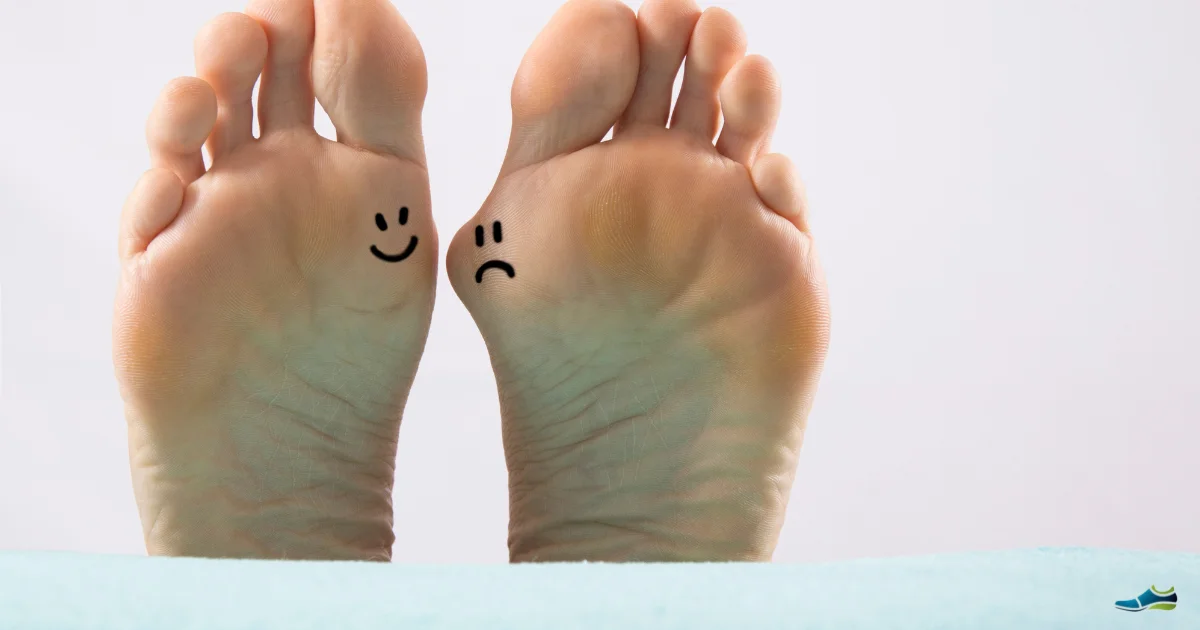
The best shoes for bunions have a wide, roomy toe box, a low heel and a soft, supportive sole. These features reduce pressure and rubbing around the bony joint, helping you stay active more comfortably. Shoes cannot remove or reverse a bunion, but the right fit can ease pain and irritation and prevent your footwear from making symptoms worse.
For a full overview of how toe pain connects to wider foot strain, explore our Complete Guide to Foot Pain Relief.
Affiliate disclosure: This article contains affiliate links. If you buy something through one of these links, I may earn a small commission at no extra cost to you.
💡 Quick Answers Available
Want to know more about the best shoes for bunions and how to ease the pain? Scroll down for 8 quick Q&As.
What Are Bunions?
A bunion is a bony bump that forms at the base of the big toe as the joint gradually changes shape and the big toe starts to angle towards the other toes. Some bunions cause very little trouble, while others become painful, red or swollen — particularly when shoes press or rub against the joint.
Bunions usually develop gradually. They can also make finding comfortable shoes difficult because the joint sticks out and effectively makes that part of your foot wider.
What Causes Bunions?
There isn’t always one clear reason why someone develops a bunion. Your natural foot shape and the way your foot works can play a part, and bunions often run in families. Certain types of arthritis can also increase the likelihood of developing one.
Footwear is a little more complicated. Tight, narrow or pointed shoes can squeeze the toes together and may contribute to bunion problems or make an existing bunion more painful, but it’s too simplistic to say that wearing the wrong shoes is the sole cause.
Symptoms of Bunions
- A visible bump at the base of the big toe.
- Pain, redness, or swelling around the joint.
- Restricted movement of the big toe.
- Corns or calluses caused by overlapping toes.
- Difficulty finding comfortable footwear.
If your toes have started curling or overlapping, read my guide to the best shoes for hammer toes for the footwear features that can give curled or crowded toes more room.
Why the Right Shoes Matter for Bunions
If you have a bunion, the wrong shoes can make an uncomfortable joint considerably worse. A shoe that’s too narrow can press or rub directly against the bunion, while a wider and deeper toe box gives the joint more room.
The right footwear won’t reverse a bunion, but it can make living with one much more comfortable. Look for shoes that can:
- Reduce pressure and rubbing around the bunion.
- Give your toes and the bunion enough room.
- Accommodate some swelling without becoming painfully tight.
- Help you stay comfortable when you’re walking or on your feet.
What Are the Best Shoes for Bunions?
Look for these key features:
- Wide Toe Box: Space for toes to spread naturally without rubbing.
- Soft Uppers: Stretchy materials like mesh, soft leather, or knit that move with your foot.
- Low Heels: Flat or low-heeled shoes reduce pressure on the forefoot.
- Cushioned Insoles: Can make walking more comfortable, particularly if the soles of your feet are also sore.
- Adjustable Fastenings: Laces, straps, or Velcro for a flexible, personalised fit.
- Removable Insoles: Makes room for orthotics if needed.
✨ Tip: Stylish wide-fit shoes now exist — so you don’t have to sacrifice looks for comfort.
If a favourite pair of leather or suede shoes fits comfortably everywhere except around the bunion, a shoe stretcher with pressure-relief plugs may help create a small pocket of extra space at that particular pressure point. It won’t correct the bunion or rescue shoes that are fundamentally too narrow, but it may reduce rubbing in an otherwise suitable pair. See my guide to choosing the right toe-box shoe stretcher for the different options.
Treatment & Relief Options
At-Home Care
There are a few things you can try to make a painful bunion more comfortable, although they won’t remove the bunion itself:
- Wear wide, comfortable shoes with plenty of room around the toes.
- Try a bunion pad or soft gel protector if rubbing against the shoe is the problem.
- Use an ice pack wrapped in a towel for short periods if the joint is painful or swollen.
- Avoid shoes that press directly against the bunion.
When Self-Care Isn’t Enough
If your bunion remains painful despite changing your footwear and trying simple measures at home, speak to your GP or a podiatrist. They can assess what’s causing the pain and discuss whether treatments such as insoles or other measures might help.
Surgery is the only way to correct the shape of a bunion, but it isn’t normally considered simply because you don’t like how the bunion looks. It may be an option when the bunion is causing significant pain or affecting everyday activities.
Can You Prevent Bunions?
There’s no guaranteed way to prevent a bunion from developing, particularly if your natural foot shape or family history makes you more prone to them. What you can do is avoid regularly squeezing your toes into shoes that don’t fit properly.
Choose shoes that are the correct length and give your toes enough width and depth. Try to avoid narrow, pointed styles or high heels that push the toes together, especially if you already have a bunion that’s becoming uncomfortable.
When to See a Doctor or Podiatrist
It’s worth getting professional advice if:
- The pain hasn’t improved after trying wider footwear and other simple measures for a few weeks.
- The pain is stopping you doing your normal activities.
- The bunion appears to be getting worse.
- You have diabetes as well as a bunion, because foot problems can need more careful assessment.
How Common Are Bunions?
Bunions are common, and they become more common with age. Research also consistently finds them more often in women than in men.
A large systematic review involving almost half a million people estimated that bunions affected around 23% of adults aged 18 to 65 and 35.7% of people over 65. Across adult age groups, the estimated prevalence was around 30% in women compared with 13% in men.
The chart below shows how bunion prevalence varies by age and sex in the research.
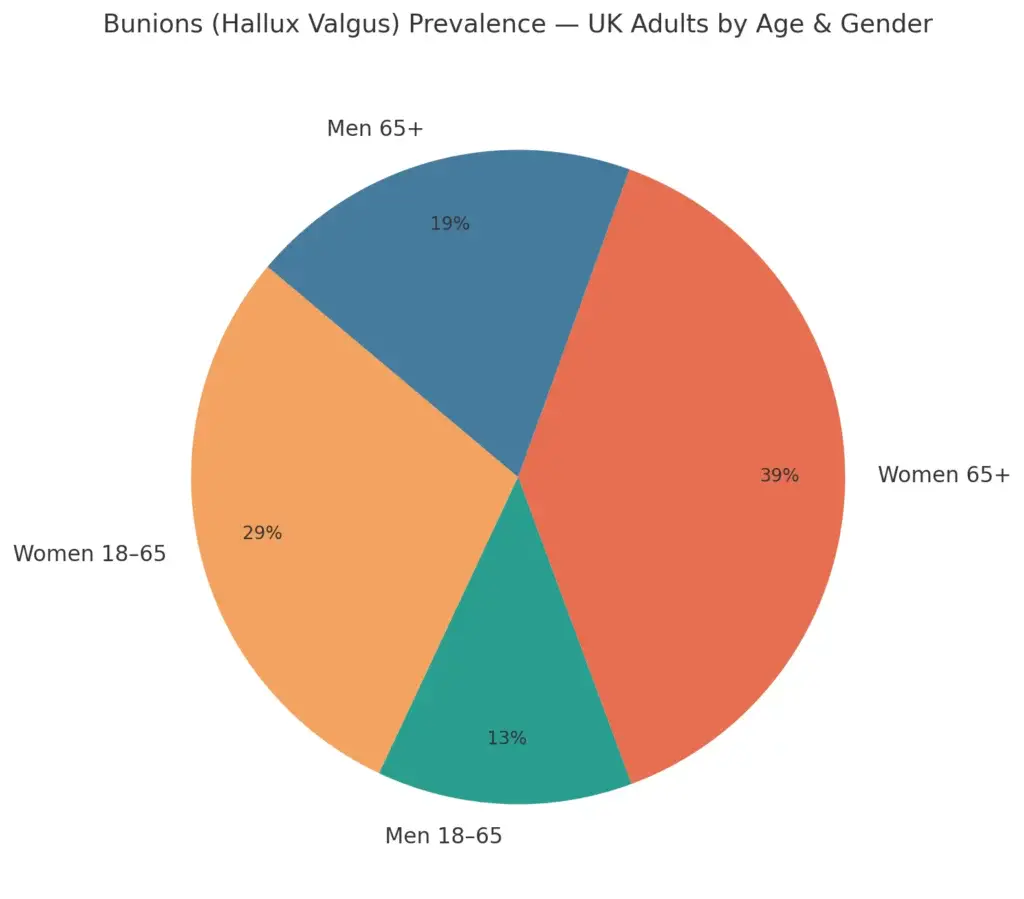
Estimated prevalence of bunions (hallux valgus) reported in published research. Bunions become more common with age and are considerably more common in women.
References
- Royal College of Podiatry – What are Bunions?
- NHS – Bunions Overview
- Nix S. et al. (2010). Prevalence of hallux valgus in the general population: a systematic review and meta-analysis. Journal of Foot and Ankle Research
- Thomas M. et al. (2019). Population prevalence and associations of hallux valgus in older adults. BMJ Open
8 Common Bunion Questions
Are bunions caused by wearing tight shoes?
Not necessarily. Bunions can run in families and the exact cause isn’t always clear. Tight, narrow or pointed shoes can aggravate a bunion and may increase the likelihood of developing one if you’re already susceptible.
Can bunions go away without surgery?
No. Wider shoes, pads, insoles and other measures may make a bunion more comfortable, but they won’t remove it. Surgery is the only way to correct the bunion itself.
What are the best shoes for bunions?
Look for shoes with plenty of width and depth around the toes, soft uppers and a low heel. Adjustable laces or straps can also help you get a comfortable fit without squeezing the bunion.
Should I buy bigger shoes for bunions?
Not simply longer ones. Your shoes still need to fit properly from heel to toe. What you usually need is enough width and depth to accommodate the bunion without pressure or rubbing.
Do toe spacers or bunion splints fix bunions?
They won’t correct the underlying bunion. Some people may find toe spacers, splints or pads helpful for reducing pressure or discomfort, but they shouldn’t be expected to straighten the joint permanently.
Can bunions come back after surgery?
Yes. Bunion surgery aims to correct the deformity, but a bunion can sometimes recur afterwards.
Can men get bunions?
Absolutely. Bunions can affect anyone, although research generally finds them more commonly in women.
Do wide-fit shoes prevent bunions?
There’s no guarantee that wide-fit shoes will prevent a bunion. What they can do is give your toes more room and reduce pressure and rubbing around an existing bunion. Wearing correctly fitting shoes with enough toe room may also help reduce the likelihood of developing one.
The Bottom Line
You can’t get rid of a bunion by changing your shoes, but you can stop making an uncomfortable joint even more miserable. Give the bunion room, avoid shoes that press or rub against it, and look for soft uppers, enough width and depth, and a heel height you’re comfortable walking in.
If your bunion is becoming increasingly painful or is stopping you doing the things you normally do, that’s the point to get professional advice rather than simply trying another pair of shoes.
Medical disclaimer: This article is based on my personal experience and is for general information only. It isn’t a substitute for medical advice. If you have persistent or worsening foot pain, or you’re concerned about a change in the shape of your foot, speak to your GP or a podiatrist.
About Sue Holland
Sue writes WiderFittingShoes.com from first-hand experience of finding footwear for wide and difficult-to-fit feet. After two hip replacements, two ankle replacements and years of dealing with arthritis, swelling and feet that don’t always behave the same from one day to the next, she shares the practical things she’s learned about shoe fit, width and comfort.