
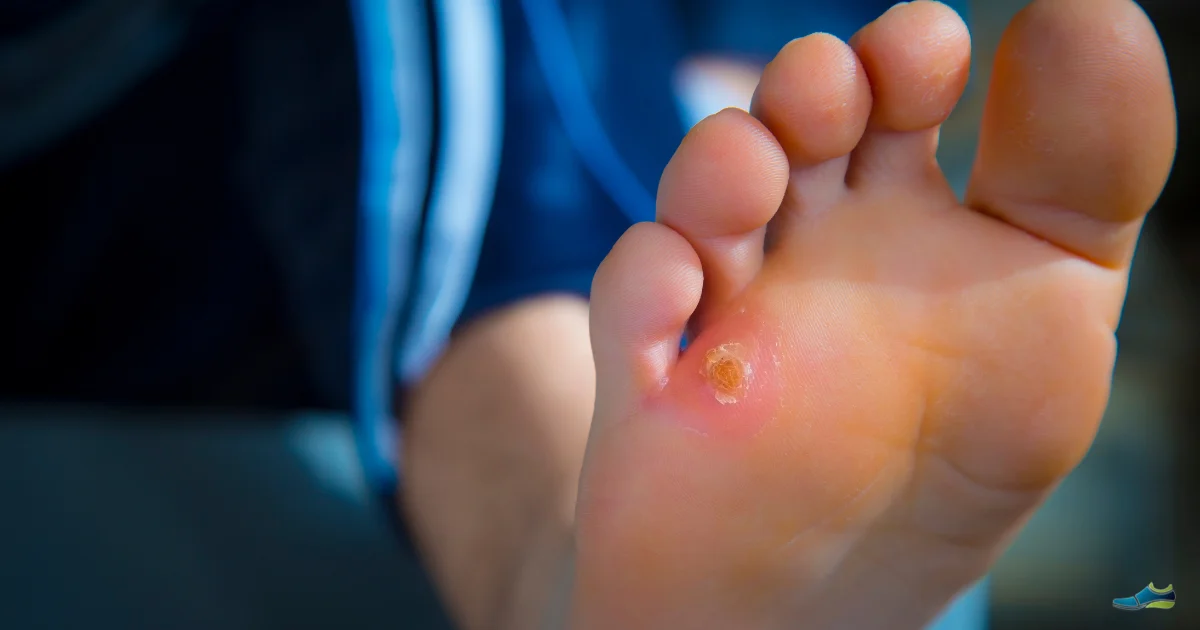
Corns are one of the most common foot complaints, but what are corns on feet exactly?
They’re small, thickened areas of skin that develop when there’s too much pressure or friction — usually from tight shoes or awkward weight distribution. While they’re not dangerous, corns can become painful, especially if left untreated.
In this guide, we’ll look at what causes corns, the best ways to treat and prevent them, and why choosing wide-fitting shoes can help you avoid flare-ups. If you’ve been wondering how to ease discomfort or stop them returning, you’ll find the answers here.
I’ve had a corn myself, just the once, and used a corn plaster to deal with it. It did the job — the corn cleared — but I left it on longer than I should have, and it left a noticeable dent in the bottom of my foot that took a while to properly settle. I haven’t had a corn since, but it taught me to actually follow the timing instructions on these things rather than assuming “longer must be better.”
Affiliate disclosure: This article contains affiliate links. If you buy something through one of these links, I may earn a small commission at no extra cost to you.
📌 At a Glance
Here’s everything I know about corns — what causes them, how to treat them safely, and how to stop them coming back.
Jump straight to the 20 Quick Q&As for fast answers.
Looking for a bigger picture view of foot pain? You’ll find it in our Complete Guide to Foot Pain Relief — a practical overview that covers every cause from heel to toe and how to ease it fast.
What Are Corns on Feet and Why Do They Form?
- Ill-fitting shoes that squeeze toes together or rub at pressure points.
- Toe deformities such as hammertoes or bunions that increase friction.
- Walking barefoot on hard surfaces.
- Wearing shoes without socks, which increases rubbing.
Recognising Corns
- Thickened, hardened skin patches — often round and raised.
- Tenderness or pain when pressure is applied.
- Dry, flaky or yellowish skin over the corn.
- Commonly appear on toes, especially tops and sides.
Difference Between Corns and Calluses
Corns are small, concentrated areas of thickened skin that usually form on the tops or sides of toes where there is friction or pressure. Calluses are broader, flatter patches that develop on weight-bearing areas like the heel or ball of the foot. Both are the body’s way of protecting skin, but corns tend to be deeper and more painful, while calluses are usually less sensitive.
Treatment Options
At-Home Care
- Soak feet in warm water to soften the skin.
- Use a pumice stone gently to reduce thickness.
- Apply moisturising cream to keep skin supple.
- Wear cushioned pads or plasters to relieve pressure.
If you have diabetes, poor circulation or reduced feeling in your feet, don’t try to remove or file a corn yourself. Ask a healthcare professional or podiatrist for advice.
Professional Care
- Seek help if corns are painful, recurrent, or if you have diabetes or poor circulation.
- Podiatrists can safely remove thickened skin and provide orthotic solutions.
Prevention Tips
- Choose wide-fitting shoes with soft uppers and plenty of toe room.
- Wear socks that reduce friction and wick moisture away.
- Keep feet moisturised to prevent dry skin buildup.
- Address underlying foot issues like hammertoes with proper support.
Why Wide-Fitting Shoes Help with Corns
When shoes squeeze or rub against toes, corns form as a protective reaction. Wide-fitting shoes provide extra space, reducing pressure points and friction. They also allow natural toe spread, improving comfort and helping to prevent recurrence.
When to Seek Medical Advice
- If a corn becomes very painful or inflamed.
- If there are signs of infection such as redness, swelling, or pus.
- If you have diabetes, poor circulation, or nerve damage in your feet.
Corns and calluses often appear alongside blisters or thickened nails from fungal infections.
What I’d Actually Look For
Scholl’s Corn Removal Plasters use salicylic acid to soften the corn, and they genuinely work — but learn from my mistake and actually follow the timing on the packet. Mine sat on far longer than it should have, and the dent it left behind took a while to settle. Check, and stick to, the recommended wear time rather than assuming longer is better.
Check Scholl Corn Removal Plasters on Amazon
Corns: 20 Quick Q&As
Q: What do corns on feet actually feel like?
A: Most people describe them as having a small stone stuck in their shoe. Corns create a sharp, pinpoint pressure when you walk, which makes them different from the dull ache of calluses. They’re especially noticeable when wearing tight shoes.
Q: Do corns always hurt?
A: Not always. Hard corns can feel like pressure points or tender spots under load, while soft corns (between toes) may only hurt if they get inflamed. Some remain painless but can still cause irritation if ignored.
Q: How do I spot the difference between normal hard skin and a corn?
A: Normal callused skin tends to spread out in a patch, whereas corns have a dense central “plug.” If pressing on the centre produces a sharp twinge, it’s usually a corn rather than simple hard skin.
Q: Can tight shoes cause corns?
A: Yes. Narrow shoes squeeze toes and create friction, which is the most common cause of corns forming.
Q: Are soft corns different from hard corns?
A: Yes. Hard corns form on top or sides of toes, while soft corns develop between toes where it’s moist. Soft corns feel rubbery and may be prone to infection.
Q: Can corns form under the toenail?
A: Rarely, yes. Subungual corns grow beneath the nail plate, usually from pressure. They can be very painful and need a podiatrist’s care.
Q: Do corns go away naturally?
A: They can improve or disappear if the pressure or friction causing them is removed. Changing footwear or reducing pressure on the affected area may be enough for some corns, while persistent or painful corns may need professional treatment.
Q: Is cutting a corn at home safe?
A: No. Cutting can cause infection or bleeding. Use protective pads or see a podiatrist instead.
Q: Can corns come back after removal?
A: Yes, if the friction or pressure continues. Changing shoes, using orthotics, or reducing pressure is the key to prevention.
Q: Do corn plasters work?
A: Some corn plasters contain salicylic acid, which can soften and remove thickened skin, but it can also damage healthy skin around the corn. Follow the instructions carefully, and don’t use medicated corn treatments if you have diabetes or poor circulation unless a healthcare professional advises you to.
Q: Are corns contagious?
A: No. Unlike warts, corns are caused by friction and pressure, not viruses.
Q: Can corns form on the soles of feet?
A: Yes, though they’re less common. These “seed corns” appear on weight-bearing spots and can feel like walking on grit.
Q: What’s the quickest way to relieve corn pain?
A: Reducing pressure on the corn is usually the quickest way to improve comfort. Roomier footwear, soft cushioning or a non-medicated corn pad can help protect the area from further rubbing.
Q: Can diabetes make corns worse?
A: Corns need extra care if you have diabetes because reduced sensation or circulation can make foot problems harder to detect and slower to heal. Don’t cut, file or self-treat a corn without appropriate medical advice.
Q: Do insoles help with corns?
A: They can. A suitable insole or orthotic may redistribute pressure away from the area where a corn develops. The right choice depends on what is causing the pressure in the first place.
Q: Can children get corns?
A: They can, but it’s uncommon. If children develop corns, it usually signals poorly fitted shoes.
Q: Are corns the same as verrucas?
A: No. Verrucas are viral warts with tiny black dots inside, while corns are purely pressure-related.
Q: How long does it take for a corn to heal?
A: With proper footwear and padding, pain may ease within days. Full healing can take weeks if the skin is thick.
Q: Can corns be permanently removed?
A: Podiatrists can remove them, but unless the underlying cause is fixed (like tight shoes or abnormal gait), they often return.
Q: Do toe separators prevent corns?
A: Toe separators can help some people by reducing rubbing between neighbouring toes, particularly where soft corns develop. They need to fit comfortably and shouldn’t create extra pressure inside the shoe.
Disclaimer: Sue is not a clinician. Her posts reflect personal experience and research. Always follow your clinician’s advice for diagnosis or treatment.