
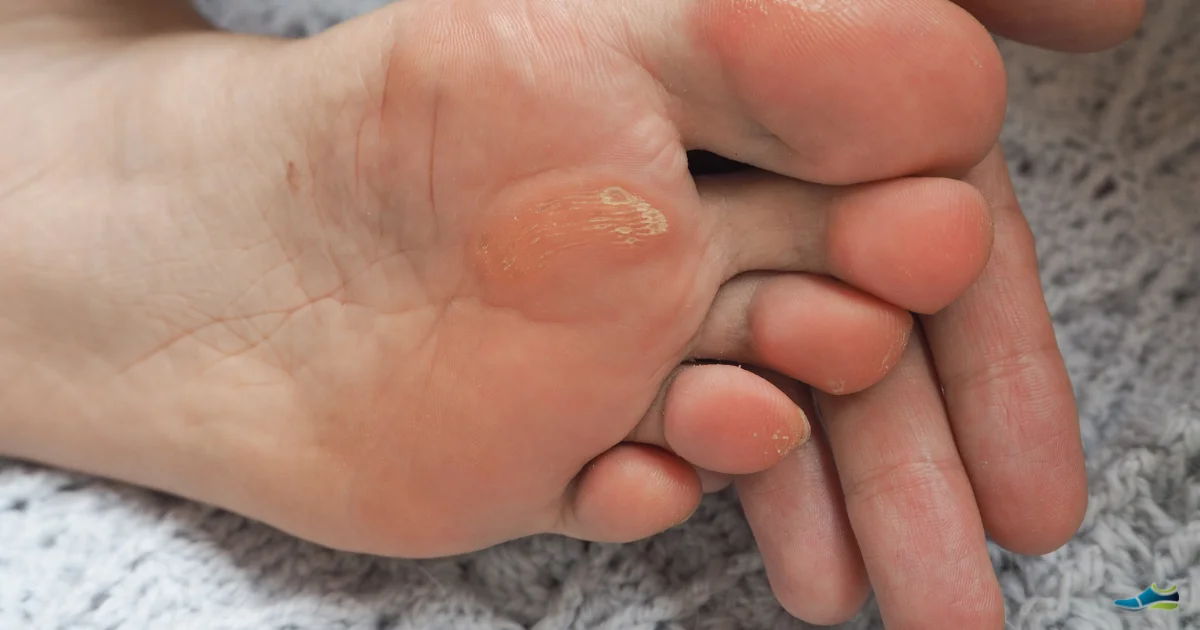
Calluses are thickened areas of skin that usually develop where your feet are repeatedly exposed to pressure or friction. They’re extremely common and aren’t necessarily a problem, but they can become uncomfortable if they get particularly thick, dry or cracked.
Footwear can play a big part, especially when a shoe repeatedly rubs or puts pressure on the same area. In this guide, I’ll look at why calluses develop, what you can safely do about them and the footwear features that may help reduce the rubbing or pressure behind them.
Affiliate disclosure: This article contains affiliate links. If you buy something through one of these links, I may earn a small commission at no extra cost to you.
📌 At a Glance
This guide covers why calluses develop, what they can look and feel like, ways of looking after mild calluses at home, and the footwear features worth checking if pressure or rubbing is contributing to the problem.
If you’d rather skip straight to specific questions, jump to the Q&A below.
What Are Calluses?
What Are Calluses?
Calluses are areas of thickened, hardened skin that develop in response to repeated pressure or friction. On the feet, they’re particularly common around the heels, balls of the feet and other areas that regularly take pressure.
They usually cover a fairly broad area and may feel rough or hard. Some don’t hurt at all, while thicker calluses can become uncomfortable, particularly when you’re standing or walking.
Calluses aren’t quite the same as corns. Corns tend to be smaller and more concentrated, whereas calluses usually spread over a wider area. And although a verruca can sometimes be covered by hard skin, it’s caused by a virus rather than simply by pressure or friction.
If you’re not sure whether an area of hard skin is a callus, corn or something else, it’s better to get it checked than to start treating it on the assumption that it’s one particular condition.
If you think you may have a corn rather than a callus, my guide to corns on feet explains the differences and what can help.
Pressure from footwear can also be particularly troublesome if you have a bunion, while my Complete Guide to Foot Pain Relief looks at some of the other common reasons feet become uncomfortable..
What Causes Calluses on Feet?
Calluses develop where an area of skin is repeatedly exposed to pressure or friction. On your feet, that can happen for several reasons:
- Shoes that are too tight or narrow, creating repeated pressure against the skin
- Shoes that rub or allow your foot to move around too much
- Regular walking, running or other activities that repeatedly load the same areas of your feet
- Foot shape or toe position, which can change where pressure falls inside a shoe
- Bunions or hammer toes, particularly where they rub against the inside or upper of the shoe
- Walking barefoot, which can expose the skin to repeated pressure and friction
It’s worth remembering that shoe width isn’t always the problem. Sometimes your shoes are wide enough but don’t have enough height inside, so the tops of your toes constantly rub against the upper. If that sounds familiar, my guide to understanding a high volume toe box explains why extra depth can be just as important as extra width.
When toes bend or overlap, hammer toes can cause callus build-up in hard-to-reach areas. Narrow or shallow shoes can make that pressure worse, so choosing footwear with enough width and depth matters.
Worth knowing the difference: a callus is a build-up of pressure-related skin, while a verruca is a viral infection entirely — different cause, different treatment.
Can the Wrong Shoes Cause Calluses?
If there’s one thing I’ve learned over the years, it’s that most people blame the callus instead of asking why it appeared in the first place.
It’s easy to understand why. You notice the hard skin, it feels rough, maybe it catches on your socks, so you reach for a foot file or a tub of cream. That certainly helps, but if the pressure that caused the callus is still there, there’s a good chance it will come straight back.
Very often, that pressure comes from your shoes.
Now, that doesn’t automatically mean your shoes are too small.
In fact, one of the biggest surprises for me was discovering that a shoe can feel comfortable and still create enough rubbing to produce a callus.
Sometimes the width is fine, but the shape of the shoe doesn’t match the shape of your foot. Sometimes there’s enough room across your toes, but not enough height, so the tops of your toes gently rub against the upper every time you take a step. It isn’t painful at first. It’s just constant, repeated friction, and your skin responds by getting thicker.
The same thing can happen underneath your foot.
If the cushioning has worn out, the sole is particularly hard, or the shoe is creating a pressure point under your foot, extra pressure can build up under the heel or the ball of the foot. Your body doesn’t know you’re wearing an old pair of trainers or a shoe that’s lost its cushioning. It simply responds to the repeated pressure on the skin.
I’ve also found that orthotics can sometimes change where pressure falls inside a shoe. They often make shoes much more comfortable, but they also lift your foot slightly higher. If the shoe wasn’t especially deep to begin with, that extra height can leave the front of your foot feeling cramped, even though the shoe seems wide enough. It’s one of the reasons I often talk about shoe depth as well as shoe width. A shoe can be wide enough, yet still not have enough room where you need it.
This is where understanding shoe features becomes really helpful.
Some people benefit from a wider toe box because their toes are being squeezed together. Others need a high volume toe box, which gives extra space above the toes rather than simply making the shoe wider. If you’re not sure what that means, I’ve explained it in my guide to high volume toe boxes, because it’s a feature that many people have never heard of until they need it.
It’s also worth checking your shoes for the simple things. Worn insoles, rough internal seams, creases in the lining, or shoes that have lost their shape can all create small pressure points that gradually turn into calluses. Individually they don’t seem like much, but remember that your feet take thousands of steps every day. A tiny amount of rubbing, repeated often enough, soon adds up.
That’s why I always say that treating the callus is only half the job.
Looking after the hard skin may make your feet feel more comfortable, but unless you reduce the friction or pressure that caused it in the first place, the callus may keep returning.
Common Signs of a Foot Callus
A callus may appear as:
- An area of thickened, hardened skin
- Rough or dry skin that feels different from the surrounding area
- Yellowish or greyish skin
- Tenderness or discomfort when standing or walking, particularly if the callus becomes thick
- Dryness or cracking in the affected skin
Not every patch of hard or painful skin is a callus. If you’re unsure what you’re dealing with — particularly if the area is painful, changing, bleeding or isn’t healing — it’s sensible to get it checked.
Callus Treatment at Home
Mild calluses can often be looked after at home, particularly if you can also reduce the rubbing or pressure that caused them.
Simple foot care may include:
- Soaking your feet in warm water to soften hard skin
- Gently using a pumice stone or foot file rather than aggressively trying to remove the callus
- Moisturising regularly to help keep dry, hardened skin softer
- Checking your footwear for pressure points, rubbing, worn insoles or areas that feel cramped
Don’t cut a callus with a razor, knife or other sharp object. It’s very easy to damage the healthy skin underneath.
If you have diabetes, poor circulation or reduced sensation in your feet, don’t start filing or treating a callus yourself without getting appropriate medical or podiatry advice first.
What I’d Actually Look For
If I wanted a reusable foot file for dealing with ordinary hard skin, I’d keep it simple. I’d want something that’s easy to hold and lets me work gently rather than feeling as though I need to scrub half my foot off.
One option I came across is the Dr. Scholl’s Nano Glass Foot File. It’s a glass file designed for removing hard skin and can be used without soaking your feet first.
I haven’t used this particular file myself, so I’m including it as an example rather than a personal recommendation.
Check the Dr. Scholl’s Nano Glass Foot File on Amazon
Remember: if you have diabetes, poor circulation or reduced sensation in your feet, get professional advice before using a foot file on a callus.
When to See a Podiatrist for Calluses
Most ordinary calluses aren’t an emergency, but it’s worth getting professional advice if a callus is painful, keeps returning, becomes cracked or bleeds, or you’re not sure that it actually is a callus.
A podiatrist can assess why the hard skin is developing and, where appropriate, safely reduce it and advise on ways of reducing the pressure or friction that’s contributing to it.
If you have diabetes, poor circulation or reduced sensation in your feet, get professional advice rather than trying to remove a callus yourself.
Reducing the Risk of Calluses
- You can’t prevent every callus, but reducing repeated pressure and rubbing can make them less likely to develop or keep returning. A few practical things to check include:
- Make sure your shoes fit properly in width, length and depth
- Check for rubbing around your toes, heels and the sides of your feet
- Look inside your shoes for rough seams, worn linings or anything creating a pressure point
- Replace badly worn footwear or insoles when they’ve lost their shape or cushioning
- Wear socks that fit comfortably without bunching or creating extra pressure
- Keep an eye on recurring hard skin, because it can be a useful clue that the same area is repeatedly being loaded or rubbed
If a callus repeatedly returns in exactly the same place despite changing your footwear, that’s a good reason to ask a podiatrist what might be causing the pressure.
What to Look For in Shoes if You Get Calluses
If pressure or rubbing from your footwear is contributing to a callus, changing the fit or style of your shoes may make a considerable difference.
Rather than looking for a shoe specifically marketed for calluses, I’d concentrate on the features that affect how the shoe fits your particular foot:
- Enough width so the sides of your feet and toes aren’t being squeezed
- Enough toe-box depth so the tops of your toes aren’t rubbing against the upper
- A toe-box shape that suits your foot, rather than forcing your toes into a shape they don’t naturally follow
- Comfortable cushioning under areas that take a lot of pressure
- A secure fit so your foot isn’t repeatedly sliding around inside the shoe
- Smooth internal linings and seams that don’t create obvious rubbing points
If you’re not sure what extra depth actually means, have a look at my guide explaining a high volume toe box.
For many people, simply changing footwear makes an enormous difference. Shoes with the correct width, enough toe room, good cushioning and adequate internal volume reduce the rubbing that causes calluses in the first place. If you’re unsure whether width is actually your problem, it’s worth learning how to measure your foot width before buying your next pair.
The Bottom Line
Calluses are usually your skin’s response to repeated pressure or friction, so dealing with the hard skin is only part of the answer. It’s also worth looking at why that particular area of your foot keeps taking the pressure.
That’s where footwear can make a real difference. Check the width, depth and shape of your shoes, but also look for less obvious things such as worn cushioning, rough seams or your foot sliding around inside the shoe.
Mild calluses can often be looked after with simple foot care, but if one is painful, repeatedly returns or you’re not sure what you’re dealing with, a podiatrist can help identify what’s causing it.
Questions About Calluses
What exactly is a callus?
A callus is an area of thickened skin that usually develops in response to repeated pressure or friction. Some are completely painless, while thicker calluses can become uncomfortable.
Where do calluses usually develop on the feet?
They’re commonly found on areas that regularly take pressure, including the heels and balls of the feet. They can also develop where toes or other parts of the foot repeatedly rub against footwear.
Does having a callus mean my shoes don’t fit properly?
Not necessarily, but footwear is certainly worth checking. A shoe may be too narrow, too shallow, rubbing in one particular place or allowing your foot to move around inside it.
Is it safe to cut a callus off myself?
No. Don’t use a razor, knife or other sharp object to cut away a callus. If hard skin needs more treatment than you can safely manage yourself, see a podiatrist.
Why does my callus keep coming back?
A recurring callus may mean that the same area is still being exposed to repeated pressure or friction. Checking your footwear can help, but a podiatrist can also assess recurring calluses and look for other contributing factors.
What’s the difference between a callus and a corn?
Both involve thickened skin caused by pressure or friction, but calluses generally cover a broader area. Corns tend to be smaller and more concentrated and can be particularly uncomfortable when pressed.
When should I get a callus checked?
Get professional advice if a callus is painful, repeatedly returns, cracks or bleeds, or if you’re unsure what it is. If you have diabetes, poor circulation or reduced sensation in your feet, get appropriate medical or podiatry advice before trying to treat a callus yourself.
Medical Disclaimer: This article is for general information only and isn’t a substitute for medical advice, diagnosis or treatment. If a callus is painful, bleeding, showing signs of infection or you’re unsure what the area of skin actually is, seek appropriate medical or podiatry advice. If you have diabetes, poor circulation or reduced sensation in your feet, get professional advice before treating a callus yourself.
Sources and Further Reading
- NHS — Corns and calluses
- Diabetes UK — Looking after your feet
- Royal College of Podiatry — Foot health information
About Sue Holland
Sue writes WiderFittingShoes.com from first-hand experience of finding footwear for wide and difficult-to-fit feet. After two hip replacements, two ankle replacements and years of dealing with arthritis, swelling and feet that don’t always behave the same from one day to the next, she shares the practical things she’s learned about shoe fit, width and comfort.