
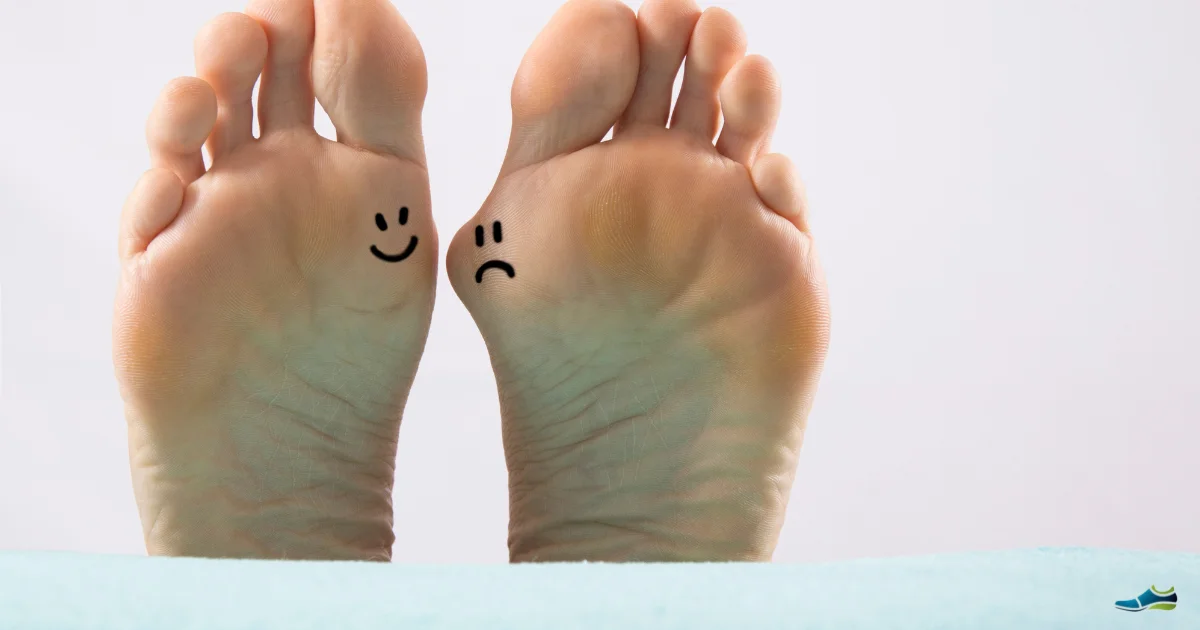
The best shoes for bunions have a wide, roomy toe box, a low heel and a soft, supportive sole. These features reduce pressure and rubbing around the bony joint, helping you stay active more comfortably. Shoes cannot remove or reverse a bunion, but the right fit can ease pain and irritation and prevent your footwear from making symptoms worse.
For a full overview of how toe pain connects to wider foot strain, explore our Complete Guide to Foot Pain Relief.
Affiliate disclosure: This article contains affiliate links. If you buy something through one of these links, I may earn a small commission at no extra cost to you.
💡 Quick Answers Available
Want to know more about the best shoes for bunions and how to ease the pain? Scroll down for 20 quick Q&As.
What Are Bunions?
A bunion is a structural bony shift that develops right at the base of the big toe joint.
Visually, when the inner margin of the foot displays a prominent, angular bony projection, accompanied by localized skin redness, noticeable joint puffiness, or a distinct inward deviation of the big toe toward its neighbours, these physical signs are highly consistent with a bunion deformity (hallux valgus), an active arthritic flare, or a localized bursitis sac swelling.
Over time, forcing this altered shape into narrow, stiff footwear configurations causes intense mechanical pressure to build up rapidly, which is exactly why walking can start to trigger a sharp, aching pain and why a soft, accommodating toe box layout becomes an absolute lifesaver for daily mobility.
Bunions may develop slowly over years and often run in families. Left untreated, they can worsen, making it difficult to walk comfortably.
Causes of Bunions
- Genetics: Inherited foot shape and mechanics.
- Footwear: Narrow or pointed shoes that crowd the toes.
- Flat Feet & Low Arches: Can increase bunion risk.
- Medical Conditions: Arthritis or connective tissue disorders.
- Injury: Damage to the toe joint can accelerate changes.
Symptoms of Bunions
- A visible bump at the base of the big toe.
- Pain, redness, or swelling around the joint.
- Restricted movement of the big toe.
- Corns or calluses caused by overlapping toes.
- Difficulty finding comfortable footwear.
If your toes have started curling or overlapping, read how the right shoe design can help prevent hammer toes from forming.
Why the Right Shoes Matter for Bunions
Poorly fitting shoes can make bunion pain unbearable. The best shoes for bunions reduce pressure, allow space for swelling, and keep your foot stable. Wearing supportive footwear won’t reverse a bunion, but it can:
- Reduce daily pain and discomfort.
- Prevent further misalignment.
- Lower the risk of corns, calluses, or blisters.
- Help maintain better mobility.
Friction from bunion pressure often leads to corns and calluses — here’s how to manage them and prevent future irritation.
What Are the Best Shoes for Bunions?
Look for these key features:
- Wide Toe Box: Space for toes to spread naturally without rubbing.
- Soft Uppers: Stretchy materials like mesh, soft leather, or knit that move with your foot.
- Low Heels: Flat or low-heeled shoes reduce pressure on the forefoot.
- Cushioned Insoles: Shock absorption for comfort during walking.
- Adjustable Fastenings: Laces, straps, or Velcro for a flexible, personalised fit.
- Removable Insoles: Makes room for orthotics if needed.
✨ Tip: Stylish wide-fit shoes now exist — so you don’t have to sacrifice looks for comfort.
If a favourite pair of leather or suede shoes fits comfortably everywhere except around the bunion, a shoe stretcher with pressure-relief plugs may help create a small pocket of extra space at that particular pressure point. It won’t correct the bunion or rescue shoes that are fundamentally too narrow, but it may reduce rubbing in an otherwise suitable pair. See my guide to choosing the right toe-box shoe stretcher for the different options.
Sizing Guidance: Because a structural joint expansion requires genuine horizontal width rather than artificial length, always check the manufacturer’s physical width tables and structural last measurements to confirm the shoe shape safely handles your specific joint circumference before ordering.
Treatment & Relief Options
At-Home Care
- Wear wide, cushioned shoes.
- Use bunion pads or gel shields to reduce friction.
- Apply ice packs to reduce swelling after activity.
- Try toe spacers for temporary alignment relief.
What I’d Actually Look For
If you’re shopping for bunion pads or toe spacers, you don’t need anything fancy — just a genuinely soft gel that won’t irritate your skin, and a fit that stays put through a full day in shoes. Welnove’s gel toe separators are a good, sensibly priced option worth starting with.
A washable, reusable pad tends to work out cheaper and less wasteful than disposable ones over time — worth checking before you buy if that matters to you.
Professional Care
- Surgery is reserved for persistent, painful cases.
- Custom orthotics can improve foot mechanics.
- Physiotherapy exercises may reduce strain.
- Corticosteroid injections may help severe inflammation.
Prevention Tips
- Avoid narrow, pointed shoes.
- Choose footwear with extra depth and width.
- Keep a healthy weight to reduce stress on joints.
- Stretch and strengthen feet daily.
- Replace worn shoes regularly.
When to See a Doctor or Podiatrist
- Difficulty walking or balancing.
- Persistent bunion pain despite footwear changes.
- Severe swelling, redness, or infection signs.
- Rapidly worsening deformity.
The Bigger Picture: UK Prevalence
Bunions are extremely common in the UK, especially in women over 65.
- Women are several times more likely than men to develop bunions.
- Prevalence rises sharply with age.
Here is a detailed pie chart showing the prevalence of Bunions in the UK
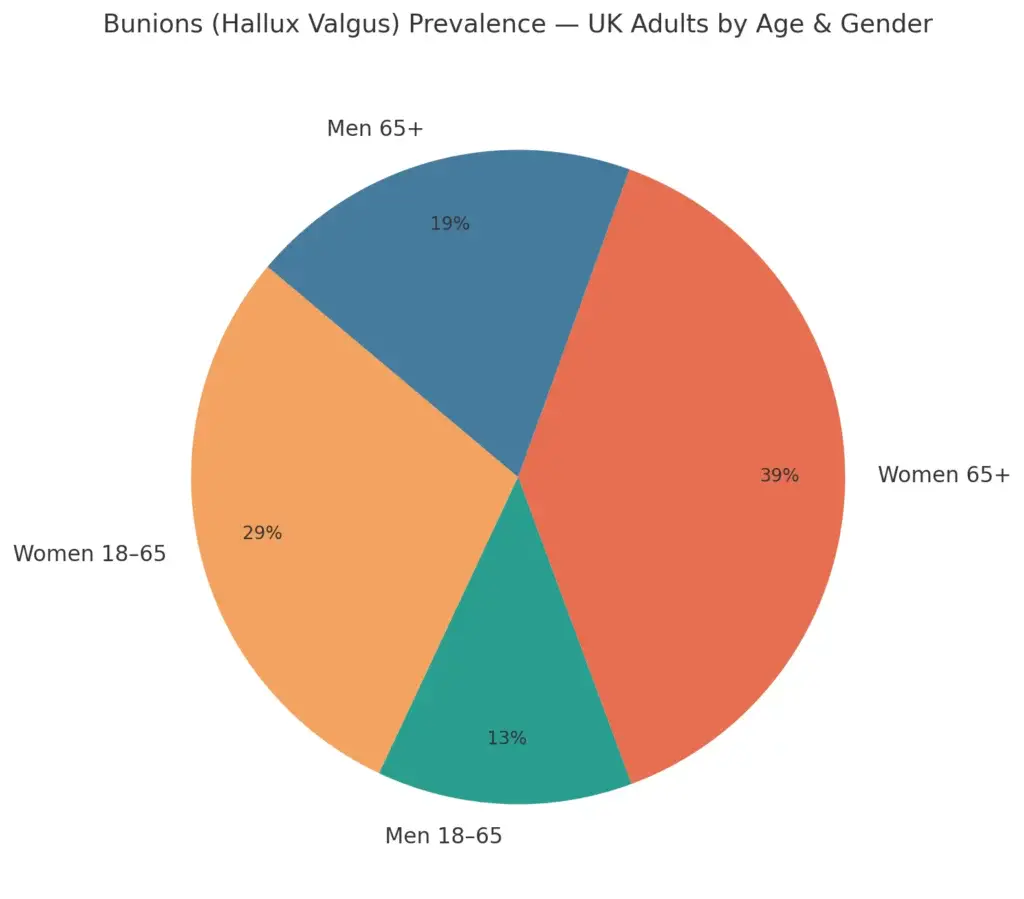
Estimated prevalence of bunions (hallux valgus) in UK adults, broken down by age and gender. Women are significantly more affected, particularly over 65.”
References
- Royal College of Podiatry – What are Bunions?
- NHS – Bunions Overview
- Nix S. et al. (2010). Prevalence of hallux valgus in the general population: a systematic review and meta-analysis. Journal of Foot and Ankle Research
- Thomas M. et al. (2019). Population prevalence and associations of hallux valgus in older adults. BMJ Open
Prevalence figures are estimates drawn from systematic reviews and UK health sources. Women are significantly more affected than men, particularly over 65.
20 Common Bunion Questions
Q: Are bunions caused by wearing tight shoes?
A: Not directly, but tight or pointed shoes can make them worse if you’re already prone to bunions.
Q: Do bunions always get bigger?
A: They often worsen over time, though good footwear and orthotics can slow progression.
Q: Can bunions go away without surgery?
A: No. Conservative treatments relieve symptoms but don’t remove the bunion.
Q: What are the best shoes for bunions?
A: Wide-toe box shoes with soft uppers, cushioning, and adjustable fastenings.
Q: Are sandals good for bunions?
A: Yes — provided they have a wide footbed, cushioned soles, and supportive straps.
Q: Will losing weight help bunions?
A: It can reduce stress on the feet, easing pain, but won’t remove the bunion itself.
Q: Can bunions come back after surgery?
A: Yes, recurrence is possible if foot mechanics or footwear issues remain.
Q: Do toe spacers fix bunions?
A: They may provide temporary comfort but won’t correct the deformity.
Q: Is bunion pain worse in the morning?
A: Some people feel more stiffness and swelling after resting, especially if shoes aggravated them the day before.
Q: Can children get bunions?
A: Yes, bunions can appear in adolescence, often due to inherited foot mechanics.
Q: Should I buy bigger shoes for bunions?
A: Length isn’t the issue — choose wider shoes, not just longer ones.
Q: Can high heels cause bunions?
A: They can worsen them by pushing weight onto the forefoot and crowding toes.
Q: Are bunions linked to arthritis?
A: Yes. Bunions can form alongside or be aggravated by arthritis in the big toe joint.
Q: Do bunion splints work?
A: They may ease pain short-term but don’t correct the underlying joint alignment.
Q: Can men get bunions?
A: Absolutely — bunions affect both men and women, though they’re more common in women due to footwear trends.
Q: Do cushioned insoles help bunions?
A: Yes. They relieve pressure and improve comfort, especially during long days on your feet.
Q: How long does bunion recovery take after surgery?
A: Typically 6–12 weeks, though swelling can last several months.
Q: Can bunions cause balance problems?
A: Yes. As the toe shifts inward, it can affect foot stability.
Q: Are flip-flops bad for bunions?
A: Basic flat ones can be, but supportive sandals with arch support and cushioning are fine.
Q: Do wide-fit shoes prevent bunions?
A: They can reduce risk by minimising pressure and friction on the big toe joint.
📌 Summary
- Bunions are a structural foot condition worsened by poor footwear.
- The best shoes for bunions provide width, cushioning, and flexibility.
- At-home care, orthotics, and lifestyle changes relieve discomfort.
- Surgery is only for severe or unmanageable cases.
Medical Disclaimer: The footwear fitting parameters, specialized padding suggestions, structural stretching methods, and conservative lifestyle metrics compiled across this guide are provided strictly for general informational and educational purposes. They do not substitute for personalized professional medical advice, clinical diagnosis, or distinct orthopedic treatment plans. Persistent deep joint pain, skin breakdown over the bony bump, signs of localized infection, or progressive loss of mobility require direct professional evaluation and assessment by your qualified GP or a registered podiatrist.